Filmmaking, apart from its ambitious, political and
experimental possibilities, can be a deeply personal exercise as well; Lithuanian-American
avant-garde filmmaker Jonas Mekas championed that facet about cinema through
his intensely personal stories where the subject, or at least the observer, was
he himself. The sprawling, lyrical and beautifully melodic 3-hour “diary film” Lost, Lost, Lost – shot over an
astonishing period of 14 years (from 1949 to 1963) using his 16-mm Bolex camera
– was a complex, layered and kaleidoscopic chronicle of the incredible circle that
may define the journey of an émigré, viz. the deep existential crisis upon leaving
one’s homeland behind forever, settling into a place which is absolutely
foreign not just geographically but more so culturally, the constant inner tussle,
the eventual acceptance of one’s new habitat and finally a tentative assimilation
into it. Mekas, along with his brother Adolfas, arrived in NY as a 27-year old “displaced
person” in 1949, after the end of WWII, and settled in Williamsburg, Brooklyn –
no wonder, this area, with its diverse, vibrant and politically active emigrant
population, formed a vital aspect of this 6-reel film, even though he spent
only 4 years there before shifting base to Manhattan. Not just its temporal
arc, its choice of subjects too was richly varied and was portrayed through grainy,
brilliantly framed and spellbindingly captured B/W images of the city, its streets,
its peoples, its social fabric, its multifarious political immersions and its
simmering zeitgeist. The movie, accompanied with a score that ranged from
classical to jazz, was laced with bold political splashes (angry protests to
subversive stances), formal bravura, and absorbing personal revelations – loneliness,
melancholia, reflections and friendships with the era’s bohemian and artistic
crowd.

Director: Jonas Mekas
Genre: Avant-Garde/Diary Film/Documentary/Essay Film
Language: English
Country: US
The engrossing world of classic American noirs
is replete with tough-guy heist films where things end badly through a mix of bad
breaks. The Asphalt Jungle – adapted from
W.R. Burnett’s novel, and one of Huston’s greatest works, along with The Maltese Falcon and The Treasure of the Sierra Madre
– remains a fabulous, gritty, hardboiled, fatalistic, hugely influential and a definitive depiction of,
to borrow from the script, “a left-handed form of human endeavour”. “Doc” Riedenschneider
(Sam Jaffe) is a recently paroled career-criminal who’s hatched plan for a big
caper; the potential payoff interests the wealthy lawyer Emmerich (Louis
Calhern) and a crooked bookie (Marc Lawrence) to fund the expenses and hiring of
the crew for the job, which includes a disillusioned hooligan (Sterling Hayden),
a bartender and a family man. Things, unfortunately, don’t follow the planned
route as Emmerich, unbeknownst to the group, has planned a neat double-cross;
and that, combined with murders, nasty luck and an overenthusiastic police
Commissioner, push Doc and his crew into a corner from which there’re hardly
any chances of a clean getaway. Most of the men have their weaknesses – the street-smart
professional Doc in his attraction towards nymphets; the seemingly well-placed Emmerich
having gone broke through his affair with a teasing seductress (Marilyn
Monroe), etc. – which, in the end, take all involved to their doom. The
sparkling B/W photography, jazz score and taut script were wonderfully aided by
a host of fine performances led from the front by the brilliant Sam Jaffe, and
a top-notch Huston who magnificently created a realistic depiction of corrupt
cops, societal underbelly and crime as just another occupation, despite the many
limitations of the then prudish Production Code.
p.s. This is a revisit. My earlier review of this film can be found here.
Author: John Huston
Genre: Film Noir/Crime Thriller/Heist Film
Language: English
Country: US

4 years after the historic Cuban Revolution –
which saw Fidel Castro and his band of bearded rebels deposing the puppet
dictator Batista and installing a Socialist state – Agnès Varda, in keeping
with her Left Bank affiliations and like a string of intellectuals who were fascinated
by this watershed event, made a trip to the island-nation to capture the
post-revolution zeitgeist. She took around 4000 pictures there and used 1500 of
those to make the heady, freewheeling and intoxicating photomontage essay-film Salut les Cubains, as the follow-up to Cléo from 5 to 7. In this enthralling
endeavour, she was deeply influenced by Chris Marker – he’d made a trip to Cuba
a couple of years back and had made the documentary Cuba Si!; and more importantly, his seminal short film La Jetée, which too was composed using still pictures. This court métrage, playfully narrated by
Varda and Michel Piccoli, provided for an engrossing portrayal of the varying
facets of the new socio-political order. Topics such as agrarian reforms and mass-education
program for peasants were interesting but also tad pedagogical. But Varda, being
too intelligent a filmmaker to make a straightforward agitprop, delved heavily on
the country’s distinctive Afro-Spanish cultural influences; its vibrant
artistic and literary scene comprising of Alea (Memories of Underdevelopment, Death of a Bureaucrat), Carpentier (Reasonsof State), etc.; the throbbing rhythm of the rumba; the beloved Cuban
singer-songwriter Benny Moré; pop-cultural references (Havana cigar, Greene’s
comic gem Our Man in Havana, Hemingway,
irreverent Castro graffiti). Irrespective of which side of the political spectrum
one aligns with, this absorbing work is bound to spellbind with its infectious energy,
tongue-in-cheek humour, affection for the common folks, and the ravishingly
beautiful B/W photographs.

Director: Agnes Varda
Genre: Documentary/Political Film/Essay Film/Short Film
Language: French
Country: France

A Bucket of Blood might
not be the most well-known work of schlock trailblazer Roger “The Pope of Pop
Cinema” Corman, but it most remains one of his most brilliant. Using his deprecatory
ability to traverse across genres, he created – in this low budget B-movie shot
in just 5 days – something preposterous, provocative, darkly funny, bitingly
satirical, grisly, quirky, ironic and deliciously reflexive in its
meta-narrative. Walter Paisley (Dick Miller in his 1st of 7
renditions of characters with this name) is a geeky, fidgety, neurotic busboy
in a Village café populated by Beatniks and bohemians. He’s in thrall of the resident
Beat poet (Julian Burton) and his freeform poetry; he’s infatuated with Carla (Barboura
Morris) but is always receiving scorns and jibes from his boss (Antony
Carbone); he lives alone in a run-down apartment; and he dreams of himself as a
great artist despite his singular lack of talent. His fortunes change
dramatically, however, when he accidentally kills a cat, and then, in a bizarre
display of artistic expression, encases the corpse in clay. His “avant-garde” sculpture
attracts immediate attention and admiration, and, with his ambition now stoked,
he’s propelled into a ghastly journey of churning out one work of hideous ultra-realism
after another, in a hilarious reimagining of the slasher film House of Wax. The fabulous turn by
Miller, the striking B/W photography, deadpan humour and the mock-serious bring-down
of highbrow pretentiousness, combined with Corman’s love for the macabre, made
this a fascinating ‘black-comedy horror’ flick – a genre which he flaunted to
have pioneered. Corman and writer Charles B. Griffith would reunite the
following year, and would even reuse the same set, with The Little Shop of Horrors.

Director: Roger Corman
Genre: Horror/Black Comedy/Social Satire
Language: English
Country: US

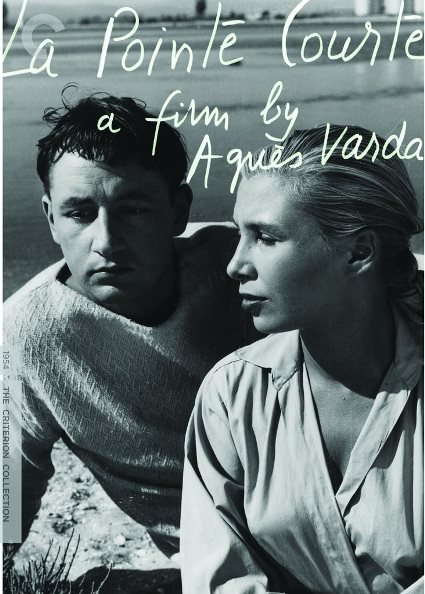
Agnès Varda’s remarkably assured and exquisitely
shot directorial debut La Pointe Courte
straddled across two iconoclastic film movements, without consciously aiming
for that, though its two loosely connected narratives. The affecting 1st
narrative portrayed, with humour, warmth, exuberance and lyricism, the life of
a tightly-knit, impoverished fishing community in the eponymous French coastal village;
the authorities are trying to clamp down as they believe the shellfish are contaminated
by industrial effluents, which propels the fishermen to find new ways of
dodging the city guys who they clearly disdain, while also enjoying their lives
despite the meagre means at their disposal. The other narrative covered an
unnamed Parisian couple (Philippe Noiret and Silvia Monfort) who’ve come there to
spend a few days together; they roam around the fields, river banks and discarded
boats discussing about their crumbling marriage, and hoping if there’s a way to
save it yet. The only instance where the two narratives coincided was during the
end when the couple is finally seen enjoying while attending an annual revelry that
the village hosts. The infectious former narrative had all the distinctive elements
of Italian Neorealism, including a non-professional cast, on-location shooting
and delightful naturalism. The latter narrative, on the other hand, was
discursive, self-reflexive and stylized – the arresting close-up shots of the
profile of one cutting in half the face of the other, would reappear more
famously in Bergman’s Persona. Though
I found the latter stilted and artsy, it did bear early signs of the Nouvelle
Vague movement, even if it would still be around half a decade before Truffaut would debut
with The 400 Blows, Resnais (who
edited this film) with Hiroshima Mon Amour, and Godard with Breathless.

Director: Agnes Varda
Genre: Drama/Rural Drama/Marital Drama
Language: French
Country: France