Showing posts with label British Cinema. Show all posts

Thursday, 11 June 2026

Bugonia [2025]

 Yorgos Lanthimos’ absurdist and unhinged black comedies have toggled between relatively minimalist palettes and unreservedly maximalist ones. Bugonia was primarily constructed in the former vein – seething with anxiety, paranoia, gallows humour, and satire on class warfare, corporate malfeasance and exploitation – and soared for stretches with the unsettling ferocity and straight-faced schlock of his dystopian parable The Lobster. However, unlike that earlier film, it instead ended up literalizing the plot, delivering philosophical explanations and veering towards grandiose tendencies in the final third leading to the “extraterrestrial” climax. That jump into fantasy partially offset the tense and edgy buildup, even if it ultimately closed with a fine montage accompanied by Marlene Dietrich’s rendition of the great Pete Seeger folk song “Where Have All the Flowers Gone?”. Remade from the Korean film Save the Green Planet!, it follows two marginalized and alienated guys – conspiracy theory-obsessed Teddy (Jesse Plemons) and his autistic cousin Don (Aidan Delbis) – who kidnap Michelle (Emma Stone), the CEO of a powerful pharmaceutical company, assuming her to be an alien (“Andromedan”) secretly here in human form to destroy earthlings and its ecology. At its heart lay the psychological duel between the cold, manipulative and sociopathic Michelle, with her doublespeak, consulting jargon, and frightening lack of empathy, and Teddy, whose grief, past trauma, and emotional estrangement – complemented by his intelligence and detestation for the neoliberal monstrosity that the pharma company represents – has transitioned into volatile and destructive monomania. Stone was riveting, and Plemons no less compelling, in embodying their characters, while Delbis was quietly affecting as the tragically lost and fragile Don, in this bleak and unsparing work that stopped short of brilliance due to Lanthimos’ inability to pull back.


Director: Yorgos Lanthimos

Genre: Black Comedy/Thriller/Social Satire/Sci-Fi

Language: English

Country: UK

Monday, 16 March 2026

Distant Voices, Still Lives [1988]

 British filmmaker Terence Davies’ feature-length debut, Distant Voices, Still Lives, continuously switched between bitter, mournful memories and gregarious displays of life in the here and now, and between private and public spaces. These intersecting aspects, along with Davies’ decision to replace linear recounting with a heavily impressionistic approach, instilled this heavily autobiographical film with formal rigour and poetic realism that were curiously at odds with its mythologizing of war-time and post-war working-class Britain and splashes of melodrama. Incidentally, this was two shorts rolled into one considering that its two interconnected halves “Distant Voices” and “Still Lives” were filmed two years apart and made with different crews, albeit with the same set of actors. It’s foregrounded on a Liverpudlian family – a stoic mother (Freda Dowie), two daughters (Angela Walsh and Lorraine Ashbourne) and son (Dean Williams) – that lived under the scarring shadows of an abusive and violent patriarch (Pete Postlethwaite), and continues to bear that trauma even after his death, which formed a pivotal juncture for them and divided their lives into a before and an after. Their oppressive interiority within their dreary, cramped home was frequently alternated with moments spent with friends and family in taverns and public houses, drinking beer and breaking into popular songs of that time. The communal power of music, in fact, formed a key theme. The cinematography, with its washed-out and desaturated colours, exquisitely evoked a lost time and space that exists through the subjective prism of memories, while the long, gently panning shots captured the calm and the chaos. The mannered acting and lack of any redeeming qualities of the brutish father, fleeting displays of gentleness notwithstanding, marginally dampened this deeply personal work.


Director: Terence Davies

Genre: Drama/Family Drama/Musical/Coming-of-Age

Language: English

Country: UK

Thursday, 29 May 2025

On Falling [2024]

 It’s only appropriate that Laura Carreira’s exceptionally assured debut film On Falling was produced by ‘Sixteen Films’ – which was co-founded by Ken Loach – given how closely it mirrored the British giant’s profound empathy for the working-class and the disenfranchised, and, in particular, for its intimate and nuanced portrayal of the human cost of gig economy workers, a topic that Loach had delved into in Sorry We Missed You. This delicate, understated and quietly heartbreaking work was steadfastly centred on Aurora (Joana Santos), a Portuguese woman working at a massive e-commerce warehouse in Scotland. Her existence is a dreary combination of dehumanized labour – she works long-hours in a job of crushing monotony, for a pittance, under patronizing micro-management and constant passive-aggressive supervision – and her nights at a crowded co-living space occupied by immigrant workers like her, upon returning exhausted. It’s a life, therefore, of ennui, isolation, loneliness, alienation and despair. Her only human connections are the stray conversations during lunch hours, her rides back home with a Portuguese colleague – discussing their desire to switch into a marginally more meaningful job – and the fleeting bond that she develops with Polish trucker Kris (Piotr Sikora) who’s recently moved in as flatmate; her only other distractions are her mobile phone, which she gets lost into whenever she’s in a break or off work, and binging on chocolates. Set over the course of a week, this luminously shot film is marvellously led by Santos; her boredom, anxieties and hints of edginess are ensconced within her placid surface; it was, consequently, particularly affecting when she lets her emotions out – as in the pub where she gets invited by Kris or during the desolate job interview.


Director: Laura Carreira

Genre: Drama/Urban Drama

Language: English/Portuguese

Country: UK

Sunday, 18 May 2025

Santosh [2024]

 British-Indian filmmaker Sandhya Suri’s gripping, smouldering and impressive debut feature Santosh operated in the grim intersectionality of class, caste, religion and gender, and the foul cesspit of disenfranchisement, bigotry, caste violence, Islamophobia, misogyny and police brutality. That may seem like a lot is going on for one movie. It’s therefore to Suri’s credit – aided perhaps by her background as a documentarian – that these themes were organically interlaced into the script, thereby ensuring that they’re integral to this police procedural involving the investigations into the rape and murder of a young Dalit girl in the ironically named north Indian state of “Chirag Pradesh”. The clincher was that these subterranean realities were evoked through the gaze of a woman protagonist – privileged by her caste and religion, but not so much by her class and gender – in an inversion to this otherwise “masculine” genre and the heavily male-dominated police force. Shahana Goswami was terrific – in a turn marked by seething fury and restraint – as the eponymous Santosh, a recently widowed woman who decides to inherit her husband’s job of a police constable, and therefore his salary and accommodation, in order to secure her social and financial independence. There, she immediately encounters an environment reeking of patriarchy, prejudices, sexism and apathy, and soon after finds herself amidst an increasingly vile morass on account of the afore-mentioned crime. The scenario was suffused with additional nuance upon the arrival of a seasoned senior inspector (Sunita Rajwar) to lead this politically volatile case, as on hand she treats Santosh with courtesy and even protectiveness – albeit, coloured with sensual undertones on occasions – while, on the other, she has a murky past of custodial torture and cynical expediency.


Director: Sandhya Suri

Genre: Crime Thriller/Police Procedural

Language: Hindi

Country: India/UK

Friday, 2 May 2025

Hard Truths [2024]

Mike Leigh reunited with Marianne Jean-Baptiste in Hard Truths nearly 3 decades after they last worked together in the shattering masterpiece Secrets & Lies; further, he also returned to his preferred setting of contemporary, everyday England over a decade since his brilliant film Another Year. This latest from the great British filmmaker, which could’ve repurposed the title of Almodóvar’s hilarious gem Women on the Verge of a Nervous Breakdown, may well rank among his most downbeat works; while he’s made movies with bleaker backdrops and drearier settings, this one came largely devoid of any reconciliations, resolutions and catharses, thereby underscoring its bracing cynicism. At the core of this combustible miniature tale of personal and domestic collapse, in post-Covid UK, is Pansy (Jean-Baptiste), a perpetually edgy and cantankerous middle-aged British-Jamaican woman who’s afflicted with anxiety and depression, and is on the brink of an irreversible emotional meltdown. She keeps lashing out at her taciturn, mild-mannered husband (David Webber) and their withdrawn, soft-spoken son (Tuwaine Barrett), as well as whoever she’s compelled to meet, from her doctor to the cashier at the departmental store and even random strangers at the parking lot. She, as well as the desolate atmosphere at their otherwise fastidiously sanitized suburban house, made for dramatic contrast to her jovial and vivacious sister Chantelle (Michele Austin), and the happily chaotic environment of the women’s parlour that this single mum runs as well as the vibrant energy at her small apartment where she lives with her equally lively daughters (Ani Nelson and Sophie Brown). Jean-Baptiste and Austin were both memorable in this alternately tense, exasperating, darkly funny and compassionate kitchen-sink portraiture of working-class diaspora families barely holding it together.


Director: Mike Leigh

Genre: Drama/Family Drama

Language: English

Country: UK

Monday, 17 March 2025

Conclave [2024]

 Who’d have thought that a movie packed with ageing, pompous, conservative and hyper-religious men in ostentatious dresses could make for a taut papal thriller. Adapted from Robert Harris’ bestselling novel of the same name, Conclave was at its most entertaining when it functioned as a pulpy potboiler. When the pope dies of a heart attack, what ensues is one of the oldest and most secretive rituals – viz. election of the next pope. Lawrence (Ralph Fiennes), as dean of the College of Cardinals, becomes the most powerful man in the Catholic church at such a time as this, and congregates the titular papal conclave at the Vatican City. The frontrunners are a liberal British Cardinal (Stanley Tucci), an ultra-orthodox and gleefully nasty Italian (Sergio Castellitto), a Canadian moderate (John Lithgow) who had a suspicious meeting with the Pope just before his death, an African-American (Lucian Misamati), whose win could be historic moment for the church, though ironically, he’s exceptionally regressive in his views, and an enigmatic last-minute arrival (Carlos Diehz) who’s been based in various war zones. It was amusing, bordering on the fiendish, seeing seemingly “pious” and “dignified” men concocting petty machinations at the canteen and corridors, squabbling with each other like schoolkids, and even resorting to Machiavellian ploys to win the coveted position. Along the way murky events – both within the sequestered chamber and outside – make the proceeding more dramatic. However, where the film faltered – which slightly undermined its delicious fun – was when it tried portraying moral seriousness, existential dilemmas and political correctness. Consequently, while Fiennes was excellent in his performance, his character was arguably the least interesting of the lot vis-à-vis his smug, hyper-competitive and power-hungry colleagues.


Director: Edward Berger

Genre: Drama/Thriller/Religious Drama/Conspiracy Thriller

Language: English/Italian/Latin/Spanish

Country: UK

Sunday, 19 January 2025

The Story of Film: An Odyssey [2011]

 At just over a century, cinema is, by some distance, the youngest of all major artforms; yet, it has evolved, expanded and shape-shifted so extraordinarily in its relatively brief history, that any attempts at chronicling its history is bound to be an exercise in audacity. Furthermore, when one realizes that it freely built upon multiple other artforms, and its progression has been as technical as cultural and political, one can also sense the sheer complexity of that endeavour. If one dizzying way to do that was Godard’s dense, metatextual and monumental video essay Histoire(s) du Cinéma, another diametrically opposite approach was Marc Cousin’s in The Story of Film. Running at 900 minutes, and covering around 1000 films across all 6 continents, this was no less ambitious. Further, by consciously spending considerable time on silent cinema, covering films from the “global south”, and complementing technical evaluations and historical details with highly personal views – even if they were dubious or superficial at times – Cousins made this much more idiosyncratic than what a more straightforward documentary would’ve been. Spread over 15 chapters, it covered an immensely wide spectrum – films made within and outside the studio system, films that’re canonical and those beyond the canon, popular and arthouse movies, films demonstrating technological developments as well as political contexts – which also made it episodic and engaging, even if this sacrifice of depth for breadth made it too cursory and thereby less rigorous. Notwithstanding Cousins’ exasperating diction and repetitiveness, one must admire his love for the medium, the stunning span of his focus, and the herculean efforts that he invested by interviewing diverse people and physically visiting numerous places during the course of its making.


Director: Mark Cousins

Genre: Documentary/History/Mini-Series

Language: English

Country: UK

Friday, 22 November 2024

The Go-Between [1971]

 The three films that Joseph Losey and Harold Pinter made together – The Servant, Accident and The Go-Between – were all piercing examinations of class, adapted from literary texts (in this case, from L.P. Hartley’s renowned novel), and amalgamations of formal and narrative bravura. The common grounds aside, however, they strikingly diverged in tones, styles, settings and structures, thereby underlining the duo’s artistic ambitions. Unlike the pitch-dark satire and dizzying expressionism of the first film, and the unsettling modernism of the second, this had the most overly classical palette, with its lush period setting, sprawling cast, lyricism and melancholy. Further, while the events take place in the past, they’re informed by a framing device set in the present, thus making it a quietly devastating exploration of memory and time. The story unfolds from the perspective of 12-year-old Leo (Dominic Guard) – and in turn his much older self, reminiscing about a fateful summer that continues to haunt him – who’s been invited to spend his vacation at the palatial country house of his wealthy school friend Marcus. That he’s from a lower social and economic class is readily apparent, which makes him a bemused outsider. He finds himself besotted with Marcus’ ravishing older sister Marian (Julie Christie), who’s engaged to a man of her social standing (Edward Fox) but is in a forbidden relationship with a raffish local farmer (Alan Bates). Upon being enlisted as secret messenger by the covert lovers, Leo transitions from tacit observer to active participant. Sumptuously mounted and photographed, the exterior sections were a series of sublimely lit, composed and framed images resembling French impressionist paintings, while the stirring score enveloped them with longing, lost innocence and blazing emotions.


Director: Joseph Losey

Genre: Drama/Romantic Drama/Ensemble Film

Language: English

Country: UK

Sunday, 17 November 2024

Accident [1967]

 Four years after exiled American filmmaker Joseph Losey had joined hands with British playwright Harold Pinter for the explosive The Servant, they teamed up for Accident, the second of their renowned trilogy of collaborations (they’d work together again on the marvellous The Go-Between). A barbed, smouldering and formally rigorous examination of brittle masculinity, sexual rivalry, abuse of power and dysfunctional bourgeois relationships, this was Losey’s distinctive turn to the “arthouse” aesthetics associated with continental European filmmakers like Antonioni, Resnais and Chabrol. The duo constructed this adaptation of Nicholas Mosley’s novel through delicate interplay between formal exactitude and freewheeling progression, and between minimalist expressions and emotional tumult, while depicting midlife crises, repressed desires, simmering jealousies, and the way that these shockingly unfold (reminding me of Roeg and Saura). It begins with a fatal car accident, and the screenplay – clinically pieced together like a jigsaw puzzle – reveals what preceded that through intricate flashback sequences. Stephen (Dirk Bogarde) is an eerily composed Oxford tutor, living in an idyllic country house with his wife (Vivien Merchant), who’s pregnant with their third child. All’s not well, unfortunately, beneath their seemingly banal and contented life, as he’s become infatuated with his ravishing Austrian student Anna (Jacqueline Sassard), who’s being romantically pursued by a fellow student while having a furtive affair with Stephen’s colleague Charley (Stanley Baker). He’s envious of Charley’s adulterous fling as well as his TV appearances, that leads him to a former lover (Delphine Seyrig) and an ugly transgression after the said accident. This brilliantly photographed film, accompanied by a jazz score, carried a discomfiting “life-imitating-art” subtext as Merchant was then in a disintegrating marriage to Pinter on account of his open infidelity.


Director: Joseph Losey

Genre: Drama/Marriage Drama/Psychological Drama

Language: English

Country: UK

Tuesday, 12 November 2024

The Servant [1963]

 The Servant bruises its viewers like red-hot iron with its trenchant and subversive dissection of class and power, its electrifying blend of flamboyantly baroque aesthetics and coolly modernist form, its unsettling homoerotic undertones, and the way it tantalizingly occupied the subliminal space between tar black satire and psychological terror. The first of three remarkable collaborations between Joseph Losey – the great American exile who’d been blacklisted from Hollywood for his left-wing politics – and Harold Pinter – an exciting young British playwright then, in his first tryst with screenwriting – this remains the most acclaimed directorial venture of Losey (even if his greatest film was Monsieur Klein) and screenplay by Pinter. If the former’s simmering and spectacularly caustic evocation of barely contained hysteria, anarchy and violence, and the latter’s virtuoso script (adapted from Robin Maugham's novella) – filled as much with complex confrontations as with precision, silences, inflections and wry asides – were two stunning sides of this meticulously balanced triangle, undoubtedly the anchoring third side was Dirk Bogarde’s deliciously unfolding and implosive turn as the titular manservant Hugo – at once slippery, scheming and sinister – who cannily usurps the role of his employer Tony (James Fox), a callow and dandy man-child; incidentally, he’d also played a role in getting Losey and Pinter connected. Interestingly, aside from the servant turning the tables on his master, Hugo – over the course of the film – also seems to represent Tony’s nagging wife, jilted mistress and possessive mother; no wonder, both women in their lives – Tony’s snobbish fiancée Susan (Wendy Craig) and Hugo’s coquettish “sister” – are eventually pushed out of their claustrophobic house, magnificently photographed in expressionist B/W, and accompanied by a haunting bluesy melody and gloriously discordant jazz score.


Director: Joseph Losey

Genre: Thriller/Black Comedy/Psychological Drama

Language: English

Country: UK

Wednesday, 23 October 2024

The Crown [2016-2023]

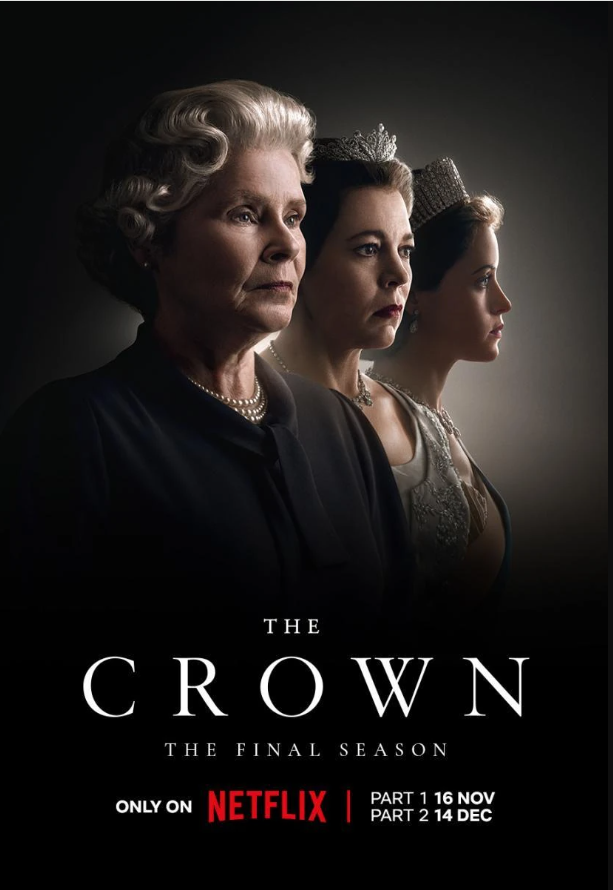
 The journey from being decidedly sceptical about watching The Crown to being left mesmerized by it was an exhilarating one. Though not an exceptionally long series per se, it achieves a formidable colour when one takes into account that it intricately covered six decades of British history, complex political forces and social happenings, and a staggering multitude of events and people. Hence, instead of a conventional summation, it’s perhaps more prudent to highlight few aspects that made this a TV phenomenon. First, and foremost, this was anything but a hagiography or a simple history lesson; rather, it was charged, edgy and turbulent on one hand, and delicate, layered and nuanced on the other, while boldly diving into moral turpitudes and quandaries. Second, it was a gripping portrayal of the “royal family” as a dysfunctional, bickering, self-centred and over-privileged group of people with skeletons in their closets and nasty machinations up their sleeves, while also evolving with the years – both willingly and otherwise. Third, the show’s creator went for a crazy gamble by casting different actors for the same characters at different times, given the narrative’s stunning temporal arc, and that played off superbly; each actor brought in something remarkable while also ensuring continuity. Fourth, it was packed with magnificent performances; the seven actors who I found most shattering were Claire Foy as Elizabeth (Seasons 1-2), Vanessa Kirby as Margaret (S1-2), Alex Jennings as Edward (S2, S5), Josh O’Connor as Charles (S3-4), Emma Corrin as Diana (S4), Lesley Manville as Margaret (S5-6), and Salim Daw as Mohamed Al-Fayed (S5). Fifth, and definitely not the last, the larger tapestry was exquisitely interwoven through meticulously mounted episodes, many of which were extraordinarily powerful; “Fagan” (S4), which recalled the bleak Thatcherite dystopia in Leigh’s Meantime, “Fairytale” (S4), where Diana roller-skates in Buckingham Palace and jives to ‘Edge of Seventeen’, ‘Tywysog Cymru’, where Charles is drawn into Welsh history, “Aberfan” (S3), centred on a colliery disaster, and ‘Vergangenheit’ (S2), that delved into the monarch’s Nazi links, were my personal favourites (in that order).


Created By: Peter Morgan

Genre: Drama/Historical Drama/Family Drama/Marital Drama/Biopic/Epic

Language: English

Country: UK

Friday, 18 October 2024

All or Nothing [2002]

 In All or Nothing, Mike Leigh constructed a multilayered, kaleidoscopic and Dickensian slice-of-life on working-class Brits residing in a sprawling but dreary London council estate. With its nuanced and compassionate portrayal of the desolate, hardscrabble lives of the proletarian apartment complex’s residents, who’re shorn of any silver lining in their grey horizons, it provided a trenchant depiction of Thatcher’s damaging legacy, and thereby vividly recalled Leigh’s remarkable earlier Thatcher-era films like Meantime, Four Days in July, High Hopes and Life Is Sweet. Yet, despite the overarching bleakness, Leigh never basked in miserabilism; rather, he developed his characters and their stories from a place of deep empathy for the human condition, and infused his script with touches of levity, camaraderie and warmth; the film, consequently, was absorbing and lyrical amidst the melancholy and hopelessness. The  exceptional ensemble’s primary focus was on Phil (Timothy Spall), a lost, soft-spoken taxi driver; his common law wife Penny (Lesley Manville), who’s become inwardly bitter for having to hold together their family both economically – the wages from her job as a departmental store cashier is their primary source of sustenance – and through her housework; their cranky, obese son; and their withdrawn, lonely daughter (Alison Garland) who buries herself in books when she’s not working at a home for the elderly. Their neighbours comprise of Maureen (Ruth Sheen), an effervescent single mother; her troubled teenage daughter Donna who’s in an abusive relationship; temperamental taxi driver Ron (Paul Jesson); his dazed, alcoholic wife; and their conflicted teenage daughter (Sally Hawkins), who’s smitten with Donna’s boyfriend and craved by a hapless stalker. Marvellous performances abound, as do immaculately conceived moments, in this delicately strung tapestry on everyday survival.


Director: Mike Leigh

Genre: Drama/Marital Drama/Urban Drama/Slice-of-Life/Ensemble Film

Language: English

Country: UK

Thursday, 17 October 2024

Career Girls [1997]

 Similar to how the scorching Naked was a radical volte face for Mike Leigh after the bittersweet Life Is Sweet, and the cathartic Secrets & Lies a stunning switch after that, Career Girls – with its parodic humour and quirky satire, and reflective moments thrown in – presented another considerable tonal shift. One, nevertheless, finds in it the pointed sociocultural observations, dry political jabs and affecting female friendships which’ve been recurring elements in the sardonic British humanist’s oeuvre, while the themes that it espoused – viz. the transformed demeanours and outlooks of two women from the 80s to the 90s mirroring the tectonic changes in London during these two points in time – infused wry undertones into the proceedings. It was, otherwise, a relatively slight and patchy work, and its humour was tad alienating at times, while still being engaging and perceptive. We see the two protagonists, viz. Annie (Lynda Steadman) and Hannah (Katrin Cartlidge), through interlocking narratives. Set in 1996, the former has come over to London to spend a weekend at the latter’s charming apartment. Meeting after 6 years, they renew their past bond, revisit their old localities many of which are now heavily gentrified, admire facets about each other, and of course reminisce. As may therefore be surmised, there’re multiple flashback episodes, starting in 1986 when a then neurotic Annie – afflicted with dermatitis and besieged with tics – joins the then bohemian, mercurial and caustic Hannah in the latter’s grubby and chaotic flat, and progressing through various seriocomic experiences over the next four years. Steadman and Cartlidge were both interesting to watch, as they displayed complementary behaviours in the past, and significant evolutions thereafter into more self-assured, conformed and mellowed individuals.


Director: Mike Leigh

Genre: Comedy/Social Satire/Buddy Film

Language: English

Country: UK

Sunday, 13 October 2024

Naked [1993]

 Mike Leigh has regularly interspersed seriocomic films – the tonal palette that he perhaps was most comfortable with – with those that were bleaker and more downbeat. In either case, though, one can always locate humanism, tenderness and empathy suffused in them. Naked, therefore, stands out as a stunning departure in his canon, with its fury, fierceness and ferocity. Drenched in edgy humour, scalding bitterness, smouldering violence and bottomless nihilism, the film – with its lost, unhinged, outsider, motor-mouth anti-hero Johnny (David Thewlis), who’s a searing cocktail of rage, alienation, malevolence, misanthropy, misogyny, pungent cynicism, self-destructiveness and uncouth behaviour – provokes one through the collision between its cutting brilliance and alienating sordidness. Led by a blazing, virtuoso performance by Thewlis, and superbly shot in grainy, desaturated colours by Leigh regular Richard Pope – the bled-out aesthetics complemented Leigh’s apocalyptic and angst-filled expression of a grungy, rat-eaten, post-Thatcherite England – the film follows Johnny, a northerner, who flees to London upon sexually violating a prostitute, and holes up at the apartment of his lovesick ex (Lesley Sharp), where he promptly seduces her vulnerable, drug-addict roommate (Katrin Cartlidge), before going on an aimless, nightmarish and nocturnal odyssey through the city. During that he meets a troubled Scottish guy (Ewen Bremner) whose girlfriend is missing, a “lonely hearts” security guard (Peter Wight) at an empty office building who spies on a woman across the road, and a sad-faced café waitress (Gina McKee), among others. Johnny, incidentally, is educated, well-read and articulate, and his existence outside the margins and bad behaviour reflect his sociopolitical alienation. Thus, the more hideous individual is a cold, noxious, wealthy guy (Greg Cruttwell) who exists within, and uses his privilege to rape and exploit.


Director: Mike Leigh

Genre: Black Comedy/Social Satire/Urban Drama

Language: English

Country: UK

Thursday, 5 September 2024

Land and Freedom [1995]

 Loach’s deeply underrated gem Land and Freedom remains a singular work in his oeuvre, for his rare foray into historical epic – thus presaging the excellent The Wind that Shakes the Barley – and into a setting far removed from his preferred milieu of working-class Britain. Yet, it was also profoundly linked to the political inquiries, meditations and dissents that he’s pursued throughout his career. This rousing ode to the collective spirit of resistance – albeit, one tampered with bleak setbacks and heartbreaking defeats – opens with the death of the aged Liverpudlian Dave Carne, upon which his granddaughter (Suzanne Maddock) delves into his mementoes at his flat – newspaper cuttings, letters, photographs, and earth wrapped in a red cloth, the immensely moving significance of which will emerge later – and thereby pieces together an extraordinarily eventful chapter from his younger days. Unfolding in 1936 over flashbacks, David (Ian Hart), an unemployed Communist, travels to Spain to enlist with the International Brigade and fight with the Republicans against Franco. However, he ends up joining the Marxist Revolutionary and unwaveringly anti-fascist group POUM. There he experiences the thrill of fighting fascists, seeing a freed village opting for collectivization, befriending comrades, and having a tender romance with a fiery Catalan fighter (Rosana Pastor), as well as facing terrible losses, witnessing the appropriation of the left by Stalinists, and most devastatingly, the collapse of shared dreams. Marvellously shot on location that lent it both poetic and gritty textures, this electrifying collaboration between Loach and playwright Jim Allen recalled Homage to Catalonia, Orwell’s unforgettable memoir from his days of walking with POUM revolutionaries during the Spanish Civil War, and ended on a stirring display of solidarity during David’s funeral.


Director: Ken Loach

Genre: Drama/Historical Epic/War

Language: English/Catalan

Country: UK

Sunday, 1 September 2024

The Wind That Shakes the Barley [2006]

 The Wind that Shakes the Barley was equal parts poetic and political, as evidenced by its deeply elegiac title that referenced a revolutionary Irish folk ballad written by Robert Dwyer Joyce. A rare foray by Ken Loach into a complex, sprawling and historical canvas – that, and its fearless dive into a bloody civil war from which no one comes out either physically or morally unscathed made it a splendid companion piece to his magnificent Spanish Civil War saga Land and Freedom – it focused first on the Irish War of Independence and then the Irish Civil War over a turbulent couple of years, viz. 1920-22. Beginning on a tranquil note, we see a group of young guys playing “hurling” against an enchanting background. The game, unfortunately, becomes a tipping point, as they’re rounded up by the vicious “Black and Tans” – British soldiers stationed in Ireland to crush the IRA’s rebellion – and a youngster is executed for refusing to speak in English. Damien (Cillian Murphy), a studious, soft-spoken and pacifist doctor, does a radical volte face upon witnessing this and another act of mindless thuggery, and joins the IRA outfit led by his elder brother Teddy (Pádraic Delaney). Structured roughly into two halves, we first see them fighting as comrades-in-arms against British imperialism; but, upon formation of “Irish Free State”, they become profoundly opposed as Teddy decides to forcibly support the compromise struck with Britain while Damien continues his struggle for complete independence and socialist state. Beautifully shot in sombre palettes, filled with murky moral intransigencies that bloody conflicts invariably elicit, and led by riveting turns, this film was at once furious, bleak and melancholic… just like a revolutionary folk ballad.


Director: Ken Loach

Genre: War/Historical Epic

Language: English

Country: Ireland/UK

Friday, 16 August 2024

All of Us Strangers [2023]

 Adam (Andrew Scott), the protagonist in Andrew Haigh’s All of Us Strangers, is a man shaped, bound and defined by internalized trauma – on account of his parents’ death when he was just 12, and growing up as an alienated orphan on account of his homosexuality – and the consequent rootlessness, social estrangement and deep-rooted feelings of otherness. He, as a result, exists in a liminal space haunted by past ghosts, detached present and formless future. His loneliness and melancholy are complemented by his sense of being stuck and intensely secluded life. A drifting television screenwriter, he lives alone in a swanky but thoroughly deserted upscale high-rise in London. Two parallel – and ostensibly unconnected – threads suddenly unfold that throw his ennui-filled life into an emotional whirlpool. On one hand he finds his parents (Claire Foy and Jamie Bell) at the suburban house he grew up in – exactly as they were just before they died, thus making the film seem an intriguing mix of magic realism, ghost story and a schizophrenic mirage induced by the subconscious – and starts reconnecting with them and bringing them up to speed about his life, including his being gay. On the other, he befriends and gets sucked into an intense relationship with Harry (Paul Mescal), an enigmatic, volatile, borderline self-destructive younger guy – and seemingly the only other resident in that building – who exudes a troubled vulnerability. Led by powerhouse turns by Scott, Mescal and Foy, suffused with rippling emotionality, comprising of a glorious disco-era soundtrack, and adapted from the Japanese novel Strangers by Taichi Yamada, this achingly intimate exploration of loss, grief, loneliness and being queer boldly walked a delicate line between passionate melodrama and sentimental contrivances.


Director: Andrew Haigh

Genre: Drama/Romantic Drama/Fantasy

Language: English

Country: UK

Friday, 26 July 2024

Poor Things [2023]

 Poor Things is possibly Lanthimos’ most unreservedly ambitious film to date – ribald, outré and gleefully grotesque – while also being situated in his distinctively weird aesthetic palettes and expressions. Adapted from Alasdair Gray’s novel of the same name, it conjured a wildly imaginative blend of period setting and punk-dystopia, and thereby a mix of black humour, body horror, sci-fi fantasy, existential inquiries and feminist fable. Yet, for all its absurdist splashes, it was also ultimately an exercise in humanism and morality, and therefore bereft of the wickedly savage and deadpan nihilism that he’d pursued so far. Consequently, for all its fantastical imagery, extravaganza and provocations, it demonstrated that he’s either mellowing with age or attempting an expanded audience (or both). Set in cartoonish Victorian England – flamboyantly evoked through zany cinematography, garish backdrops and discordant scores – it’s centred on Bella (Emma Stone), who has the mind of a child in the body of a woman. This freakish contradiction is the result of the handiwork of mad scientist Godwin (Willem Defoe) – who she unironically calls “God” – as he revived a woman who’s committed suicide by transplanting an unborn child’s brain into her. Unapologetically gauche, outrageously libidinous and infinitely curious, she embarks on a wild adventure of self-learning, first with the gloriously louche Duncan (Mark Ruffalo) – their romps represented the film’s most enjoyable sections – and then as a prostitute at a Parisian brothel where she’s drawn to socialist ideas. The drab final segment and some self-consciously serious set-pieces, unfortunately, were dampeners. Excellent performances aside – Stone was particularly fearless and nuanced – the film comprised of a charming cameo by Hanna Schygulla and droll inter-species hybrids reminiscent of Sukumar Ray’s unforgettable nonsense poem ‘Khichuri’ (“Hodgepodge”).


Director: Yorgos Lanthimos

Genre: Sci-Fi/Black Comedy/Fantasy/Romantic Comedy/Existentialist Drama

Language: English

Country: UK

Monday, 1 July 2024

The Pigeon Tunnel [2023]

 A meeting between renowned American documentarian Errol Morris – his examination of the slippery nature of truth, by sifting through deceptive non-truths, has been a running theme in his filmography, and most famously touched upon in his canonized work The Thin Blue Line – and celebrated British spy novelist David Cornwell – who, through his best-selling books pseudonymously written as John le Carré, had repeatedly delved into the subversion and obfuscation of truth – was, on paper, a match made in heaven. Furthermore, Cornwell sat for this rare interview just prior to his death on Morris’ behest, thus enabling this momentous rendezvous. However, for anyone who’s read le Carré’s enticing and engrossing memoir The Pigeon Tunnel, there was unfortunately nothing new in this partial transliteration of that marvellous volume. While the book, through droll irony, had audaciously cut across through myriad fascinating anecdotes from the writer’s eventful life, Morris probed predominantly into one specific aspect only, viz. Cornwell’s complex relationship with his father Ronnie – a compulsive career conman who was perennially on the run – which remained the great unresolved equation in his life. While that served as terrific material, made all the more arresting by his sardonic and surprisingly candid articulation of that difficult chapter from his life, Morris kept stopping short of provoking new memories and revelations beyond what Cornwell had already let loose in his memoir. While, in a captivating stylistic choice, the author’s responses were juxtaposed with footage from four highly reckoned adaptations (Martin Ritt’s haunting The Spy Who Came in from the Cold, and the three acclaimed BBC miniseries Tinker Tailor Soldier Spy, Smiley’s People and A Perfect Spy), dramatizations and overemphasis of the title’s meaning, however, felt tepid.


Director: Errol Morris

Genre: Documentary/Biopic

Language: English

Country: UK

Thursday, 18 April 2024

The Zone of Interest [2023]

 Jonathan Glazer’s chilling examination of the co-existence of mundane and monstrous – and shattering manifestation of Hannah Arendt’s powerful phrase from her seminal reportage Eichmann in Jerusalem – was as much a meditation on the Holocaust where industrialized extermination was perpetuated by white-collar bureaucrats zealously committed to overachieving their quotas and targets, as a devastating indictment of the complicity of the rest through wilful denial of genocide. The film’s title, aside from its reference to the coinage by the Nazi forces to describe the areas surrounding the Auschwitz camps, therefore also sardonically demonstrated people’s propensity for being oblivious to and even being apologists for the killings of those not belonging to their “zones of interest”. The latter aspect was emphasized by Glazer’s moral courage in expressing solidarity with Palestinians and “Not in My Name” campaign. Loosely based on Martin Amis’ novel, it depicted – through electrifying and formally rigorous scene compositions, virtuoso sound design, and a meticulously shaped script developed through a decade’s research – the unsettling domesticity and ordinariness of Rudolph Höss (an eerily unassuming Christian Friedel), his wife Hedwig (a frighteningly brilliant Sandra Hüller) who with their kids reside in an idyllic home adjacent to the death camp. Consequently, while the camera never looks beyond the walls, what’s happening there is obliquely and viscerally indicated through discomfiting minutiae, which made it an especially clinical and disturbing evocation of malevolent apathy. Glazer found the premise – demystification of evil by situating the film as “a story of here and now”, rather than “as something safely in the past” – so relentlessly dark that he interspersed it with stirring acts of resistance by 12-year-old Polish girl Aleksandra Bystroń-Kołodziejczyk, who he’d met shortly before her death.


Director: Jonathan Glazer

Genre: Drama/Historical Drama/Family Drama

Language: German/Polish/Yiddish

Country: UK