Showing posts with label Biopic. Show all posts

Sunday, 2 August 2026

Mussolini: Son of the Century [2025]

 It often takes distance to relook at an infamous tyrant’s hideous rise, along with the toxic idea of fascism (or its codification, to be more appropriate), and that’s what one senses while watching the biopic miniseries on Benito Mussolini’s surge from a relative nobody to two decades’ reign as an ultra-right-wing dictator of Italy. Adapted from Antonio Scurati’s novel, this was directed by British filmmaker Joe Wright – best known for his fine 2007 film Atonement and having never made anything outside the English language, leave alone in Italian – and produced while conscious that populist right-wing nationalism has once again been raising its ugly head across continental Europe, including in Italy. The brutal, power-hungry and self-serving strongman’s ascent – from founding the ‘Fasci Italiani di Combattimento’ in 1919 and stoking pent-up frustrations from WW1, through establishing the savage ‘Blackshirts’ militia, exponential growth in political clout and snatching the Prime Ministerial chair, and up until the cynical assassination of socialist leader Giacomo Matteotti by his bloodthirsty thugs in 1924, culminating with a chilling speech in the Parliament on 3rd January 1925 which effectively signalled the advent of totalitarianism – has been presented in the form of a punk, stylized and tar black satire that made it a volatile fusion of political history with gleeful formal experimentation, punched with the ethos and machinations of a gangster movie. The deliberately grotesque, hideous, hyper-violent and vulgar tone and palette – composed with compelling exactitude over 8 episodes of an hour each – were accompanied by a techno score, contemporary self-awareness, and a fiery – and frequently fourth-wall breaching – performance by Luca Marinelli as the smug, insecure, uncouth, self-serving and cunning despot who embodied the absolute corruptibility of absolute power.


Director: Joe Wright

Genre: Biopic/Black Comedy/Historical Drama/Political Satire/TV Miniseries

Language: Italian

Country: Italy

Tuesday, 28 July 2026

Magellan [2025]

 With his hypnotic film Magellan – through co-existence of sublime beauty and harrowing monstrosity – Lav Diaz delivered a searing peek into the horrors, madness and violence of colonial adventurism, and a trip into the heart of darkness. Sitting alongside such spellbinders on this theme as Herzog’s Aguirre, the Wrath of God and Martel’s Zama, the great Filipino auteur’s smouldering latest exercise in formal rigour and slow cinema – at a “mere” 2 hours 45 minutes it’s among his “crispest” works, but there’s apparently an 8-9 hour director’s cut waiting somewhere – depicted a demythologized examination of the colonial campaigns to Malaysia and the Philippines by 16th century Portuguese explorer Ferdinand Magellan (played by Gael Garcia Bernal, an international star, which is a first for Diaz, even if in a non-heroic turn). It begins with the capture of Malacca under Afonso de Albuquerque’s command, in which Magellan participated and returned with a slave. Back home in Lisbon, while dealing with the accusatory gaze of widows of dead compatriots and marriage to Beatriz (Ângela Azevedo) who nurses him to health, he first tries in futility with the Portuguese king and then successfully convinces the Spanish king to sponsor a crazy circumnavigation voyage. The film – composed through ethereal and visually splendorous static frames straight out of classical oil paintings – thereby covered the exhausting expedition that begun Magellan’s descent into zealotry and brutality, and then his obsessive attempts at converting Cebu’s residents en masse into Christianity, while punishing “heretics”, that ended in bloody carnage. Epic in scope, minimalist in form, staggering in ambition and viciously powerful in its anti-imperialist stance, this is a bold new direction in Diaz’s life-long meditations on his country’s past and present.


Director: Lav Diaz

Genre: Drama/Historical Epic/Biopic/War/Adventure

Language: Portuguese/Spanish/Cebuano

Country: Philippines

Tuesday, 2 June 2026

Peter Hujar's Day [2025]

 In 1974, writer Linda Rosenkrantz – who loved harnessing casual conversations and gossips – invited celebrated photographer and her friend Peter Hujar – who was still operating in the margins at that time, even if he was already a part of New York’s underground cultural circle, and died at the young age of 53 a decade later due to AIDS related complications – to her Upper East Side apartment to share how his previous day had been. The freeform “interview” that was recorded on tape as part of an intended larger project was unfortunately lost, but the manuscript resurfaced nearly half-a-century later in 2021, and which filmmaker Ira Sachs discovered at a Parisian LGBTQ+ bookstore. Peter Hujar’s Day is a delectable adaptation of that interaction – at once a meticulous, word-for-word transliteration of the text and a self-reflexive interpretation through such playful gestures as changing attires, the day transitioning into night in sync with Hujar’s recap, jump cuts, and the film’s crew bleeding into the frame on occasions. This warm, droll and captivating work provided a fascinating time capsule of 1970s NYC while also revealing, through gentle touches, the deep friendship that Rosenkrantz (tenderly portrayed by Rebecca Hall) had with Hujar (played with terrific panache by Ben Whishaw). Over the course of this intimate pas de deux, an exceptionally chatty Hujar recounts activities both consequential (Allen Ginsberg’s photoshoot, receiving tips for winning over William Burroughs, phone call from Susan Sontag, the challenges of getting paid, etc.) and banal (napping, eating Chow Mein, etc.), and their rambling exchanges – mostly indoors but at times on the balcony with the NYC skyline as backdrop – were captured in rich, grainy and exquisitely zeitgeisty 16-mm photography and art décor.


Director: Ira Sachs

Genre: Drama/Docudrama/Biopic

Language: English

Country: US

Wednesday, 20 May 2026

Portobello [2025]

 It’s quite astonishing that Marco Bellochhio, a (hopefully) soon-to-be nonagenarian who made his directorial debut six decades back, is still making films that’re bold, ambitious, caustic, rebellious, comprises of electrifying moments and filled with throbbing vitality. His second television miniseries – made four years after Exterior Night, a similarly vigorous and riveting recounting of a complex and sensational chapter from contemporary Italian history – Portobello flamboyantly glided through a real-life soap opera filled with kitsch, melodrama, scandal-mongering, lurid machinations, “theatre of the absurd” and a proto version of cancel culture. Enzo Tortora (Fabrizio Gifuni, in his third consecutive collaboration with Bellocchio and fourth overall) was at the peak of his popularity in the early-1980s when things took a spectacular nose-dive for him and he was plunged into a bizarre nightmare. He was the host of the enormously popular weekly TV show – a rather cheesy programme that was fervently devoured by 28 million viewers – when Giovanni Pandico (Lino Musella), a creepy and egotistic Comorra member who was obsessed with Tortora and turns into an informant for the Italian authorities, falsely alleges the latter of being a drug trafficker for the mafia out of sheer spite. Few of his fellow turncoats, too, join him in that, and as a result Tortora’s life comes crashing down, leading to a frustrating, traumatic and seemingly endless battle with an obsessed state prosecution. Bellocchio splendidly captured the zeitgeist through ambitiously mounted set-pieces and production designs, and the utterly farcical nature of the scenario through a mix of drama, bombast and sardonic humour, thereby making this a thrilling seriocomic ride. The firebrand Italian filmmaker’s pointed jabs at his country’s social, political, judicial, religious and criminal layers continue unabated.


Director: Marco Bellocchio

Genre: Drama/Legal Drama/Crime Drama/Biopic/TV Miniseries

Language: Italian

Country: Italy

Friday, 26 December 2025

Ludwig [1973]

 Luchino Visconti’s ambitious opus Ludwig – butchered by distributers during its release and restored to its mammoth original runtime of 4 hours four years after the director’s demise – was a sprawling and operatic study on doomed idealism, extravagant folly, and obsessions bordering on madness. The final chapter in the Italian maestro’s formally dazzling and thematically complex ‘German Trilogy’ – following the unhinged brilliance of The Damned and the smouldering melancholy of Death in Venice, with all three ending with images of death – reminds one of his towering masterpiece The Leopard for its elegy to lavish opulence and Senso for its paean to self-destructive passions. Ludwig II, the “Mad King” of Bavaria, was an inveterate romantic, aesthete and nonconformist who was besotted with Richard Wagner (Trevor Howard), splurged extravagantly to appease the temperamental and opportunistic composer’s egotistic whims, hosted ostentatious operas, and constructed spectacular castles and palaces; he was heartbroken by his unrequited love for his vivacious older cousin sister Elisabeth (whose enigmatic beauty was gloriously evoked by Romy Schneider, having portrayed “Sissi” thrice in the past), pursued his repressed homosexuality as he grew older, and refused to either marry or partake in politics or fight wars. Covering his tormented life from his coronation in 1864 until his mysterious death shortly after his deposition in 1886, the film – in a fascinating narrative choice – was set mostly indoors, largely avoiding any explicit historical depictions and resorting to verbal citations instead, and the proceedings were interspersed with sombre talking-head witnesses by his ministers and inner coterie at a tribunal to judge his mental fitness. Ludwig’s androgynous grace, tormented loneliness, conflicted sexuality, and descent into lunacy was magnetically portrayed by Visconti’s then lover Helmut Berger.


Director: Luchino Visconti

Genre: Drama/Biopic/Historical Biopic

Language: German/Italian

Country: Italy

Wednesday, 7 May 2025

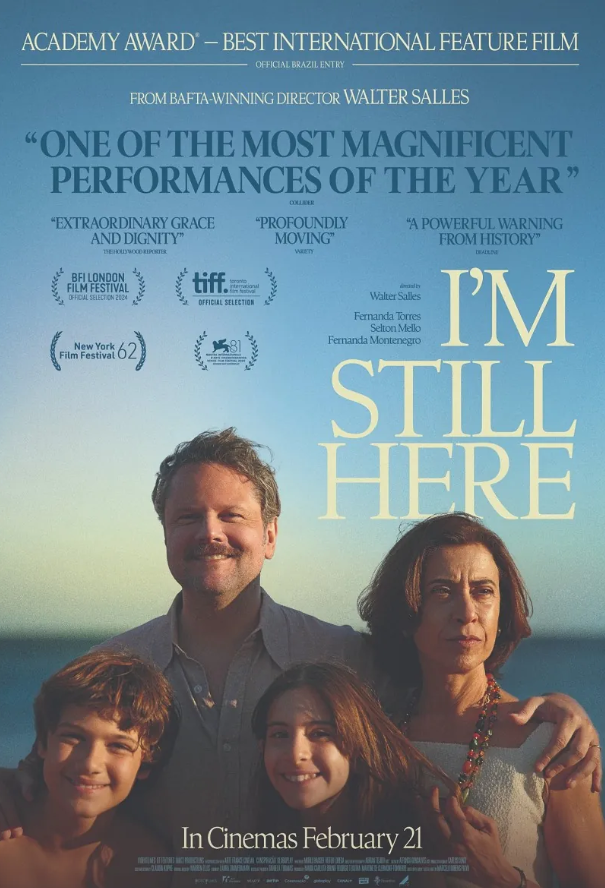
I'm Still Here [2024]

 Memorable films and books hinged around enforced disappearances of political dissidents, which was frequent under military dictatorships in Latin America, interweave the personal and the collective, with one informing the other. I’m Still Here, Walter Salles’ haunting and intimate tale of loss, defiance and solidarity, touched upon a brutal national wound through one family’s story. Adapted from Marcelo Rubens Paiva’s memoir, and imbued with the director’s own memories, it focussed on the well-off, progressive and politically engaged Paiva family on the despairing backdrop of Brazil’s repressive military dictatorship. Rubens (Selton Mello) – civil engineer, former Congressman and secret supporter of left-wing resistance activities – was arrested, tortured and killed by the authorities, though his status remained officially “unknown” until his wife Eunice (Fernanda Torres), who became a lawyer at the age of 47 and an activist championing victims of the dictatorship, secured his death certificate twenty-five years later. The film began on a buoyant note as we see this family – which also comprised of their four lively kids, living in a beach-side house in Rio Janeiro, and regularly visited by friends – with hints to the troubling political situation that turns into a backlash upon a Swiss diplomat’s kidnapping. The narrative, therefore, was broken into a “before” and an “after” as we see Eunice – who herself was illegally detained for 12 days – having to uproot her family and provide for it while doggedly pursuing Rubens’ disappearance. Accompanied by an engrossing soundtrack from the 60s and 70s, and powered by a towering central turn by Torres, this luminously shot and classically framed film reminded me of Cuarón’s Roma, which too was exquisitely foregrounded on a closely-knit family on the backdrop of political tyranny.


Director: Walter Salles

Genre: Drama/Historical Drama/Political Drama/Docudrama/Family Drama

Language: Portuguese

Country: Brazil

Wednesday, 23 October 2024

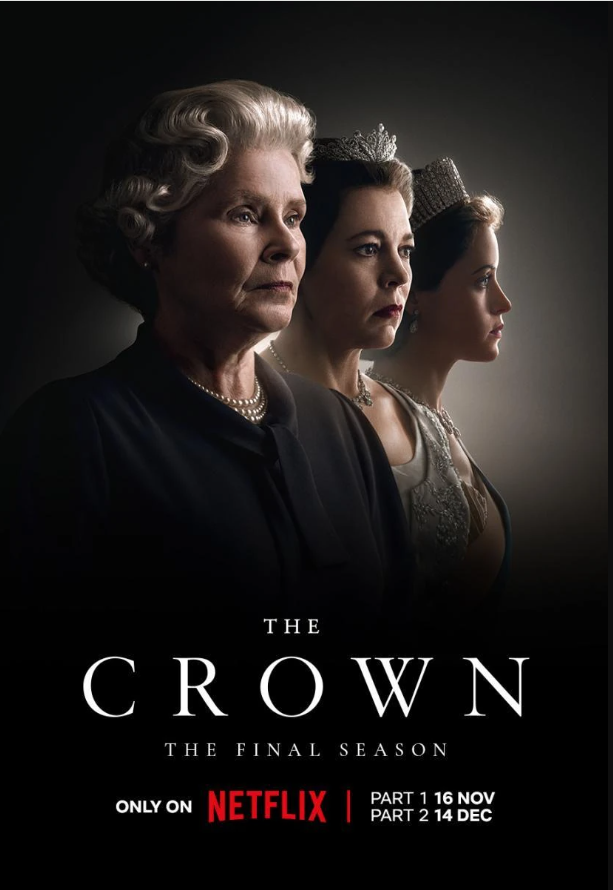
The Crown [2016-2023]

 The journey from being decidedly sceptical about watching The Crown to being left mesmerized by it was an exhilarating one. Though not an exceptionally long series per se, it achieves a formidable colour when one takes into account that it intricately covered six decades of British history, complex political forces and social happenings, and a staggering multitude of events and people. Hence, instead of a conventional summation, it’s perhaps more prudent to highlight few aspects that made this a TV phenomenon. First, and foremost, this was anything but a hagiography or a simple history lesson; rather, it was charged, edgy and turbulent on one hand, and delicate, layered and nuanced on the other, while boldly diving into moral turpitudes and quandaries. Second, it was a gripping portrayal of the “royal family” as a dysfunctional, bickering, self-centred and over-privileged group of people with skeletons in their closets and nasty machinations up their sleeves, while also evolving with the years – both willingly and otherwise. Third, the show’s creator went for a crazy gamble by casting different actors for the same characters at different times, given the narrative’s stunning temporal arc, and that played off superbly; each actor brought in something remarkable while also ensuring continuity. Fourth, it was packed with magnificent performances; the seven actors who I found most shattering were Claire Foy as Elizabeth (Seasons 1-2), Vanessa Kirby as Margaret (S1-2), Alex Jennings as Edward (S2, S5), Josh O’Connor as Charles (S3-4), Emma Corrin as Diana (S4), Lesley Manville as Margaret (S5-6), and Salim Daw as Mohamed Al-Fayed (S5). Fifth, and definitely not the last, the larger tapestry was exquisitely interwoven through meticulously mounted episodes, many of which were extraordinarily powerful; “Fagan” (S4), which recalled the bleak Thatcherite dystopia in Leigh’s Meantime, “Fairytale” (S4), where Diana roller-skates in Buckingham Palace and jives to ‘Edge of Seventeen’, ‘Tywysog Cymru’, where Charles is drawn into Welsh history, “Aberfan” (S3), centred on a colliery disaster, and ‘Vergangenheit’ (S2), that delved into the monarch’s Nazi links, were my personal favourites (in that order).


Created By: Peter Morgan

Genre: Drama/Historical Drama/Family Drama/Marital Drama/Biopic/Epic

Language: English

Country: UK

Saturday, 7 September 2024

Christ Stopped at Eboli [1979]

 Christ Stopped at Eboli, Francesco Rosi’s sublime adaptation of Carlo Levi’s celebrated memoir, was composed as much as elegiac memories of enforced exile, as it was crafted as probing field notes on people existing in the margins. Through these parallel routes – informed by Levi’s personal impressions, political consciousness, and ethnographic meditations borne out of curiosity and empathy, and that unfolded through a series of loosely strung vignettes and anecdotes – it emerged as a document both specific in its context and timeless in its eloquence. Levi, a qualified doctor, left-wing intellectual and anti-fascist activist based in Turin, used his passion for painting as a front for his political resistance against Mussolini. Upon being arrested for his dissidence, he was banished to a remote town in remote southern Italy. While residing there from 1935 to 1936 – his exile was cut short upon the country’s successful invasion of Ethiopia – he witnessed impoverishment, disenfranchisement, diseases, superstitions and ancient customs. Despite the arid, desolate and alienating environs – poetically captured in washed-out colours – he got enmeshed into the community, participated in discussions, renewed his long-severed tryst with medicine, captured the place through his paintings, and even developed a sensuous relationship with a promiscuous cleaning woman (Irene Papas), leading to a rich understanding of the irreconcilable North-South divide. Rosi’s observational style provided the perfect counterfoil to Gian Maria Volontè’s immersive turn as the soft-spoken yet fiercely perceptive Levi, in this eloquent, essayistic study. The opening sequence, languidly cataloguing Levi’s gigantic journey via multiple transportation modes, during which he befriends an abandoned dog, was particularly memorable. The locale, premise and overarching theme, incidentally, heavily reminded me of Kiarostami’s The Wind Will Carry Us, their tonal departures notwithstanding.


Director: Francesco Levi

Genre: Drama/Historical Drama/Biopic

Language: Italian

Country: Italy

Monday, 1 July 2024

The Pigeon Tunnel [2023]

 A meeting between renowned American documentarian Errol Morris – his examination of the slippery nature of truth, by sifting through deceptive non-truths, has been a running theme in his filmography, and most famously touched upon in his canonized work The Thin Blue Line – and celebrated British spy novelist David Cornwell – who, through his best-selling books pseudonymously written as John le Carré, had repeatedly delved into the subversion and obfuscation of truth – was, on paper, a match made in heaven. Furthermore, Cornwell sat for this rare interview just prior to his death on Morris’ behest, thus enabling this momentous rendezvous. However, for anyone who’s read le Carré’s enticing and engrossing memoir The Pigeon Tunnel, there was unfortunately nothing new in this partial transliteration of that marvellous volume. While the book, through droll irony, had audaciously cut across through myriad fascinating anecdotes from the writer’s eventful life, Morris probed predominantly into one specific aspect only, viz. Cornwell’s complex relationship with his father Ronnie – a compulsive career conman who was perennially on the run – which remained the great unresolved equation in his life. While that served as terrific material, made all the more arresting by his sardonic and surprisingly candid articulation of that difficult chapter from his life, Morris kept stopping short of provoking new memories and revelations beyond what Cornwell had already let loose in his memoir. While, in a captivating stylistic choice, the author’s responses were juxtaposed with footage from four highly reckoned adaptations (Martin Ritt’s haunting The Spy Who Came in from the Cold, and the three acclaimed BBC miniseries Tinker Tailor Soldier Spy, Smiley’s People and A Perfect Spy), dramatizations and overemphasis of the title’s meaning, however, felt tepid.


Director: Errol Morris

Genre: Documentary/Biopic

Language: English

Country: UK

Tuesday, 5 March 2024

Lucky Luciano [1973]

 Rosi’s terrific film Lucky Luciano – with its rigorous aesthetic palette, overarching thematic preoccupations and an overriding sense of mundaneness that made it radically antithetical to the gangster genre – released between Coppola’s epic and baroque gangland sagas The Godfather and The Godfather: Part II. No wonder, it didn’t receive the attention that it should’ve, even though it was as riveting and stylistically flamboyant as anything that he’d made. Like his masterworks Salvatore Guiliano and The Mattei Affair, this too was a boldly kaleidoscopic piece of investigative and political filmmaking centred on actual, ferocious and powerful Sicilian men – where sequences freely segued from one timeline and location to another – thus connecting them into a cinematic trilogy. Furthermore, like those films, we see “Lucky” Luciano (Gian Maria Volonté in a exquisitely restrained turn) – the formidable “boss of bosses” who, upon being exiled to Italy by the US, set-up a sprawling international empire – and are informed of the political contexts that enabled his rise and presaged his death, without any intimate peeks into him whose bespectacled, unassuming and routine-bound nature, ironically, belied his mythic persona. This grand indictment of the US’ Machiavellian political machinations, which enabled the rise of the Mafiosi only for it to become a Frankenstein’s Monster, also starred Rod Steiger as a loquacious informant and – continuing Rosi’s love for “authentic” casting – Charles Siragusa, the American narcotics agent who’d relentlessly pursued Luciano, as himself. While shot like a journalistic docudrama, it veered briefly for a hypnotic, breathtaking and operatic montage – recalling The Godfather, albeit near the beginning itself – that dizzyingly intercut between the clinical elimination of all his rivals on the same day that Luciano had orchestrated and his celebratory dinner.


Director: Francesco Rosi

Genre: Drama/Crime Drama/Historical Drama/Gangster Movie/Biopic

Language: Italian

Country: Italy

Saturday, 2 March 2024

The Mattei Affair (Il Caso Mattei) [1972]

 Rosi made dazzling use of a polyphonic, multi-perspective and non-linear form in The Mattei Affair – recalling his landmark film Salvatore Guiliano – which made it an exhilaratingly kaleidoscopic biopic, thrilling piece of investigative journalism and complex historical document rolled into one. He counterpointed documentary realism with the riveting tempo of a conspiracy thriller, and walked a delicate line between questioning official verdicts while avoiding populist postulations, which combined to make this astonishing work a formally audacious exercise and a seminal example of political filmmaking. At the core of its intricately orchestrated tapestry was the towering figure of Enrico Mattei – played with electrifying charisma by Gian Maria Volonté – a former anti-fascist partisan who’d been tasked with dismantling the ailing Mussolini-era petroleum agency AGIP after WW2, but instead converted it into the gigantic behemoth ENI which came to rival the Big Oil oligopoly, and made him an immensely influential business magnate and public figure. He radically challenged the status quo by brokering deals with Soviets, Arabs and Africans; he was openly critical of French colonialism in Algeria; and his allegiances cut across Italy’s political spectrum. Consequently, when his private plane mysteriously crashed in 1962 – which formed its starting point and around which it hinged – anyone from the CIA and OAS to the Mafiosi could’ve engineered the alleged sabotage. As a discomfiting afterword, journalist Mauro De Mauro, who was investigating into Mattei’s death in 1970 on Rosi’s behest, disappeared too, further indicating a cover-up. Interestingly, this vividly shot and ominously scored film shared that year’s Palm d'Or with Elio Petri’s downbeat The Working Class Goes to Heaven, another political film that had Volonté in the lead and became obscure despite the coveted prize.


Director: Francesco Rosi

Genre: Drama/Political Drama/Historical Drama/Biopic

Language: Italian

Country: Italy

Saturday, 3 February 2024

The Confession [1970]

 The Confession, Costa-Gavras’ follow-up to his pulsating masterpiece Z, couldn’t be more dramatically contrasting in form, tone and milieu. Yet it was bound to the preceding smash hit as well the electrifying next film State of Siege, in that this formidable trilogy catalogued judicial overreach and abuse of power by the state against those it construed as political dissidents, and was bolstered by Yves Montand’s charismatic presence. Harsh, harrowing and disorienting, and yet also gripping and darkly irony, this edgy and compelling film made no bones about the filmmaker’s disdain for Stalinist totalitarianism and excesses despite his steadfast leftism. This crucial nuance was also underlined by association of multiple other people on the left in different capacities – actors Montand and Simone Signoret, writer Jorge Semprún, Chris Marker who served as still photographer during production, etc. – even though it inevitably evoked sharp political reactions. Based on Czechoslovak communist veteran Artur London’s memoirs L’Aveu, it chronicled his sudden arrest, long stretches of dehumanizing torture and deliberate manipulation into self-incriminating confession – on charges of Trotskyism, Titoism and Zionism – and thereafter the Slánský show trials he was made to stand along with many others; these, despite his past involvements in Spanish Civil War and French anti-Nazi Resistance, his internment in Mauthausen concentration camp, and his long-standing party position. Montand’s remarkable performance – he lost twenty-five pounds for the role – was matched by Gabriele Ferzetti as a hideously cunning interrogator, while the film’s bleak mood and claustrophobic spaces were impressively captured through washed out images by Raoul Coutard. Gavras’ political voice was matched by his narrative brilliance, in how he often jumped back and forth in time, invoked collective memory and demonstrated the underlying farce.


Director: Costa-Gavras

Genre: Drama/Political Drama/Historical Drama/Biopic

Language: French

Country: France

Friday, 26 January 2024

Salvatore Giuliano [1962]

 In the annals of landmark political filmmaking, Salvatore Guiliano – the scintillating film that established Marxist and post-neorealist filmmaker Francesco Rosi as one of the most electrifying voices of post-War Italian cinema – remains a work of piercing analytic brilliance, formal bravura and blazing ferocity. Having earlier assisted Visconti on La Terra Trema and Senso, he combined visceral realism, remarkably dialectical approach, and uncompromising diagnosis of historical artefacts into a thrilling piece of investigative journalism that provided a scalding examination of the rotten state of affairs perpetuated by the government, army, police, Mafiosi, feudal class and law – foregrounded in Sicily’s gritty sociopolitical landscape – that first led to the titular outlaw’s phenomenal rise in power and popularity, and thereafter the massive manhunts that eventually led to his death and posthumous trial. Instead of a classical approach, Rosi adopted a dazzling multi-perspective form – reminiscent of Citizen Kane, Rashomon and Peruvian writer Llosa’s magnificent novel The Real Life of Alejandro Mayta – for a powerful inquiry into corruption, complicity and expediency, and in turn deconstruction of the Sicilian bandit’s life, death and myth. Rosi crafted this complex, clinical and non-linear mosaic, and forensic diagnosis, with a mostly non-professional cast – as desperado, partisan, hired-hand, fugitive – and filmed in the same locations where Guiliano’s meteoric persona unfolded, through magnetic B/W palettes that evoked a striking sense of here-and-now. In a fascinating artistic choice, we hardly ever see Giuliano; yet, the enigmatic desperado’s shadowy presence pervaded every episode, including his enlisting for Sicily’s secessionist ambitions, his repute among the poor for his antagonistic persona vis-à-vis the oppressive carabiniere, his noxious participation in the massacre of Sicilian communists, and the power structure’s turbid, tangled and malleable links to him.


Director: Francesco Rosi

Genre: Drama/Historical Drama/Biopic/Docudrama

Language: Italian

Country: Italy

Wednesday, 25 October 2023

The Fabelmans [2022]

 The gold standard for autobiographical cinematic representations of directors’ coming-of-age as cinephiles and their journeys into filmmaking – across films à clef and docu essays/diaries – would include Truffaut’s The 400 Blows, Mészáros’ Diary Trilogy (Diary for My Children, Diary for My Lovers, Diary for My Father and Mother), Mekas’ Lost, Lost, Lost, Varda’s The Beaches of Agnès, etc. Spielberg’s The Fabelmans, as a love letter to the movies, ode to discovering one’s life-long passion, in seeing the world through the camera’s lens, and the myth making capacities of this medium – alongside its quirky humour, self-effacing tone, tender personal anecdotes, and cinema’s ability to display alternative realities – aimed for the afore-mentioned echelon. The brilliant meta reference evoked through a home video that the protagonist makes – fun and bonhomie in the released version vis-à-vis discomfiting forebodings in the director’s cut – was its most representative moment. It was also, however, marked by sentimental approach, largely sanitized exploration of topical particularities – with rare incursions into political contexts – and whimsy intended at easy likeability; and these undid its lofty ambitions. It began with Sammy – Spielberg’s deadpan alter-ego – literally crashing into the world of movies upon seeing Cecil B. DeMille’s The Greatest Show on Earth with his dad Burt (Paul Dano), a low-key guy and brilliant computer engineer, and mom Mitzi (Michelle Williams), a deeply temperamental woman and trained pianist. The gradual marital unravelling of his parents – accentuated by physical dislocations and Mitzi’s falling for Burt’s friend (Seth Rogen) – provided an engaging parallel track to Sammy’s obsessive immersion into filmmaking. The film’s standout turn belonged to Williams, and comprised of two striking cameos – by Judd Hirsch as Sammy’s eccentric granduncle and David Lynch as John Ford.


Director: Steven Spielberg

Genre: Drama/Family Drama/Biopic/Film a Clef/Coming-of-Age

Language: English

Country: US

Tuesday, 17 October 2023

All The Beauty And The Bloodshed [2022]

 The celebrated photographer Nan Goldin’s fascinating life has been one of profound personal tragedies, furious defiance, feminist agency, civil disobedience, queer experiences, eclectic underground and counterculture associations, and active participation in anti-establishmentarian communities. These, in turn, influenced her art – which was, at once, gritty, non-conformist, political, sexual, powerful, and above all, intensely personal – and shaped her activism. Laura Poitras’ magnetic documentary All the Beauty and the Bloodshed – filled with urgency, ferocity, angst, immediacy and formal fluidity – captured Goldin’s polychromatic shades through a blend of thrilling reportage, freewheeling memoir, vivid art exhibits, engrossing zeitgeist and melancholic reflections. That Poitras herself has fearlessly critiqued the state machinery and defied the system with her documentaries – which too have existed at the crossroads of art and activism – paved way for a symbiotic collaboration between the two women. It’s a matter of marvel that the different elements of the mosaic combined with such lucidity despite so much ground that it covered – the repressive familial and suburban milieu in which Goldin grew up; the haunting memories of her sister’s suicide; her dizzying friendships with rebellious individuals, radical artists and social misfits living on the margins; her experimentations with drugs, sexuality and subaltern circuits; her journey as a trailblazing artist who merged avant-garde form and subversive undercurrents with rare intimacy; her addiction to Oxycontin that nearly killed her; and her blazing activism to bring the hideous Sackler family to account for their culpability in the opioid epidemic. The protests that she led at the Met, Guggenheim and Louvre – for taking donations from the Slackers and naming galleries after them – provided for rousing moments, as did her dazzling photographic installations accompanied by terrific music hand-picked by Goldin.


Director: Laura Poitras

Genre: Documentary/Essay Film/Biopic

Language: English

Country: US

Saturday, 9 September 2023

Nelly & Nadine [2022]

 Swedish documentarian Magnus Gertten’s remarkable found footage film Nelly & Nadine didn’t just tell an extraordinary story of queer love, social defiance, resilience in the face of dehumanizing persecutions, and preservation of memory, it had a fascinating backstory too. He’d been obsessed, since 2007, with a grainy reel of women Holocaust survivors arriving in Sweden on 28th April, 1945 – where, among a gang of joyous and cheerful faces, there’s a lady bearing a solemn, perplexed expression – and which featured in two of his prior works. While he’d been able to identify most of the people in it, the last remaining puzzle finally fell into place during a screening of his previous film that was serendipitously attended by a middle-aged French women called Sylvie Bianchi. As it turned out, Bianchi’s late grandma – Nelly Mousset-Vos, Belgian opera singer and former member of the French Resistance – had been in a passionate relationship with that enigmatic woman, who, as it emerged, was Nadine Hwang, the daughter of a Chinese diplomat and iconoclastic gay feminist Natalie Barney’s lover before the War. The two met and fell in love in the ghastliest place imaginable – the Ravensbrück concentration camp – and, upon liberation, they reconnected couple of years later and emigrated to Venezuela where they lived together in sublime bliss for many years. Gertten stitched the canvas with delicacy and through a disarmingly complex polyphonic form – Nelly’s profoundly intimate diary entries, infectious Super 8 home videos shot by Nadine, personal reminiscences of Nelly’s genial granddaughter (with whom the archive had remained unopened for many years), and other historical artefacts and interviews. Aesthetic sparseness, lyrical narration, and evocative score splashed this haunting docu with warmth, depth and melancholy.


Director: Magnus Gertten

Genre: Documentary/Essay Film/Holocaust Film/Biopic

Language: Swedish/French/English/Spanish

Country: Sweden

Wednesday, 16 August 2023

Oppenheimer [2023]

 Oppenheimer – contrary to my apprehensions of muscular and/or hagiographic account of a man who’d helped engineer war crimes and precipitate global arms race – was a thematically dense, formally dazzling and deeply bleak film which was antithetical to a conventional biopic, deconstructive of a dark chapter in 20th century history, and riveting political thriller with a surprisingly level-headed portrayal of leftism in America alongside feverish examination of individual and collective hubris. Nolan demonstrated his fascination with temporal fluidity in cinema by crafting a work at once monumental and intimate, through a Cubist structure – Picasso’s Guernica, incidentally, is eloquently referenced near its beginning – that kept zooming in and out, and rigorously progressed along interlocking timelines. It was a bold audiovisual exercise too, in its experimentations with colour and monochrome, aspect ratios, depths of field, and interplay of diagetic/non-diagetic sounds. The film’s stylistic bravura boldly complemented the multifaceted decomposition of its complex protagonist, enacted with searing intensity by Cillian Murphy. He was leftist and antifascist – his brother Frank, wife Katherine (Emily Blunt) and troubled former girlfriend Jean Tatlock (Florence Pugh) were card-carrying Communists; many of his Manhattan Project colleagues had left-wing affiliations; he’d contributed to Spanish Civil War causes through Communist channels, etc. – and yet collaborated with the American military and industrial machineries that were fervidly conservative; further, he became “father of the atomic bomb”, the concentration and proliferation of which he subsequently dissuaded. The parallel narratives chronicled his university days, Los Alamos, McCarthy witch-hunts orchestrated by Lewis Strauss (Robert Downey Jr.)., and guilt. He’d crossed paths with the who’s-who of scientific giants of his time, which the film mirrored through an all-star cast, comprising also of Matt Damon, Kenneth Branagh, etc.


Director: Christopher Nolan

Genre: Biopic/Political Drama/Political Thriller/Historical Drama/Psychological Drama/Epic

Language: English

Country: US

Friday, 11 August 2023

The Fire Within: A Requiem for Katia and Maurice Krafft [2022]

 Werner Herzog, in The Fire Within, didn’t intend to make either a conventional biography or a straightforward hagiography of eminent French volcanologist couple Katia and Maurice Kraft. His objective, rather, was to compose a personal interpretation of their legacy, by resorting to the stunning archive of footage and photos that they’d left behind prior to their demise in 1991 (they were both killed by the pyroclastic flow from Mount Unzen in Japan). The result was a fierce and enrapturing essay filled with brooding atmosphere, ironic observations (delivered by Herzog in his customary deadpan voiceover), idiosyncratic moments, and breathtaking visuals. The narrative provided a fascinating peek into the Krafts’ transition over the years from wannabe scientists who recorded their experimentations in amateur home videos, dressed at times in oddball outfits to enable proximity to high temperatures, to grand filmmakers who – as Herzog quipped – “were shooting a whole film about creation in the making… they just didn’t have enough time left to edit it” through mesmeric visuals that silently captured the ferocious power of volcanos, and even quirky humanists deeply invested in the devastating human, sociological and ecological impacts of volcanos. The couple’s captivating journey and their shared, unwavering obsession with this frightening force of nature was bookended on either side by reportage on their fateful trip to Japan, while in between we see their visits to diverse places – Italy, Iceland, Hawaii, Alaska, Indonesia, Colombia, etc. – in their quest for fire and love, including a couple of truly near misses. As an interesting aside, 2022 saw another well-received documentary on the Krafts, Fire of Love by Sara Dosa, while Herzog himself had earlier made one on active volcanos, Into the Inferno.


Director: Werner Herzog

Genre: Documentary/Essay Film/Biopic

Language: English

Country: US

Saturday, 27 August 2022

Judas and the Black Messiah [2021]

 There’s a constant interplay between scalding anger and understated melancholy running through Shaka King’s furious, electrifying, fiercely evoked, meticulously researched and marvellously told feature debut Judas and the Black Messiah, and rightly so. It captured the grotesquery that the establishment committed under the guise of “threat to internal security of the country” – in essence a manifestation of systemic racism and systematized governmental overreach – through the real story of incessant intimidations, false arrests and ultimately murder of Fred Hampton, Chairman of the Illinois chapter of the Black Panther Party, by the FBI. And, ironically, they achieved their nefarious objective by planting William O’Neal, a car thief turned FBI informant, in their midst in order to rat on Hampton and the Panthers, and thereafter betray him, in lieu of money and protection from prosecution. Daniel Kaluuya who played the charismatic, indefatigable and extraordinarily progressive 21-year-old revolutionary Hampton – who believed in social welfare, justice for black communities, and raising political consciousness of the working class, and could deliver rousing speeches – with superb panache, vigour and power, and Lakeith Stanfield who played the shifty, slippery and conflicted O’Neal with the cunning charm of a chameleon, were both excellent in this gripping work laced with political prescience, moments of tenderness and vulnerability, and exquisitely composed atmosphere. Jesse Plemons as O’Neal’s FBI handler and Dominique Fishback as Hampton’s girlfriend and fellow BPP activist Deborah Johnson provided noteworthy supporting turns, as did others. That King, instead of taking a straightjacketed approach, structured the film like a thriller – even if it’s tragically predestined – and chronicled it through the dual perspectives of its two dramatically divergent men, made this so much more layered, complex, authentic, dismaying and compelling.


Director: Shaka King

Genre: Drama/Political Drama/Biopic

Language: English

Country: US

Sunday, 21 August 2022

Everything Went Fine [2021]

 It’s really something to marvel at that a film, on subjects as heavy, brooding and serious as old age, mortality and assisted suicide, could so refreshing, humorous and bereft of sentimentality, and more so, considering François Ozon’s penchant for bleak and unsettling movies. Adapted from the Emmanuèle Bernheim’s memoir who’d earlier written screenplays for Ozon’s Swimming Pool and the especially downbeat 5x2, Everything Went Fine – the wry and deadpan irony of the title becomes clear only at the end – seamlessly laced grief, pain and loss with disarming levity into a bittersweet work. The wealthy and retired businessman André (André Dussollier) – very well connected socially on account of being an art collector, but having complicated relationships with his dementia-stricken and separated sculptress wife (Charlotte Rampling), and his two daughters Emmanuèle (Sophie Marceau) and Pascale (Géraldine Pailhas) on account of his acid-tongued nature and homosexuality – finds his life turned into shambles upon suffering a debilitating stroke. Unable to bear such an existence, he literally demands his favourite Emmanuèle – who, in turn, has always had a complex love-hate bond with him – to help him die. That isn’t just an emotionally wrenching ask, but a legally challenging one too as they need to surreptitiously take help of an expensive Swiss facility administered by a soft-speaking lady (legendary German actress Hanna Schygulla in a cameo) to avoid getting arrested by the police. Marceau was both striking and brilliant as the conflicted woman who as a kid wished for her dad to die and now, ironically, must facilitate that – not because she wants to, but because she can’t say no to him – while Dussollier was surprisingly effective as the obstinate, difficult, mercurial and entitled father.


Director: Francois Ozon

Genre: Drama/Family Drama/Biopic

Language: French

Country: France