Showing posts with label 2010s. Show all posts

Friday, 9 January 2026

One or Two Questions [2018]

 The wave of military dictatorships that spread through Latin America during the 20th century, competed with one another on state-sponsored repression, human rights abuses, extra-judicial punishments, and most notably, enforced disappearances. The one that ruled Uruguay for over a decade – it began with the 1973 coup d'état and brutal crackdown on the Marxist-Leninist Tapamaros, and finally ended in 1985 following massive demonstrations and strikes – was no less draconian. Hence, when an amnesty law was passed by the government in 1986, shielding the armed forces from prosecutions, it inevitably led to widespread protests by the civil society and human rights groups against it, which ultimately paved the way for a country-wide referendum in 1989. This remarkable 4-hour-long documentary – shot between 1987 and 1989 on the streets of Montevideo and neighbouring towns and villages; and finally released nearly 3 decades later – provided a rare glimpse of the wheels of democracy and the voice of journalism in action as the event, and associated political forces, unfolded. Two journalists, María Barhoum and Graciela Salsamendi, interviewed multiple everyday folks for Swiss television – both those favouring the amnesty, for reasons ranging from fascist beliefs, apologia and apathy to underlying fear of fresh retributions, and those steadfastly opposing it – and the recorded footage was edited by globetrotting Swiss documentarian Kristina Konrad into this 4-hour-long reportage on the shifting meanings of “peace” and “justice”, and a nuanced investigation into political trauma, anger and amnesia. The interviews were interspersed with electoral television commercials from that period, which added ironic qualities to the engrossing audio-visual collage. The docu remains part of an ever-growing pantheon of powerful Latin American political documentaries and films connected by their shared refusal to forget.


Director: Kristina Konrad

Genre: Documentary/Essay Film/Political History/Reportage

Language: Spanish

Country: Uruguay

Friday, 7 November 2025

Twin Peaks [1990-91, 2017]

 Twin Peaks – the surrealist, grisly, horror, mystery, campy and goofy soap opera that David Lynch co-created with Mark Frost – was a surprise hit when it premiered in 1990, and became a pop-culture phenomenon with a cult following despite its eccentric, outlandish and bizarre plot elements. The first season – arguably the highest-point in the series – opened with the murdered body of the beautiful but troubled high school student Laura Palmer (Sheryl Lee) in the tranquil town of Twin Peaks. It followed, on one hand, the murder investigation led by the incorrigibly optimistic and doggedly persuasive FBI Agent Dale Cooper (Kyle MacLachlan) supported by the local Sheriff, and on the other, the private affairs, sly ploys and nefarious machinations of the town’s offbeat residents which included corrupt businessmen, impassive cops, mad psychiatrists, punks, drifters, and striking damsels (Lara Flynn Boyle, Sherilyn Fenn, and Joan Chen), along with teasing forays into alternate realms. The longer second season concluded the investigation, and then took the plot forward. With the broader narrative scope, it succeeded in being more playful, madcap and adventurous, while also stepping the gas too much on occasions on silly humour and psychedelic excesses. Though the second season ended on a cliffhanger note, and Lynch followed it immediately with the gripping prequel feature Twin Peaks: Fire Walk With Me, it was a whopping 2 ½ decades before a much-awaited third season finally arrived. Largely bereft of the campy Americana and soap opera elements of the earlier seasons, this alternately arresting, ingenious and exasperating season – filled with multiple parallel plots, interludes and detours, alongside both returning and new cast members – took the narrative forward, backwards and sideways into a bonkers, mind-bending trip.


Director: David Lynch

Genre: Series/Crime/Mystery/Comedy/Horror/Thriller/Drama

Language: English

Country: US

Thursday, 24 July 2025

Certified Copy (Copie Conforme) [2010]

 With Certified Copy, the great Abbas Kiarostami joined an exclusive group of non-francophone filmmakers like Buñuel, Kieślowski and Losey who made cinematic masterpieces in French. At once deliciously beguiling, seductively beautiful and disarmingly ingenious, this breathtaking exercise subtly channelled Rosellini’s Journey to Italy, the distinctive flavours of archetypal European arthouse cinema and his own marital disintegration, and echoed the futility of authenticity and originality, while ironically being a ravishingly original piece of work. It began like a dry essay – a form that Kiarostami had extensively partook in since his earliest days – with British writer James Miller (English opera singer William Shimell in a fine acting debut) introducing, at a gathering in Tuscany, the Italian translation of his eponymously titled book which posits the relevance of reproductions. After the lecture he meets the unnamed “Elle” (Juliette Binoche in an effortlessly triumphant turn) – a French woman and single mom who runs an antiques store selling replicas – and the two strangers decide to chat while exploring the charming locales. They initially drive and then stroll around, with their freewheeling and intelligent conversations bearing edgy undertones. The gently ambling narrative underwent a stunning pivot at a trattoria where they’ve stopped for coffee. The café’s matronly owner assumes that they’re a married couple, and they seemingly decide to participate in this charade. However, one soon starts wondering if they’re playacting or they’re indeed an estranged couple carrying years of differences, disappointments and bitterness. Magnificently shot in fluid long takes – a sequence where they’re driving with the gorgeous surroundings reflected on the windshield was especially captivating – this enigmatic and richly textured film delivered sharp reflections on both art and relationships over one sumptuous Tuscan afternoon.

p.s. This is a revisit. My earlier review of the film can be found here.


Director: Abbas Kiarostami

Genre: Romantic Drama/Marital Drama/Avant-Garde

Language: French/English/Italian

Country: France

Sunday, 19 January 2025

The Story of Film: An Odyssey [2011]

 At just over a century, cinema is, by some distance, the youngest of all major artforms; yet, it has evolved, expanded and shape-shifted so extraordinarily in its relatively brief history, that any attempts at chronicling its history is bound to be an exercise in audacity. Furthermore, when one realizes that it freely built upon multiple other artforms, and its progression has been as technical as cultural and political, one can also sense the sheer complexity of that endeavour. If one dizzying way to do that was Godard’s dense, metatextual and monumental video essay Histoire(s) du Cinéma, another diametrically opposite approach was Marc Cousin’s in The Story of Film. Running at 900 minutes, and covering around 1000 films across all 6 continents, this was no less ambitious. Further, by consciously spending considerable time on silent cinema, covering films from the “global south”, and complementing technical evaluations and historical details with highly personal views – even if they were dubious or superficial at times – Cousins made this much more idiosyncratic than what a more straightforward documentary would’ve been. Spread over 15 chapters, it covered an immensely wide spectrum – films made within and outside the studio system, films that’re canonical and those beyond the canon, popular and arthouse movies, films demonstrating technological developments as well as political contexts – which also made it episodic and engaging, even if this sacrifice of depth for breadth made it too cursory and thereby less rigorous. Notwithstanding Cousins’ exasperating diction and repetitiveness, one must admire his love for the medium, the stunning span of his focus, and the herculean efforts that he invested by interviewing diverse people and physically visiting numerous places during the course of its making.


Director: Mark Cousins

Genre: Documentary/History/Mini-Series

Language: English

Country: UK

Friday, 3 January 2025

A Man of Integrity [2017]

 Dissident Iranian filmmaker Mohammad Rasoulof’s slow-burn thriller A Man of Integrity – which he secretly made in defiance of the suspended prison sentence and ban on filmmaking that’d been imposed by the state – is a bristling Kafkaesque work that delivered a lashing critique of the corruption, authoritarianism and bureaucracy in the broader society. It did that by pitting a wronged working-class man against a powerful, crooked and intransigent system, thereby making it feel like a companion piece to Zvyagintsev’s terrific movie Leviathan, especially in their fatalist and desolate outlooks accompanied by scorching political undercurrents. The man referred to by its title is Reza (Reza Akhlaghirad), a hot-headed, stubborn and principled man – a prickly combination even on a good day, but more so if you’re financially struggling, without any influential connections and residing in a place where due processes are thoroughly subverted – who displays the temerity to stand for his rights. He runs a small fish farm that he refuses to sell off, owes debts that he decides to address by the book, and gets into a fight with the brutish enforcer of the company that has its sights on his land upon realizing that his water is being deliberately poisoned. That’s just the beginning of his problems as he and his wife – Hadis (Soudabeh Beizaee), the school headmistress and an eloquent woman who stands by her husband while also being thoroughly infuriated by his pig-headedness – find their lives spectacularly falling apart. That’s when he decides to strike back and exact revenge for the injustices, which is inevitably at a heavy price. The tense and moody atmosphere made this grim parable, bursting with fury and dissent, a charged and gripping work.


Director: Mohammad Rasoulof

Genre: Drama/Thriller

Language: Persian

Country: Iran
Wednesday, 23 October 2024

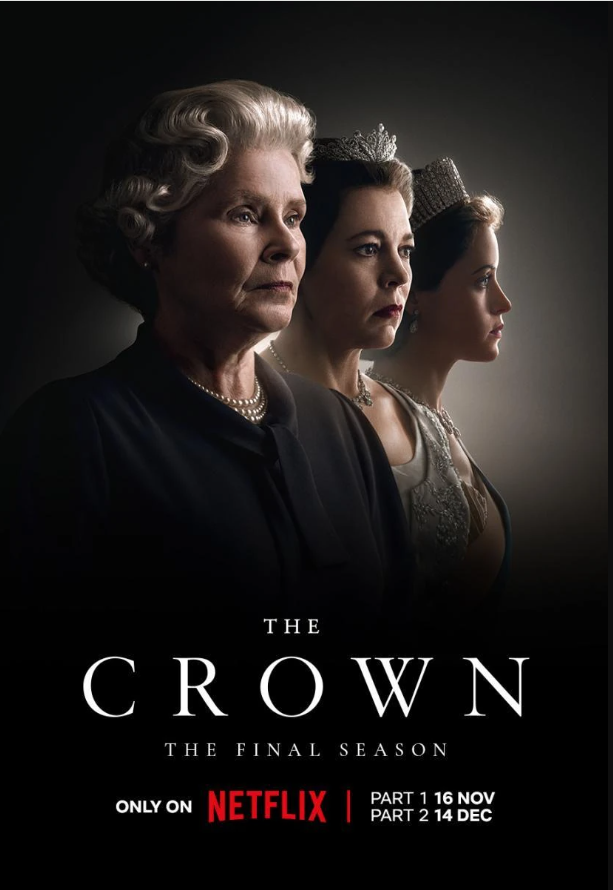
The Crown [2016-2023]

 The journey from being decidedly sceptical about watching The Crown to being left mesmerized by it was an exhilarating one. Though not an exceptionally long series per se, it achieves a formidable colour when one takes into account that it intricately covered six decades of British history, complex political forces and social happenings, and a staggering multitude of events and people. Hence, instead of a conventional summation, it’s perhaps more prudent to highlight few aspects that made this a TV phenomenon. First, and foremost, this was anything but a hagiography or a simple history lesson; rather, it was charged, edgy and turbulent on one hand, and delicate, layered and nuanced on the other, while boldly diving into moral turpitudes and quandaries. Second, it was a gripping portrayal of the “royal family” as a dysfunctional, bickering, self-centred and over-privileged group of people with skeletons in their closets and nasty machinations up their sleeves, while also evolving with the years – both willingly and otherwise. Third, the show’s creator went for a crazy gamble by casting different actors for the same characters at different times, given the narrative’s stunning temporal arc, and that played off superbly; each actor brought in something remarkable while also ensuring continuity. Fourth, it was packed with magnificent performances; the seven actors who I found most shattering were Claire Foy as Elizabeth (Seasons 1-2), Vanessa Kirby as Margaret (S1-2), Alex Jennings as Edward (S2, S5), Josh O’Connor as Charles (S3-4), Emma Corrin as Diana (S4), Lesley Manville as Margaret (S5-6), and Salim Daw as Mohamed Al-Fayed (S5). Fifth, and definitely not the last, the larger tapestry was exquisitely interwoven through meticulously mounted episodes, many of which were extraordinarily powerful; “Fagan” (S4), which recalled the bleak Thatcherite dystopia in Leigh’s Meantime, “Fairytale” (S4), where Diana roller-skates in Buckingham Palace and jives to ‘Edge of Seventeen’, ‘Tywysog Cymru’, where Charles is drawn into Welsh history, “Aberfan” (S3), centred on a colliery disaster, and ‘Vergangenheit’ (S2), that delved into the monarch’s Nazi links, were my personal favourites (in that order).


Created By: Peter Morgan

Genre: Drama/Historical Drama/Family Drama/Marital Drama/Biopic/Epic

Language: English

Country: UK

Thursday, 22 February 2024

The Wonders [2014]

 Italian filmmaker Alice Rohrwacher stitched together The Wonders with such deceptive simplicity, delicacy and lightness that it’s easy to miss the various elements interwoven into it. Balancing naturalism, lyricism, understated immediacy and observational approach with undertones of wry satire, social commentary and magic realism, she crafted a spare yet emotionally resonant coming-of-age story that unfolded against a fading way of life outside the grid. Her interlocking portrayal of familial chaos against a vividly sunny countryside, on the verge of violently unravelling, reminds one of such films as Lucrecia Martel’s La Ciénaga and Carla Simón’s Alcarràs; hardly incidental that all were helmed by women filmmakers adept at complementing ferocity with nuance, and political underpinnings with evocative intimacy. This last aspect was laced with additional meanings through its semi-autobiographical touches. Rohrwacher was born to German beekeeper father and Italian mother. The film’s adolescent protagonist Gelsomina (exceptionally performed by Alexandra Maria Lungu) – the introspective eldest of four sisters – similarly has a German beekeeper father in the form of the brusque and irritable Wolfgang (Sam Louwyck), who’s fiercely adamant of retaining their austere lifestyle and agricultural purity borne out of his deep distrust of modernization and consumerism, and a loving if frazzled Italian mother (played, interestingly, by Alice’s elder sister Alba Rohrwacher). Their rural summer, spent collecting and processing honey with steadfast rigour, gets ruffled on account of two arrivals – a troubled German boy who’s taken in as temporary help, and a stunning buxom beauty (enacted with self-mocking irony by Monica Bellucci) spearheading a kitschy reality TV show patronizing and fetishising local culture that Gelsomina is hypnotized by. Hélène Louvart’s terrific soft-hued photography – anachronistically shot in 16mm – impregnated rich authenticity into the proceedings.


Director: Alice Rohrwacher

Genre: Drama/Family Drama/Coming-of-Age

Language: Italian

Country: Italy

Saturday, 18 February 2023

5 Broken Cameras [2011]

 ‘Personal is political’ and ‘political is personal’ were equally and ferociously relevant for the remarkable documentary 5 Broken Cameras every minute of runtime, and, in turn, Emad Burnat, the extraordinarily courageous and steadfastly dissident Palestinian man and possessor of what the title so evocatively alluded to. This defiant first-hand chronicle of the daily oppressions and injustices that Israel’s apartheid settler-colonial apparatus perpetrates against Palestine, is centred on the West Bank village of Bil’in where Israelis, through brute military force, have been forcibly occupying farmlands and bulldozing olive groves in order to build walls and settlements, and the fearless collective protests, civil disobedience and opposition that the town’s residents keep putting up despite endless arrests, abuse, violence, extra-judicial despotism and disillusionment. This daring work of political journalism and personal activism, therefore, is the very embodiment of ‘cinema of resistance’. In a fascinating mirroring of Kieslowski’s outstanding work Camera Buff, Emad bought his first camera in 2005 to make home videos on his fourth-born Gibreel, but ended up filming – over the course of the next 6 years – the encroachments, confiscations, destructions and devastations that Bil’in faced, and the valiant stand that they took in response. 5 of his cameras got damaged for different reasons – including a bullet hit that saved Emad’s life – but the footage that they recorded became a testimony to a video camera’s ability to transform into a blazing weapon of dissent. Made in collaboration with progressive Israeli filmmaker Guy Davidi, it also portrayed his family – in particular his wife of Brazilian descent and Gibreel who grows up amidst this turmoil – and his fellow participants in this struggle, especially two lion-hearted friends who’re always at the forefront of protests.


Directors: Emad Burnat & Guy Davidi

Genre: Documentary/Political Documentary/Diary Film/Essay Film/Activist Reportage

Language: Arabic, Hebrew

Country: Palestine

Tuesday, 27 September 2022

Better Call Saul [2015-2022]

 Breaking Bad, which earned immense fandom, plaudits and awards, was undeniably gripping; however, its spin-off prequel Better Call Saul – to let the cat out of the bag at the very outset – was even better. The creators, in an excellent creative decision, focussed here on the backstories of two secondary characters from the previous show – the hustling, loquacious and amoral lawyer Saul Goodman (Bob Odenkirk) in particular, and to a lesser degree the taciturn ex-cop turned enforcer Mike Ehrmantraut (Jonathan Banks) – and dramatically reworked the mood and scope while retaining elements which were at the forefront there. The resultant work was more psychologically nuanced, morally ambiguous, stylistically ambitious, and sprawling in its narrative arc. Odenkirk gave a truly outstanding performance as Jimmy McGill, former con-man and struggling lawyer who, over 6 marvellous seasons, transforms into a wealthy, crafty and flourishing lawyer through a mix of sheer will, ingenuity, impudence, street-smartness and willingness to cut corners. Banks evoked a droll persona, juxtaposing fierce loyalty, albeit for Gus Fring (Giancarlo Esposito) – the ruthless Chilean drug distributor for the cartel – with an indeterminate moral compass. Kim Wexler (magnificently played by the stunning Rhea Seehorn) – a virtuoso lawyer and a complex, enigmatic woman – formed a fascinating counterpoint to Saul. Among other memorable characters, Saul’s elder brother Chuck (Michael McKean), a renowned lawyer with psychological troubles; Lalo Salamanca (Tony Dalton), a conniving and charismatic Mexican drug lord; and Nacho (Michael Mando), a foot-soldier in the Salamanca gang, stood out. The series became darker, murkier and more engrossing as it progressed, reaching its apotheosis in the final season – set “after” Breaking Bad’s events and shot in bleak monochromes – which portrayed a lonely, broken and hunted Saul struggling to contain his natural instincts.


Creators: Vince Gilligan & Peter Gould

Genre: Drama/Crime Drama/Legal Drama/Black Comedy

Language: English

Country: US

Friday, 5 November 2021

Breaking Bad [2008-2013]

 Breaking Bad possibly ranks – alongside Sopranos and The Wire – as one of the most acclaimed American crime TV series of the last few decades, in terms of both popular and critical consensus. Though it took time to garner viewership – its creator Vince Galligan, in fact, had to pitch the idea to multiple networks before being hesitatingly accepted by AMC – by the time it concluded its run of 5 seasons, it was among the most watched, discussed and awarded television shows of all time. The distracting fandom/hype surrounding it aside, it does remain a smart, compelling, brilliantly written and superbly realized show that slowly grows on one thanks to its original, unconventional storyline – albeit using a frighteningly real scenario as its springboard –; blend of multiple genre elements – crime, black comedy, family drama, morality play, Western –; a protagonist who one roots for even though he transitions into a fiendish antagonist; and interjections of ingenuity, dark undercurrents, ethical wranglings and violence into an otherwise deliberately paced narrative. The basic premise involved middle-aged high school chemistry teacher Walter White (Bryan Cranston) – bitter, proud, overqualified, underpaid and suffering from mid-life crisis – who, upon being diagnosed with stage-three lung cancer, gets into crystal meth production and distribution in order to pay for his treatment and secure financial security for his family. Cranston displayed a gripping screen presence, and was ably supported by a fine support cast – notably his headstrong wife Skylar (Anna Gunn); emotionally vulnerable meth addict and Walter’s partner Jesse (Aaron Paul) with whom he shares a complex relationship; incredibly capable DEA agent Hank (Dean Norris); deceptively vicious druglord Gus (Giancarlo Esposito); unctuous, resourceful and hilariously crooked lawyer Saul (Bob Odenkirk), etc.


Directors: Vince Gilligan et al

Genre: Crime Drama/Western/Family Drama/TV Series

Language: English

Country: US

Wednesday, 13 October 2021

True Detective [2014, 2015, 2019]

 True Detective has been an arresting TV series in the way each season was akin to self-contained miniseries, while the overall HBO series – created by former literature professor Nic Pizzolatto – was connected by genre/sub-genre (crime drama, police procedural), complex narrative structure (labyrinthine, multi-linear plotting), tonal palette (downbeat, moody, atmospheric, brutal, slow-burn) and themes (institutional corruption, abuse of power, perpetuation of violence, the need to subvert the system for solving crimes). The series begun on a brooding, electric note with the first season – fabulously led by Woody Harrelson as a sincere, philandering detective with Louisiana State PD and Matthew McConaughey as his disturbed, brilliant partner – which involved gruesome, religious cult homicides chronicled along two parallel strands 17 years apart. The grimy but tad bloated second season – with a cast comprising of Colin Farrell as a self-destructive cop with a murky past; Rachel McAdams as a promiscuous, self-hating detective; Vince Vaughn as a mobster trying to go legit – felt closer to a gangster film despite the elements of murder and mystery, and end on a fatalistic note. And the beautifully paced, ambitiously delineated third season, which arguably remains the best of the lot despite the relatively lower viewership – with a superb performance by Mahershala Ali as a tenacious, conflicted Arkansas State PD detective; ably supported by Stephen Dorff as his loner partner and Carmen Ejogo as the former’s wife who becomes a narrative fiction writer with a voice of her own – dealt with a gruesome investigation into two missing kids that audaciously unravels over three timelines across 35 years. From the first season’s stunning opening credits till the third’s deftly underplayed finale, this series definitely deserves the plaudits it has garnered.


Directors: Nic Pizzolatto, Cary Joji Fukunaga et al

Genre: Crime Drama, Anthology, Series, Miniseries, Police Procedural

Language: English

Country: US

Sunday, 30 May 2021

The Little Drummer Girl [2018]

 Both BBC and Park Chan-wook were very well placed when it came to adapting John le Carré’s The Little Drummer Girl – the former because of their track record of highly acclaimed adaptations of his books into the miniseries format; the latter because of his prowess in weaving visceral, deliberately paced and intricately designed tapestries. The collaboration perfectly encapsulated the thematic nuances, psychological one-upmanship and grimy moral ambiguities that’ve come to define le Carré’s works. That the tale – one of role-plays, manipulations, infiltration, duplicity, betrayals, and tussle between militant idealism and cynical realpolitik – was centered on the bloody Israeli-Palestinian conflict during the murky Cold War era, made it all the more arresting. An underground Palestinian revolutionary cell – led by the enigmatic Khalil (Charif Ghattas) and his siblings – are carrying out assassinations targeting the Jewish diaspora in Europe, with the help of radical left-wing European lawyers, activists and students. Martin Kurtz (Michael Shanon), a veteran, Machiavellian Mossad spymaster, in retaliation, forms a crack team of covert operatives for a clandestine, extra-judicial mission to hunt down the elusive leader and liquidate the group. Two members play vital parts in the “theatre of the real” that he stages – Gadi (Alexander Skarsgård), a weary Israeli intelligence officer who’s increasingly on the edge for the noxious things he’s done for a living, and Charlie (Florence Pugh), a young, headstrong and vulnerable English theatre actress who’s lured into playing a central role and starts falling for Gadi. Though its glossiness and few convenient plotting gaps were tad distracting, Park’s expert direction, lack of conventional heroes or villains, moody atmosphere, smoldering tone, stunning vistas and especially commendable turns by Pugh and Skarsgård made this a gripping watch.


Director: Park Chan-wook

Genre: Spy Drama/Miniseries

Language: English

Country: UK