Friday, 7 August 2020

Mia Madre [2015]

A good film on filmmaking is so often more than just a self-reflexive portrayal – which can be arresting in itself – but an expression of the director’s aesthetic, formal, personal and political views and choices too. From Dziga Vertov’s Man with a Movie Camera, Keaton’s Sherlock Jr. and Wilder’s Sunset Boulevard, and Fellini’s 8 ½, Godard’s Contempt, and Truffaut’s  Day for Night, to Mrinal Sen’s Interview, Kieslowski’s Camera Buff, Kiarostoami’s Close-up and PTA’s Boogie Nights, to even Porumbiou’s When Evening Falls on Bucharest – the list is extraordinary and endless. Nanni Moretti’s warmhearted and wryly self-deprecatory film Mia Madre was also multiple things in parallel – viz. making not just a political film but also politically (to paraphrase Godard), amusing challenges of balancing artistic standpoints with commercial choices and even banality, the futility of compartmentalizing grief and existential crises, memory and mortality. It opened on a terrific note – filled with here-and-now and autocriticism – where Margherita (the stunning Margherita Buy), a well-known filmmaker, is directing an ambitious scene wherein protesting factory workers clash with the police; in a droll quip, she asks the the cameraperson whether she aligns more with the workers or the police on being suggested a zoomed shot of the clashes. Thereon the narrative branched into multiple parallel strands – frustrations on working with a hilariously egotistic American actor (John Turturro); coping along with her gentle-natured brother (played by Moretti himself) the imminent demise of their mother (Giulia Lazzarini), a retired professor of Latin; and renewing bonds with her teenage daughter. Though Turturro’s turn bordered on caricature and the dream sequences were distracting at times, they nevertheless gelled with the broader flow, brilliantly anchored by Buy and suffused with semi-autobiographical touches.


Director: Nanni Moretti

Genre: Drama/Family Drama/Showbiz Comedy

Language: Italian

Country: Italy

Thursday, 6 August 2020

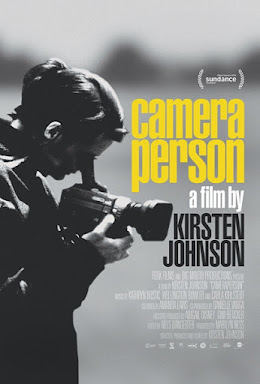
Cameraperson [2016]

Documentary cinematographer Kirsten Johnson’s life has been as much about images on diverse sociopolitical subjects as it’s been about the places around the globe she’s visited and the people she’s photographed. Her feature-length diary film Cameraperson was a distillation of these myriad subjects, places, people and images, culled from the string of award-winning documentaries she’s been associated with; and, in turn, a dizzying mosaic and collage on themes as complex, prescient and extraordinarily stirring as war and ethnic cleansing, governmental overreach and extrajudicial measures, racial hatred and bigotry, violence on women and children, PTSD and memory, women’s agency and voice, etc., with running feminist subtexts. Hence, the fact that she asks the viewers, at the beginning to consider this as her memoir indicated the indistinguishability between the political and personal dimensions of her life and profession. The sequences and footage can perhaps be classified into four categories – 1) powerful political episodes covering systematic sexual violence against Muslim Bosniak women by Serbian paramilitary forces during the Yugoslav Wars and wrenching reminiscences of the dark episodes by survivors and investigators,  a half-blinded Afghan boy recounting his brother’s death, a public prosecutor briefing on the ghastly murder of James Byrd by white Texan supremacists, detainees in Guantanamo and a Yemen prison, etc.; 2) striking social vignettes like a Nigerian midwife struggling to keep a premature baby alive, a young African-American girl trying to cope with single motherhood, Liberian women defiant against patriarchy, etc.; 3) apolitical asides like a boxing match in Brooklyn, a CERN astrophysicist philosophizing on matter and anti-matter, cameo by Derrida, etc.; and 4) personal moments from Johnson’s life covering her twin daughters and her mother’s affliction with Alzheimer’s.


Director: Kirsten Johnson
Genre: Documentary/Diary Film
Language: English
Country: US

Wednesday, 5 August 2020

S Durga [2017]

Sasidharan’s S Durga is drenched in bleak nihilism, psychedelia and angst – so much so, that it jolts you as much by its confrontational aesthetic choices, as by its lashing critique on reeking patriarchy, male gaze and casual "othering" on religious, ethnic or even linguistic grounds. The film faced enormous hostility from the right for being provocatively titled Sexy Durga initially, even to the point of its screening in IFFI being blocked where it was included in the competitive section. Like his blistering previous film Ozhivudivasathe Kali, this too opened with documentary realism – and an extended one at that – which disturbingly set the context; the violence and voyeurism in a religious celebration – ironically involving a goddess worshipped as a symbol of feminine power – formed a striking contrast to its main narrative where gender and religious violence are lurking at every corner. Set over the course of a single night – and an increasingly nightmarish one at that – it starts off with Durga (Rajshri Deshpande), a Hindu woman, and Kabeer (Kannan Nayar), her Muslim boyfriend, planning to elope, ostensibly on account of their interfaith relationship. Hoping to reach the railway station to catch a train to somewhere (anywhere), they’re given a lift by a couple of guys in a minivan on a deserted highway. However, as lecherous, bullying guys join them in the car, the ride becomes a trip through hell – though, in a pungently ironic note, they keep reiterating that their intent is to protect Durga from the wolves outside. The largely unscripted narrative and deceptively audacious long takes constantly reminded me of Sasidharan’s previous film, even if this was stylistically very different for being an incredibly visceral and nerve-wracking work.


Director: Sanal Kumar Sasidharan
Genre: Drama/Road Movie
Language: Malayalam
Country: India

Monday, 3 August 2020

Lover for a Day [2017]

Philippe Garrel’s magnificent and beguiling gem Lover for a Day is a work of such heartbreaking beauty, radical formal lucidity and exquisite emotional precision, that one might feel the presence of so many French masters while watching it – Rohmer’s understated portrayals of romantic complications, Bresson’s monochrome realism and “stripped to the bones” aesthetics, and indeed also the muted, intimate ménage à trois
in the autobiographical works of the younger Garrel. This deceptively brilliant masterwork had all the hallmarks of the veteran auteur’s craftsmanship – delightful low-key interplay between three complexly etched protagonists, absorbing intimacy of a chamber drama, and the lightness of touch while portraying the brittle nature of relationships. Upon an intensely painful breakup, an emotionally wrecked Jeanne (Esther Garrel, the director’s daughter) lands in the homey little flat of her father Gilles (Éric Caravaca), a mild-mannered professor of philosophy, who’s having a passionate affair and living together with Ariane (Louise Chevillotte), a former student of his at the university. That the two girls are of roughly the same age begins their interactions on a testy note, but it soon evolves into warm camaraderie bound by empathy and shared secrets – Jeanne inadvertently gets to know that Ariane had once posed topless, and in turn a suicide attempt by Jeanne that Ariane somehow prevents; and their friendship is counterpointed by the themes of fidelity vis-à-vis sexual freedom that play out between Gilles and Ariane. Dazzling, grainy, softly illuminated, high contrast B/W photography imbued the interiors and the Parisian streets with a remarkably moody atmosphere; this, along with exquisite use of elegiac organ-based score and terrific turns – especially by Chevillotte and Garrel – made this such a splendid rendition of lived experiences.


Director: Philippe Garrel
Genre: Drama/Romantic Drama
Language: French
Country: France

Sunday, 2 August 2020

Eden [2014]

Eden
is such a delicately strung film – filled with heartbreaking fragility – that it’s easy to overlook the fact that it’s also a deceptively ambitious work, be it in its bold temporal scope and multiple thematic interests or its absorbing slew of diverse tonal and emotional hues. These aspects, along with the intimate nature of its narrative – being a semi-fictionalized memoir of director Mia Hansen-Løve’s brother and co-writer Sven –, juxtaposed against a fascinating milieu – viz. the rise and decline of house and garage music in France – made this an entrancing film and an enthralling watch. The movie, therefore, was both epic and personal, and its mood palette traversed between “euphoria and melancholia”, as it portrayed the journey of Paul (Félix de Givry) – from a university student hoping to be a writer who’s swept away by the tidal wave by the Parisian underground musical circuit during the early 90s; to forming one half of a successful DJ duo around the same time as Daft Punk also formed, to playing gigs and hosting shows both in clubs and on the radio in Paris and even travelling to New York and Chicago over the 90s and the 2000s; to becoming engulfed by debts and addiction to the point of having to hit a hard reset in his life in the early 2010s. Givry was quietly affecting in the role of the protagonist, as were Pauline Étienne as his dazzling and vulnerable girlfriend who eventually moves on, Roman Kolinka as a brilliant but troubled graphic artist, Vincent Macaigne as an on-off buddy, etc. Both the soundtrack and the photography were simultaneously fabulous and low-key, in keeping with Løve’s magnificent and distinctive directorial signature.


Director: Mia Hansen-Love
Genre: Drama/Musical/Romance
Language: French
Country: France