Sunday, 28 May 2023

Joyland [2022]

 Biba – the vivacious transwoman in Joyland who refuses to be stripped off her agency despite an existence marked by scorn and marginalization, and played with stunning élan by Alina Khan – immediately reminded me of similarly unforgettable transwomen characters in Lemebel’s My Tender Matador, Roy’s The Ministry of Utmost Happiness and Shree’s Tomb of Sand, who too possessed unbridled verve, gall and gumption. She was one of several people here who let loose a riot of desires in reckless abandon. The way gender boundaries, sexual stereotypes, patriarchal structures and heteronormative identities were subverted in this magnificent feature debut by Saim Sadiq, therefore, was exhilarating! That it was also laced with such tenderness, profound intimacy, existential malaise and bursts of rebellious joy, was as indicative of its narrative aplomb as its radical humanism. The film’s tapestry was weaved around the middle-class Rana family residing amidst the bustle of Lahore – the wheelchair-bound patriarch (Salmaan Peerzada) who’s unabashedly conservative, yet has developed an attachment with a widowed woman; his elder daughter-in-law Nucchi (Sarwat Gilani) who manages all domestic duties and keeps giving birth in the hopes of begetting a male heir, while surreptitiously smoking on the roof and lashing out when offended; Mumtaz (Rasti Farooq), the younger daughter-in-law, who’s fiercely protective of her financial independence, hates conventional gender roles, and succumbs to furtive impulses; and Mumtaz’s unassuming husband Haider (Ali Junejo), who happily helps with household chores and becomes hopelessly enamoured with Biba upon secretly joining a risqué dance theatre. The latter affair was memorably counterpointed with the rapturous friendship that develops between Nucchi and Mumtaz. All three were magnificently enacted in this gorgeously cinematographed work filled with impudence, vitality, melancholy and desolation.


Director: Saim Sadiq

Genre: Drama/Romantic Drama/Family Drama/Existential Drama

Language: Urdu/Punjabi

Country: Pakistan

Friday, 26 May 2023

Alcarràs [2022]

 Alcarràs was a decidedly political film, even when it wasn’t ostensibly so. Its embodiment of this curious dichotomy – between its themes vis-à-vis form – made it a particularly interesting work. It focussed on a closely-knit agricultural family’s last harvest before eviction from the peach orchard in rural Catalonia that they’ve tilled for generations – and the repercussions thereof, as it isn’t just their only livelihood, but raison d'être as well – because their landlord, refusing to honour the handshake agreement made by his deceased father, wants to raze it down and setup a lucrative solar farm in its place. Carla Simón, in an admirable artistic choice, gave space to every member of the Solé clan in the first film in Catalan language to win the Golden Bear – Quimet (Jordi Pujol Dolcet), the increasingly grumpy middle-aged patriarch who leads the backbreaking harvest; his strong-willed wife who helps him on the farm while also managing domestic chores; their gangly, impulsive adolescent son (Albert Bosch), emotionally confused pre-teen daughter, and carefree, lovable little Iris (Iris (Ainet Jounou); the reserved, downcast grandpa (Josep Abad), and adorable grandma who loves reminiscing; and Quimet’s proud sister, frivolous brother-in-law and their chirpy twin kids who they’re all very close to – through their tribulations and joys, conflicts and camaraderie, falling-out and solidarity. The film, on one hand, was organically interwoven with such topics as fading memories of the Spanish Civil where Catalonia had played a revolutionary role, the advent of green capitalism, the exploitation of farmers by market forces, and use of low-cost migrant labour; while, on the other, it was awash in lyrical naturalism, bittersweet tones, luminous landscapes, quirky moments and the melancholic passage of a way of life.


Director: Carla Simon

Genre: Drama/Rural Drama/Family Drama

Language: Catalan

Country: Spain

Wednesday, 24 May 2023

Dry Ground Burning [2022]

 Dry Ground Burning, as the title indicated, was scorched, grimy and incendiary, and – as a ferociously feminist, bleakly dystopian and boldly political film; cinema of resistance; an exercise in agitprop; grungy, revisionist Western; speculative thriller; “ethnographic sci-fi”; and a work of docufiction – operated, with formal suppleness, in the shifting intersection of multiple genres. It simultaneously captured Bolsenaro’s toxic, right-wing politics, and evoked a nightmarish “what-if” scenario wherein the country has devolved into a post-apocalyptic police state and carceral society, leading to underground dissidents defiantly seizing pockets of control. And what a brash defiance it was! An all-female collective of outlaws and residents of the impoverished Sol Nascente favela in the outskirts of Brasilia – comprising of Chitarra (Joana Darc Furtado), a single mother and the voluptuous leader of the gasolinheiras; her nonchalant half-sister Léa (Léa Alves da Silva), who’s recently been released from jail; and Andreia (Andreia Vieira), who’s founded the Prison People Party with the aim to provide voice and empowerment to people, especially women, who continue to face terrible discrimination and impediments on account of past incarcerations – have taken control of an underground pipeline from which they extract crude gasoline, refine it into oil and sell that to a motorcycle gang for distribution. The film’s three gangsta protagonists – whose lives, in a blurring of boundaries, mirrored that of the respective actors –, therefore, formed a fearless vanguard and represented a proud future that “isn’t just female: it is Black, lesbian, profoundly matriarchal.” Its most scintillating moments included Andreia’s rap-canvassing of her political manifesto, and a hypnotic pan within a Bolsenaro rally where the crowd of smug conservatives was the very antithesis of this film and its three heroines.


Director: Joana Pimenta & Adirley Queiros

Genre: Drama/Sci-Fi/Revisionist Western/Crime Drama

Language: Portuguese

Country: Brazil

Saturday, 20 May 2023

Everything Everywhere All at Once [2022]

 Everything Everywhere All at Once, the unlikely smash hit by Daniel Kwan and Daniel Scheinert, a.k.a. ‘The Daniels’, was clearly a film of two halves. The first half, which transitioned from a grimy, grubby, and immediately identifiable immigrant story – filled with anxieties, stresses, feelings of otherization, futile attempts at assimilation and generational fault-lines that deftly articulated the lost dreams, and was complemented by low-fi, grainy realism that had “indie” written all over it – into a wacky, gonzo, stylistically dazzling, absurdist, gleefully farcical and unapologetically over-the-top sci-fi action comedy – that subverted genre trappings while freely jumping across alternate realities, parallel universes, and the lines between deadpan realism and unrestrained fantasies – was like a breath of fresh air. The way it meta-referenced kung-fu movies, red pill / blue pill duality, wuxia fight choreography, etc., while retaining an underlying layer of melancholy, was captivating. “Poignant maximalism”, as one reviewer coined it, was apt in this context. The second half, unfortunately, undid some of its goofy brilliance, as it became increasingly maudlin, resorted to literal philosophizing, took up one concept too many in its attempt at irreverence, and, at some point, overlong. The film’s storyline was centred on Evelyn (a truly terrific and inspired Michelle Yoeh) – a harried, embittered, middle-aged Chinese-American woman whose marriage to her meek husband (Ke Huy Quan in an endearing turn) is falling apart, relationship with their daughter (Stephanie Hsu) has estranged, the struggling laundromat that she runs is struggling with tax complications thanks to an exacting IRS inspector (Jamie Lee Curtis) and stuck in escapable existential rut – who must tap into spectacular alternate selves – action star, cook and whatnot – in order to save the world, err, the universe(s).


Director: Daniel Kwan & Daniel Scheinert

Genre: Comedy Drama/Action/Sci-Fi/Martial Arts Film/Adventure

Language: English, Cantonese

Country: US

Thursday, 18 May 2023

One Fine Morning (Un Beau Matin) [2022]

 Mia Hansen-Løve is that rare filmmaker who can effortlessly portray a volley of emotions, existential crises & lived experiences using precise and tender brushstrokes, with shades that're vivid yet understated, and on a canvas that's as fragile as an old notebook, thus capturing poetry within a raindrop that’s both delicate and mundane. One Fine Morning elucidated these sublime attributes of hers as a filmmaker. That, like Father of My Children, this too was based on actual people – her own parents – informed it with profoundly personal meanings. It centred on Sandra, a fiercely real character, played with astounding depth and stunning restraint by the magnetic Léa Seydoux. She’s a widowed single mother who stays with her little daughter; she’s committed to her vocation as an interpreter and translator; she deeply cares for her aged father Georg (an emphatically brilliant Pascal Greggory), former philosophy professor, who’s suffering from a debilitating neurodegenerative disease that’s left him utterly helpless; she embarks on a passionate affair with an old married friend (Melvil Poupaud); she’s also well-connected with her quirky mom Nicole (Nicole Garcia) – a left-wing activist who still attends to Georg despite being his ex-wife – and her sister, as they fervently explore ways to admit Georg to an agreeable nursing home while also taking care of his rich collection of eclectic books in a manner that befits their memories of his now-fading identity. Lush, vibrant photography of Parisian streets and the constant narrative motion complemented the film’s nuanced interiority, while Jan Johansson’s magnificent Liksom en Herdinna and Schubert’s sonatas amplified its wistful, melancholic tones. Coping with loss – both past and imminent – while carrying on with a gloriously messy life, therefore, formed its simmering motif.


Director: Mia Hansen-Love

Genre: Drama/Family Drama/Romantic Drama/Urban Drama

Language: French

Country: France

Sunday, 14 May 2023

My Imaginary Country [2022]

 Who could’ve imagined that an increase in Santiago’s metro fare by 30 pesos in October 2019 would spark such a massive social outburst that it’d eventually lead to the drafting of a new constitution and election of an avowedly leftist leader for the first time since Allende. That fare increase was essentially the final straw that brought millions to the streets to protest against societal malaise and neo-liberal policies of post-Pinochet governments – under-funded education, housing and healthcare; lack of employment and fair wages; perpetuation of patriarchy and sexual violence; under-representation of women and indigenous people in the government; disproportionate power of the police and military – which they did despite lack of a centralized leadership, and in stunning defiance of the violence unleashed by the authorities. This transformative event – captured by Guzmán in his pulsating, politically urgent, eloquently persuasive and powerful reportage My Imaginary Country – therefore, signified the coming of full circle for Chile, and its most impassioned and outstanding documentarian for around 50 years. Two fascinating choices made this, respectively, an essential work and a scintillating watch – viz. its stirring feminist voice, as all its talking heads – activists, journalists, photographers, filmmakers, medics, cultural collectives, etc. – were avowedly progressive women; and, alongside riveting B/W images and “live” street footage, Guzmán made thrilling use of drones wherein two sequences especially stood out – an armoured vehicle spraying teargas on demonstrators while coasting through an avenue, and throbbing crowds packing Santiago’s Plaza Italia. In an ironic touch, Estadio Nacional, which’d once served as a detention, torture and execution centre upon the 1973 military coup – the filmmaker had himself been imprisoned in it – was the venue for the 2020 plebiscite for a new constitution.


Director: Patricio Guzman

Genre: Documentary/Essay Film/Political History

Language: Spanish

Country: Chile

Thursday, 11 May 2023

All That Breathes [2022]

 Shaunak Sen, while speaking of the driving force behind his terrific documentary All That Breathes, articulated his eagerness to “touch upon the whole through the particular”, and this parallel embracing of seemingly dichotomous facets made it an especially powerful work. It was both an example of transcendental art and electrifying reportage; an unsettling portrayal of urban dystopia, while also a quietly uplifting piece; as much an expression of profound humanism as of political dissent and defiance; universal and timeless in its broader philosophies, while also extraordinarily “in the moment” in its geographic and contextual specificities; simultaneously muted in its tone, eloquent in its fierce social commentary, and pulsating in its tremendous sense of vitality and urgency. Its primary subjects were two soft-spoken Muslim brothers – Mohammad Saud and Nadeem Shehzad – residing in a desolate section of Delhi, who rescue and treat birds – predominantly the majestic black kites – at their cramped home turned makeshift clinic, despite financially and procedural hurdles. Its subject was also the city of Delhi, with its smog-filled skies and grim ecological footprint, alongside its stunning culture of resistance and troubling social fault-lines that’re demonstrated, respectively, by the massive protests that the draconian citizenship laws sparked and the venomous riots that those in positions of power engineered. And, not least, its subject was a nation-state’s irrevocable turn towards muscular majoritarianism and smug xenophobia, wherein the kites – which’re treated as outcasts by veterinary facilities for being a “non-vegetarian” species – become representative of the broader political canvas, thus paving way for touching “the whole through the particular”. While speaking of the film’s haunting portrayals, complex themes and contrapuntal manifestations, one is also transfixed by its hypnotic and rapturous audio-visual compositions.


Director: Shaunak Sen

Genre: Documentary/Essay Film

Language: Hindi

Country: India

Saturday, 6 May 2023

The Headless Woman [2008]

 Lucrecia Martel’s magnificent ‘Salta Trilogy’, over the course of the films that it comprised of, transitioned from the broad to the particular in their narrative focus – starting with the rapturously dizzying La Ciénaga which encompassed an array of extended relatives, followed by the wickedly provocative The Holy Girl which covered a smaller family, and finally the psychologically chilling, haunting and deeply unnerving The Headless Woman which largely centred on one character. Formal audacity – avoidance of establishing shots that compels viewers to situate characters and discern relationships themselves, complex audio-visual compositions, deliciously elliptical narratives, etc. –, feminist gaze, and caustic political critiques that’ve informed her works, were fiercely exhibited in this oblique hit-and-run tale and its discomfiting aftermaths. The said incident happens when Verónica (María Onetto, in a superb, nuanced performance) – a wealthy, middle-aged dentist whose class privilege is discernible through her coiffured blond hair, chic sunglasses, assured body language, and politely distanced and condescending interactions with native servants and workers – inadvertently hits something… or someone, while driving along a country road. She gets into an incredibly dazed and disoriented state, and, thereafter, starts thinking that she may have killed an Indian boy – the dog in the rear-view mirror potentially indicative of her subjective perspective – which her husband, lover and friends are keen to convince her otherwise, forget and bury. The way she ultimately shook herself out of her stupor – and guilt – was especially shattering. The film, therefore, served as a stunning – albeit, allegorical – indictment of the Argentine bourgeoisie’s clinical self-preservation and all-too-eager disavowal of the estimated 30,000 who were disappeared during the military dictatorship, and how they so easily expunged themselves of guilt and moral culpability through wilful denial.


p.s. My earlier review of the film can be found here.


Director: Lucrecia Martel

Genre: Drama/Psychological Drama

Language: Spanish

Country: Argentina

Wednesday, 3 May 2023

The Holy Girl (La Niña Santa) [2004]

 If Lucrecia Martel’s stunning debut feature La Ciénaga – with its intoxicating cocktail of chaos, malaise, torpor, vacuousness, fault-lines and undercurrents – was a dazzling piece of diamond, her sophomore feature The Holy Girl – the middle instalment in her masterful ‘Salta Trilogy’, and followed by the magnificent The Headless Woman – was like a cold, metallic razor that clinically sliced through the skin. This brilliant, cutting, provocative, unsettling, sensuous and languid work – which’re Martel’s authorial signatures – focused with wry detachment on how religious frenzy and sexual curiosity can feed into each other for a young, naïve and intensely conflicted teenager. The film’s lurid and devilish subject bore Almodóvar’s influence – he was, incidentally, the film’s executive producer – but this was Martel’s film through and through, with its ambivalent gestures, tonal ambiguities, narrative restraint, unhurried style, flirtatious compositions, and leaving things open to extrapolations. It kickstarted when a middle-aged man takes advantage of a crowd to casually press his groin against a teenage girl, in what is clearly a secret sexual perversion for him. The man happens to be Dr. Jano (Carlos Belloso), a respected and married physician, who’s attending a medical congress at an impressive hotel, and during which time he finds himself getting drawn to Helena (Mercedes Morán), the hotel’s striking owner and a divorcee in a state of emotional dilemmas. And the girl is Amalia (María Alché), a paradoxical, mischievous and pubescent teenager who’s become enamoured by Catholic faith, experiments on her burgeoning sexuality with her friend (Julieta Zylberberg) and starts stalking Jano to cure him of his sins. She, coincidentally, also happens to be Amalia’s daughter, and the ensuing ménage à trois is therefore bound to end badly for all.


Director: Lucrecia Martel

Genre: Drama/Psychological Drama/Religious Drama

Language: Spanish

Country: Argentina

Saturday, 29 April 2023

Le Cœur Fantôme (The Phantom Heart) [1996]

 Philippe Garrel’s filmography weren’t just delineated with remarkable formal, tonal, textural and compositional consistencies, it was often threaded with thematic commonalities too given how many of his films were laced with rich semi-autobiographical elements. His informally linked “Autobiographical Series” of five profoundly personal, understated and beautifully crafted gems – viz. L’Enfant Secret, Les Baisers de Secours, J’Entends plus la Guitare, Le Coeur Fantôme and Les Amants Réguliers – especially stood out in terms of their absorbing interpretations, reimagining, and manifestations of strands from his life through the prismatic lens of memory and cinema. The muted, introspective, and tender fourth film – the relatively least known work in that collage – portrayed personal, marital, romantic, and existential fragments of yet another brooding alter-ego of the filmmaker. Philippe (Luis Rego) is a middle-aged, soft-spoken, and moderately successful painter who moves out of the life and apartment he shares with his wife Annie (Évelyne Didi) – and their two kids who he deeply loves – after she reveals that she’s having an affair. While continuing to pursue with his painting at the small desolate space that he maintains, and casually indulging with a prostitute at times, he serendipitously meets the naïve and much younger Justine (Aurélia Alcaïs), and embarks on a tentative relationship with her. Philippe’s life, therefore, becomes delicately tied to the two women – the loving but possessive Justine, and Annie who seems to be falling apart and with whom his kids stay – while also spending time with his wry, garrulous and aged dad (played by the filmmaker’s real-life father, Maurice Garrel) who’s long separated from Philippe’s mother and is slipping towards oblivion. The film was shot in soft, washed-out colours that complemented its fragile, melancholic fabric.


Director: Philippe Garrel

Genre: Drama/Romantic Drama/Marital Drama

Language: French

Country: France

Thursday, 27 April 2023

Arabian Nights [1974]

 Arabian Nights – Pasolini’s concluding instalment in his audacious, expansive and uninhibited ‘Trilogy of Life’ – was an episodic anthology film that revelled in the joys of storytelling like The Decameron and The Canterbury Tales, the two preceding films in this celebrated triptych on seminal medieval literature. It was even more ambitious in that he had to choose the stories from around a thousand Persian folk tales; filmed it in locations across Iran, Yemen, Nepal and Ethiopia; and conjured a highly intricate narrative web of nested interconnected stories, despite doing away with the iconic framing device featuring Scheherazade. It was, however, possibly the least political of the trio – the sole focus here being the celebration of sensuality in its myriad forms, devoid of restrictive modern-day prejudices –, and the wicked black humour of the earlier films was toned done while freely retaining the source collection’s fantastical nature. The central strand was on the passionate romance between and incredible parallel journeys of Nur-e-Din (Franco Merli), a naïve young guy, and Zumurrud (Ines Pellegrini), a striking slave girl, while the remaining episodes – featuring dazzling locational backdrops and stories-within-stories – covered a spectacular range from impish and intimate to swashbuckling and violent. The one that deserves a special mention involved the impetuous Aziz (Ninetto Davoli) who abandons his bride-to-be Aziza – who, nevertheless, helps him out of selfless love and dies of heartbreak – upon being smitten by a mysterious, bewitching woman. That Davoli had recently broken off his relationship with Pasolini in order to marry a woman, provided a deep personal allegory for the filmmaker. The ignominious fate that Aziz eventually faced at the hands of his hedonistic pursuit, consequently, served as a sardonic cinematic schadenfreude.


Director: Pier Paolo Pasolini

Genre: Comedy/Romantic Comedy/Drama/Fantasy/Anthology Film

Language: Italian/Arabian

Country: Italy

Wednesday, 26 April 2023

The Canterbury Tales [1972]

 Based on Geoffrey Chaucher’s influential Middle English epic, The Canterbury Tales was Pasolini’s ecstatic and flamboyantly crafted second chapter – positioned between The Decameron and Arabian Nights – in his episodic, iconoclastic and spectacularly boundary-pushing Trilogy of Life. It wasn’t just more luscious and hyperbolic than its predecessor, but also more exultantly unhinged – being unabashedly peppered with graphic carnality and scatological humour – and expressed an even darker world-view. However, while it did manifest rebellious political overtones – in its lashing indictment of organized religion with its unfettered bigotry and hypocrisy; odious depictions of feudal lords and wealthy profit-mongers with their unbridled greed and pomposity; and continued affront towards bourgeois morality – it was, arguably, not as consistently and radically political as the trilogy’s masterful opening salvo. The classic’s frame story was retained here wherein eight tales are narrated by traveling pilgrims and chronicled by a smirking Chaucer (played by Pasolini) – a hideous and obnoxious elderly merchant who becomes blind upon marrying a bored, much younger woman (Josephine Chaplin) who’s aroused by a secret admirer; the violence with which the church punishes sodomy, and the befriending of the devil by a ruthless civil servant; a Chaplin-esque scoundrel (Ninetto Davoli) who lives dangerously and dies nonchalantly by offending everyone; the wooing of an unfulfilled married woman by two young lotharios; an insatiable middle-aged woman who seduces a young academic; two guileless students who exact sweet, salacious revenge against a sly middle-aged miller; three crass buddies who’re tricked by a world-weary old man into becoming murderous beasts; an avaricious monk who gets a glimpse of hell. The last tale, in fact, portrayed arguably the most gleefully grotesque, hilariously offensive and uninhibitedly outrageous cinematic rendition of hell.


Director: Pier Paolo Pasolini

Genre: Black Comedy/Social Satire/Religious Satire/Anthology Film

Language: Italian

Country: Italy

Wednesday, 19 April 2023

The Decameron [1971]

 Unapologetically ribald, wickedly subversive, gleefully scandalous and vivaciously realized, The Decameron – Pasolini’s extraordinary adaptation of Boccaccio’s mammoth 14th century volume, and the first chapter in his ‘Trilogy of Life’, followed by The Canterbury Tales and Arabian Nights – was also a profoundly political work. The towering Italian giant – whose avowed Marxism, staggering intellect, homosexuality and insouciant non-conformism made him a trailblazer for many but an anathema to reactionary conservatives – crafted a radical interpretation of the landmark Italian text. He did away with the framing device, chose 10 (out of the 100) stories that appealed to him the most; and gave them a stunning class spin by stripping them of royalty, transplanting them from Florence to Naples which served as a microcosm for the global south within Italy, and scripted it in the Neapolitan dialect. And he furthered these facets by packing it with bawdy humour, provocative sexuality, delirious subversion of organized religion, and deromanticized depiction of the Renaissance-era, laced with gold-digging, backstabbing, promiscuity, hypocrisy and violence. The fabulist, interweaving, vividly composed and thoroughly amoral tales included a swindled guy who joins hands with gravediggers; a deaf-mute simpleton who entices an entire convent of lascivious nuns; a wife’s adultery under the nose of her cuckolded husband; a merchant who lies his way to sainthood despite a life devoted to grotesquerie; the great Giotto’s pupil (played by Pasolini himself) who’s come to paint frescoes in a small church; a young couple whose first libidinous tryst gets spectacularly outed; a coy girl’s unsettling preservation of her murdered boyfriend; a respectable man who takes lewd advantage of a poor gullible couple; and a heavenly pact made between a pious man and his philanderer buddy.


Director: Pier Paolo Pasolini

Genre: Black Comedy/Social Satire/Religious Satire/Anthology Film

Language: Italian

Country: Italy

Saturday, 15 April 2023

Simon of the Desert [1965]

Simon of the Desert – considered part of his extraordinary “Alatriste/Pinal trilogy” along with Viridiana and The Exterminating Angel, as well as his admired “Religious trilogy” along with Nazarín and The Milky Way – was the final film that Buñuel made in Mexico, as well as his final collaboration with Silvia Pinal, her then producer-husband Gustavo Alatriste, and Mexican cinematographer Gabriel Figueroa. Curtailed ostensibly on account of production and financial woes, this gleefully wicked interpretation of Saint Simeon Stylites’ self-imposed life atop a pillar in the middle of a desert seeking penance, provided a spare and droll demonstration of classic “Buñuelian” elements for its striking use of surrealism and its cutting satire on blind faith, harsh self-flagellation and rigid dogmatism that organized religion both peddles and champions. Simón (Claudio Brook) experiences “professional advancement” even in a life of extreme self-denial such as this, wherein, after spending six years, six weeks and six days on a 10-feet pillar, he moves to a significantly taller one erected by a wealthy patron; attains both celebrityhood and scorn among monks and commoners for his ascetism; performs an off-hand miracle which, ironically, doesn’t lead to any brouhaha; and engages in wryly comical battles with a sly, indefatigable and chameleon-like Satan (Pinal) who manifests in multiple forms – as a coquettish seductress, in the ruse of god, etc. – in order to break his absurd abnegation. In the film’s terrific and thoroughly insane finale, Simón is teleported by Satan to a swinging rock 'n' roll nightclub in modern-day New York City, amidst a frenzied crowd indulging in “radioactive flesh” – in a wry reference to the Cold War nuclear arms race and “Mutually Assured Destruction” – against a pulsating live music.


Director: Luis Bunuel

Genre: Black Comedy/Religious Satire/Surrealist Movie

Language: Spanish

Country: Mexico

Thursday, 13 April 2023

Honeycomb [1969]

 The third chapter in Saura’s delicious and delirious ‘Bourgeois Trilogy’ – preceded by the brooding and magnificent Peppermint Frappe, and the stark and tense Stress Is Three – was a sensational exercise in absurdism, and a lacerating satire on the bourgeoisie – their social insularity, vacuous existences, class privilege and moral quagmire, that’re allegorically manifested through subversion of the sanctimonious institution of marriage – worthy of a top-drawer Buñuel. Through its progressively wild and unpredictable narrative arc – it began with an excellent, low-key single-take sequence that situated the viewers in the brutalist architecture of the exclusive villa where the film’s super-wealthy couple resides, to the bleak and shocking denouement – and an unhinged chronicle of marital toxicity that explodes into unfettered chaos and pulpy violence, it heralded a manic eruption of troubling memories, repressed obsessions, lurid fantasies and grotesque fetishes. When the ultra-staid ambiance, sterilized décor and rigid order within the modernist residence of the glum industrialist Pedro (Per Oscarsson) and his gleefully naïve wife Teresa (Geraldine Chaplin) – who possesses an anarchic streak despite having always lived in oppressive domesticity – are suddenly disturbed by the latter’s unsettling regression into her Catholic past, and the appearance of antique furniture in the household that’re antithetical and anachronistic to it, it ruptures the pair’s estranged marital dynamics and provokes them into indulging in a series of increasingly discomfiting, deranged, kinky and hysterical role-plays that’re bound to end on an ugly note for both, even if they’re spectacularly liberated out of their states of moribund stupor and existential decay in the process. Chaplin, who co-wrote the script with frequent Saura collaborator Rafael Azcona, gave an exhilarating turn as the volatile girl-woman who catalyses the couple’s mutually assured annihilation.


Director: Carlos Saura

Genre: Black Comedy/Social Satire/Marital Satire

Language: Spanish

Country: Spain

Monday, 10 April 2023

Stress Is Three [1968]

 Stress Is Three, the middle chapter in Carlos Saura’s wickedly brilliant and pungently satirical ‘Bourgeois Trilogy’ – which painted scabrous portraits of Spain’s Franco-era bourgeoisie, focusing on toxic and perverse relationships that’re defined by self-destructive obsessions, twisted passions, and unsettling fetishes hiding underneath false propriety – provided for a striking contradiction to the two superb films that sandwiched it, viz. Peppermint Frappé and Honeycomb. While the two films on either side were made in vivid colours, had greater thematic complexities, and broader temporal scopes, this stood aside with its monochrome visuals, narrative conciseness and events set over a single day. These facets, along with its off-balancing tone – which kept playfully veering towards psychological and even physical violence –, and portrayal of simmering marital and sexual jealousy that reached a ferocious intensity, made this an interesting companion piece to Polanski’s terrific debut film Knife in the Water. The film unfolds over a road trip – from Madrid to Almeria – taken by the uptight Fernando (Fernando Cebrián), a well-to-do and feudalist industrialist, his teasing wife Teresa (Geraldine Chaplin, Saura’s muse at that time who featured in all the three films in this trilogy) who he’s obsessed with, and his laidback friend and business partner Antonio (Juan Luis Galiardo) who he suspects Teresa is having a fervid affair with. His jealousy is especially amplified by the ironic tussle between his fears and his desire of being proven right. Grainy B/W imagery, along with the sparingly used pulsating jazz beats, filled the proceedings with electrifying undercurrents of paranoia and tension – to the extent that it felt the film is inevitably progressing towards an ugly denouement – while also complementing the brooding atmosphere with cynical levity and discordance.


Director: Carlos Saura

Genre: Drama/Psychological Drama/Marital Drama/Road Movie

Language: Spanish

Country: Spain

Friday, 7 April 2023

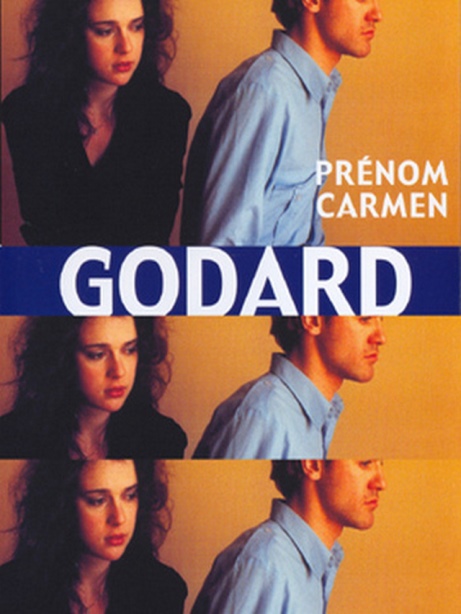
Prénom Carmen (First Name: Carmen) [1983]

 Prénom Carmen – which completed a remarkable trilogy with Every Man for Himself and Passion, in that they all featured disillusioned filmmakers in existential limbo, and the crumbling of “small movies” under overbearing financial considerations – wasn’t just a magisterial work that established the 1980s as one of the richest decades for Godard, it also places among his most aesthetically dazzling films with its fragmentary storytelling, shallow-focus visuals and rapturously beautiful use of music. It was most fascinating in how it provided an interplay between classicism and modernist deconstructions, narrative and form, solemn and absurdist, composure and chaos, melancholy and sardonic humour, personal and political. The film played out along three interconnected narrative strands that frequently overlapped but were also noteworthy for their departures. The central strand – which was a radical reimagining of Georges Bizet’s opera Carmen, by Anne-Marie Miéville – covered the passionate, tumultuous and ultimately self-destructive affair between the ravishingly beautiful Carmen (played with sultry allure by 20-year-old neophyte Maruschka Detmers), who’s part of an underground post-Maoist revolutionary cell, and a naïve security guard (Jacques Bonnaffé) who gets entangled with her during a bank robbery and falls obsessively in love with her. In parallel we see a neurotic, hilariously deadpan, aphorism-spouting, lecherous, washed-up filmmaker (played with satiric, self-deprecating aplomb by Godard himself) who’s refusing to leave the sanitorium that he’s cooped up in; and a string quartet, whose absorbing Beethoven rehearsals provided stirring emotional parallels to the actions. The heady mix of doomed lovers, militant politics and operatic violence aimed at capitalist structures stirred my memories of Le Petit Soldat and La Chinoise, while interjections of “live” music recording with narrative elements made me draw parallels with One Plus One.


Director: Jean-Luc Godard

Genre: Drama/Political Drama/Romantic Drama/Crime Drama/Musical/Showbiz Satire

Language: French

Country: France

Wednesday, 5 April 2023

Passion [1982]

 Godard’s remarkable and underrated gem Passion was laced with a delightful dichotomy. While it wasn’t an easy film – heavily political, essayistic in its form, opaque, digressive, thematically intricate and dense, woven with complex metaphors, and possessing an intellect that was unnerving in its brilliance – it was also droll, playful, deadpan, irreverent, self-effacing, and comprised of visually stunning and meticulously composed tableaux vivants that strikingly contrasted with the grainy realism of the rest of the film. Raoul Coutard, who Godard collaborated with here for the first time since his trailblazing masterpiece Week-end 15 years back, can be thanked for its splendid visual design. To paraphrase a reviewer’s witty summation, it’s a movie without a story about the making of a movie without a story, and like his previous film Every Man for Himself, here too the protagonist was a filmmaker in a state of intellectual stasis and artistic crisis. Jerzy (Jerzy Radziwilowicz) is a Polish director making a non-narrative film for television comprising of spellbinding recreations of renowned paintings by European masters – Rembrandt, Goya, Delacroix, Ingres, El Greco, Caravaggio – while his producer László (László Szabó) is highly agitated as Jerry repeatedly cancels the shoots, for the lack of conventional storyline, and because it’s overbudget which has made the financiers furious. During the course of its filming Jerry initially has an affair with Hanna (Hanna Schygulla), the weary owner of a hotel where the crew has put up, and thereafter gets besotted with Isabelle (Isabelle Huppert), a stuttering, sincere and alluring shopfloor worker who’s striking with her comrades as she’s been fired for her Marxist views by the factory’s farcical owner Michel (Michel Piccoli), who, in turn, is married to Hanna.


Director: Jean-Luc Godard

Genre: Drama/Political Drama/Political Satire

Language: French

Country: France

Monday, 3 April 2023

Every Man for Himself [1980]

 Godard, after spending well over a decade in absolute, self-imposed exile from mainstream cinema – during which time he first severed all ties with his Nouvelle Vague legacy, then made a series of politically radical agitprop Marxist essays in 16mm as part of the underground Dziga Vertov collective, and thereafter joined hands with Anne-Marie Miéville on avant-garde and formally dense video productions during his “SonImage” phase – made his return to 35mm feature films with Every Man for Himself. He therefore heralded the 1980s, and began yet another phase of extraordinary creativity, with this movie which he called his “second first film”, not least because it released two decades after his pathbreaking debut Breathless. Yet, for Godard, a return to commercial filmmaking can never be simply that, and hence, despite its apparent narrative elements and formal restraint, it was still a thematically provocative and stylistically exciting work. It was filled with striking flourishes – stunning use of slo-mos, bursts of pulsating non-diagetic music (including instances where one character can hear it while others can’t), idiosyncratic and even incredibly scandalous digressions – and comprised of biting social commentary on sexual politics, late-stage capitalism, commodification of relationships, and the inherently abusive nature of anyone in positions of power (including, in a sardonically self-referential touch, the filmmaker himself). It focussed on three existentially estranged characters – Paul Godard (Jacques Dutronc), a divorced, impassive and emotionally alienated television filmmaker; Denise Rimbaud (Nathalie Baye), a TV producer who’s having a stressful breakup with Paul, and hopes to thoroughly upend both her professional and personal lives; and Isabelle Rivière (Isabelle Huppert, in a disarmingly enchanting turn), a saucy, sexy, alluring, and self-assured prostitute for whom nothing is out of bounds.


Director: Jean-Luc Godard

Genre: Drama/Psychological Drama/Relationship Drama

Language: French

Country: France

Sunday, 2 April 2023

Life is Sweet [1990]

 Life is Sweet, the commercial breakthrough in Mike Leigh’s feature filmmaking career, provided an enchanting embodiment of the facets that’ve come to distinctively define his penchant for intimate family dynamics, everyday lives of the working-class, understated political stance, observational style and seemingly improvisational approach – albeit, one steadfastly arrived at through extensive rehearsals. As the title so ironically implied, this delightful and infectious – but never mawkish – film captured fleeting moments of bittersweet joys amidst the despair, disillusionments, disenfranchisements, hardships and tribulations that Thatcher’s dismal, neoliberalist reign – which, incidentally, ended in the same year as this film’s making – represented for the British working-class population; it also alluded, in parallel, to food in its myriad forms, implications and manifestations. At the film’s broad-hearted core was a memorably-etched family comprising of middle-aged parents – the affable, kindly and perennially hopeful Andy (Jim Broadbent), who’s the chef at an industrial kitchen; and the irrepressible, effervescent and loving Wendy (Alison Steadman), who does odd jobs while also managing the household –, and their chalk-and-cheese twin daughters – the composed, stolid and tomboyish Natalie (Claire Skinner), who works as a plumber, enjoys an easy life, and has an ambiguous sexuality; and the neurotic, self-loathing and deeply troubled Nicola (Jane Horrocks), who considers herself an anarchist feminist, is plagued by bulimia, and is in dire need of empathy. The film was filled with heart-warming moments – be it Andy’s silly hopes of turning around a ramshackle food caravan, and the endearing warmth between the couple, or the loving heart-to-hearts between Wendy and Nicola, and the sisters – which were elevated by terrific performances. The angle involving a pompous wannabe restauranteur’s (Timothy Spall) gastronomic train-wreck, however, felt out of place and avoidable.


Director: Mike Leigh

Genre: Comedy/Family Drama/Slice-of-Life

Language: English

Country: UK