Showing posts with label Epic/Historical. Show all posts

Sunday, 2 August 2026

Mussolini: Son of the Century [2025]

 It often takes distance to relook at an infamous tyrant’s hideous rise, along with the toxic idea of fascism (or its codification, to be more appropriate), and that’s what one senses while watching the biopic miniseries on Benito Mussolini’s surge from a relative nobody to two decades’ reign as an ultra-right-wing dictator of Italy. Adapted from Antonio Scurati’s novel, this was directed by British filmmaker Joe Wright – best known for his fine 2007 film Atonement and having never made anything outside the English language, leave alone in Italian – and produced while conscious that populist right-wing nationalism has once again been raising its ugly head across continental Europe, including in Italy. The brutal, power-hungry and self-serving strongman’s ascent – from founding the ‘Fasci Italiani di Combattimento’ in 1919 and stoking pent-up frustrations from WW1, through establishing the savage ‘Blackshirts’ militia, exponential growth in political clout and snatching the Prime Ministerial chair, and up until the cynical assassination of socialist leader Giacomo Matteotti by his bloodthirsty thugs in 1924, culminating with a chilling speech in the Parliament on 3rd January 1925 which effectively signalled the advent of totalitarianism – has been presented in the form of a punk, stylized and tar black satire that made it a volatile fusion of political history with gleeful formal experimentation, punched with the ethos and machinations of a gangster movie. The deliberately grotesque, hideous, hyper-violent and vulgar tone and palette – composed with compelling exactitude over 8 episodes of an hour each – were accompanied by a techno score, contemporary self-awareness, and a fiery – and frequently fourth-wall breaching – performance by Luca Marinelli as the smug, insecure, uncouth, self-serving and cunning despot who embodied the absolute corruptibility of absolute power.


Director: Joe Wright

Genre: Biopic/Black Comedy/Historical Drama/Political Satire/TV Miniseries

Language: Italian

Country: Italy

Tuesday, 28 July 2026

Magellan [2025]

 With his hypnotic film Magellan – through co-existence of sublime beauty and harrowing monstrosity – Lav Diaz delivered a searing peek into the horrors, madness and violence of colonial adventurism, and a trip into the heart of darkness. Sitting alongside such spellbinders on this theme as Herzog’s Aguirre, the Wrath of God and Martel’s Zama, the great Filipino auteur’s smouldering latest exercise in formal rigour and slow cinema – at a “mere” 2 hours 45 minutes it’s among his “crispest” works, but there’s apparently an 8-9 hour director’s cut waiting somewhere – depicted a demythologized examination of the colonial campaigns to Malaysia and the Philippines by 16th century Portuguese explorer Ferdinand Magellan (played by Gael Garcia Bernal, an international star, which is a first for Diaz, even if in a non-heroic turn). It begins with the capture of Malacca under Afonso de Albuquerque’s command, in which Magellan participated and returned with a slave. Back home in Lisbon, while dealing with the accusatory gaze of widows of dead compatriots and marriage to Beatriz (Ângela Azevedo) who nurses him to health, he first tries in futility with the Portuguese king and then successfully convinces the Spanish king to sponsor a crazy circumnavigation voyage. The film – composed through ethereal and visually splendorous static frames straight out of classical oil paintings – thereby covered the exhausting expedition that begun Magellan’s descent into zealotry and brutality, and then his obsessive attempts at converting Cebu’s residents en masse into Christianity, while punishing “heretics”, that ended in bloody carnage. Epic in scope, minimalist in form, staggering in ambition and viciously powerful in its anti-imperialist stance, this is a bold new direction in Diaz’s life-long meditations on his country’s past and present.


Director: Lav Diaz

Genre: Drama/Historical Epic/Biopic/War/Adventure

Language: Portuguese/Spanish/Cebuano

Country: Philippines

Thursday, 23 April 2026

Sirāt [2025]

 Óliver Laxe’s existential road movie Sirāt was both an unconventional film and a film made unconventionally. Combining the hellish journey of outsiders with nothing to lose (except their lives) in Clouzot’s Wages of Fear – or perhaps more appropriately, due to their tonal likeness, Friedkin’s remake Sorcerer – and the dystopian, post-apocalyptic landscapes of Mad Max, with the monomaniac quest of a father for his daughter who’s switched sides with the “philistines”, so to speak, in Ford’s The Searchers, it formed an elemental and sensorial experience. The latter aspect was heightened by its hyper-saturated realism, a visceral audiovisual palette counterpointing a stripped-down narrative, and its embracing of a techno-trance world where music is for dancing rather than listening to. Set in the harsh and visually stunning deserts of southern Morocco – captured through electrifying cinematography and accompanied by a pulsating electronic score – its primal setup followed Luis (Sergi López), a middle-aged man who, along with his adolescent son Esteban, joins a subaltern group of nomadic misfits residing outside societal boundaries – and whose raison d'être is to reach transcendence through hallucinogenic music and drugs – in search of his missing daughter. They meet at a throbbing rave held in the desert, and when that’s dismantled by the cops, they embark on a crazy ride that evolves from thrilling and immersive to tragic and shocking, to reach another illegal rave – Luis, hoping to locate his daughter, and the eccentric gang for music that never ends. This was, therefore, a story that begins in media res and ends just as abruptly, and the arbitrary violence, meaninglessness and breakdown of civilization that they encounter served as proxy to the third world war that blazes outside the frames.


Director: Oliver Laxe

Genre: Psychological Thriller/Neo-Western/Road Movie/Adventure/Epic

Language: Spanish/French/Arabic

Country: Spain

Friday, 26 December 2025

Ludwig [1973]

 Luchino Visconti’s ambitious opus Ludwig – butchered by distributers during its release and restored to its mammoth original runtime of 4 hours four years after the director’s demise – was a sprawling and operatic study on doomed idealism, extravagant folly, and obsessions bordering on madness. The final chapter in the Italian maestro’s formally dazzling and thematically complex ‘German Trilogy’ – following the unhinged brilliance of The Damned and the smouldering melancholy of Death in Venice, with all three ending with images of death – reminds one of his towering masterpiece The Leopard for its elegy to lavish opulence and Senso for its paean to self-destructive passions. Ludwig II, the “Mad King” of Bavaria, was an inveterate romantic, aesthete and nonconformist who was besotted with Richard Wagner (Trevor Howard), splurged extravagantly to appease the temperamental and opportunistic composer’s egotistic whims, hosted ostentatious operas, and constructed spectacular castles and palaces; he was heartbroken by his unrequited love for his vivacious older cousin sister Elisabeth (whose enigmatic beauty was gloriously evoked by Romy Schneider, having portrayed “Sissi” thrice in the past), pursued his repressed homosexuality as he grew older, and refused to either marry or partake in politics or fight wars. Covering his tormented life from his coronation in 1864 until his mysterious death shortly after his deposition in 1886, the film – in a fascinating narrative choice – was set mostly indoors, largely avoiding any explicit historical depictions and resorting to verbal citations instead, and the proceedings were interspersed with sombre talking-head witnesses by his ministers and inner coterie at a tribunal to judge his mental fitness. Ludwig’s androgynous grace, tormented loneliness, conflicted sexuality, and descent into lunacy was magnetically portrayed by Visconti’s then lover Helmut Berger.


Director: Luchino Visconti

Genre: Drama/Biopic/Historical Biopic

Language: German/Italian

Country: Italy

Tuesday, 23 December 2025

Death in Venice [1971]

 Luchino Visconti adapted Death in Venice from Thomas Mann’s novella – the vaunted central chapter in his ‘German Trilogy’, sandwiched between The Damned’s pungent provocations and Ludwig’s sprawling ambitions – with meticulous rigour and controlled audacity. He both accentuated the book’s sensual and disconcerting queer undercurrents borne out of a middle-aged man’s forbidden infatuation with a teenage boy, and tampered that with solemnity of tone, a pervading air of melancholy, the anxiety of a choleric outbreak, and Venice’s decaying grandeur gorgeously photographed by Pasqualino De Santis, for a bristling meditation on art, beauty, self-destructive longings and mortality. Gustav von Aschenbach (Dirk Bogarde), an allusion to Austrian composer Gustav Mahler, has come over to Venice for rest and self-exile in order to recover from debilitating health concerns and a dreadful concert. While staying in the luxurious Grand Hotel des Bains in Venice Lido, he notices the pubescent Polish boy Tadzio (Björn Andrésen), who comes to embody for him the epitome of physical beauty, and becomes obsessed with him to the detriment of his own wellbeing. The fastidious composer, ironically, had earlier preferred form over aesthetics, as indicated through the flashbacks, which were a tad jarring vis-à-vis the “present” captured through limpid, deliberately-paced and exceptionally composed mise-en-scène. He silently follows Tadzio, as if hypnotized, in the hotel’s dining room, at the adjacent beach, and through the city’s winding alleys, who in turn starts subtly responding to the attention. Accompanied by Mahler’s music, this film was led by Bograde’s magnificent turn – the muted passions and tragic vulnerability that he brought in reminded me heavily of Gian Maria Volonté in Francesco Rosi’s Christ Stopped at Eboli – and closed with one of cinema’s bleakest on-screen deaths.


Director: Luchino Visconti

Genre: Drama/Historical Drama/Romantic Drama

Language: English

Country: Italy

Sunday, 21 December 2025

The Damned [1969]

 The Damned was a scintillating outlier in Luchino Visconti’s oeuvre. Daringly provocative and subversive, packed with outré plot developments, shot in lurid colours, and driven by the unholy tussle between decadence and depravity, it bore the undercurrents of an exploitation movie, and was therefore radically removed from the Italian trailblazer’s customary stately forms and elegant compositions. The first chapter in his acclaimed “German Trilogy” – it was followed by Death in Venice and Ludwig – told the contrapuntal story of the disintegration of the aristocratic von Essenbeck family that owns a massive steel corporation, and Hitler’s consolidation of power. The family patriarch Joachim (Albrecht Schönhals) hates the Nazis, as does Herbert (Umberto Orsini) who’s married to Joachim’s niece (Charlotte Rampling). Not surprisingly, the former is murdered and the latter falsely framed over the course of an elaborately staged opening segment featuring a family gathering during Joachim’s birthday. Those present, a microcosm of the country, include the brutish Konstantin (Reinhard Kolldehoff), a member of the SA that enabled Hitler’s rise but would soon fall out of his favour; Joachim’s crafty and cunning daughter-in-law Sophie (Ingrid Thulin); her slimy social climber fiancé Friedrich (Dirk Bogarde); his cold and ruthless friend Aschenbach (Helmut Griem), who’s part of the SS and pits one family faction against another; Sophie’s paedophilic, incestuous and easily manipulated viper of a son Martin (Helmut Berger); and Konstantin’s artistically-inclined son. Over the course of the turbulent narrative that unfolds, the violent machinations within the family paralleled the corruption, moral rot and grotesquerie that the Nazis embodied, while its showpiece segment – that divided the film into two halves – graphically recreated ‘The Night of the Long Knives’ when the SS massacred the “Brownshirts”.


Director: Luchino Visconti

Genre: Drama/Historical Drama/Political Drama/Family Drama

Language: Italian

Country: Italy

Sunday, 2 November 2025

The Godfather Part II [1974]

 The Godfather wasn’t just scintillating cinema, it was a smash hit too. Francis Ford Coppola, consequently, got a free-hand for the follow-up, and he expanded the tapestry into a breathtaking saga which was broader and richer, as well as darker and edgier. He leveraged unutilized sections from Mario Puzo’s titular novel covering the past – beginnings and rise of a young Vito Corleone (Robert De Niro) – while simultaneously taking the principal narrative centred around Michael Corleone (Al Pacino) forward as he accelerates his chilling spiral – driven by the Machiavellian quad of power, capital, corruption and violence – which he’d embraced in the previous film. The second part, therefore, was both an adapted prequel and an original sequel backed by a sprawling script. While Vito’s journey was laced with warmth and was driven by memories of Sicily, familial loyalty, bonds he forged with fellow Italian-Americans, and street-smarts, making the flashback sections an elegiac immigration story, Micheal’s was colder and harsher as he displays a terrifying ability to outsmart his rivals and terminate anyone who offends him, propelled by his ruthless cunning and an absolute inability to forgive. Thus, as he battles the duplicitous Hyman Roth (Lee Strasberg) and antagonistic politicians, he also gets into shattering conflicts with his simple-minded elder brother Fredo (John Cazale), his profoundly disenchanted wife Kay (Diane Keaton), and hot-headed old-timer Frank (Michael V. Gazzo). While the film – aided by Nino Rota’s haunting score – abounded with stunning performances, Pacino’s stood out as one of devastating ferocity which made Michael’s character simultaneously arresting, volatile and diabolical; his interactions with Fredo were particularly unforgettable. The film, incidentally, also painted a captivating time-capsule of Cuba as it transitioned from Batista to Castro.

p.s. This is my latest revisit of this film. My earlier review can be found here.


Director: Francis Ford Coppola

Genre: Crime Drama/Gangster/Family Drama/Epic

Language: English/Sicilian

Country: US

Wednesday, 29 October 2025

The Godfather [1972]

 Right from its magnificent and elaborately staged opening sequence – featuring the boisterous wedding party of the daughter of formidable Sicilian-American “Don” Vito Corleone (Marlon Brando), intercut with the mafia boss bestowing extra-judicial favours – The Godfather established itself as a work of mythic ambitions and immersive power. Adapted from Mario Puzo’s bestselling novel of the same name, this became a remarkable turning point for Francis Ford Coppola – who agreed to direct it because he was struggling with debts – as he went on an incredible four-film run the kind of which is rare in world cinema. This epic tapestry on the warped honour codes, complex familial bonds, elemental forms of justice and retribution, and the unholy marriage of harsh Sicilian mores and brash American capital, was gloriously evoked through its sprawling length, brilliant ensemble cast, mix of leisurely plot developments and stunning brutality, majestic cinematography and score (by Gordon Willis and Nino Rota, respectively), and a gripping peek into the closed world of organized crime that gave a bold new direction to both the gangster genre and immigrant story. The operatic tale of a once powerful patriarch passing his reigns to a reluctant heir – Micheal Corleone (Al Pacino) – and the latter’s conversion from someone who’d embraced a civilian life into an incarnation of chilling ruthlessness, was further enriched by its array of supporting characters (featuring James Caan, Robert Duvall, Diane Keaton, John Cazale, Sterling Hayden, etc.), plot detours, unforgettable set-pieces, and dark social and political commentaries. Coppola’s fiendish spins on life’s supposed conventionalities – marriage, friendship, family gatherings, religious occasions, etc. – made it especially engrossing, and which he expanded into an even grander dimension in the magisterial sequel The Godfather Part II.

p.s. This is my latest revisit of this film. My earlier review can be found here.


Director: Francis Ford Coppola

Genre: Crime Drama/Gangster/Epic/Family Drama

Language: English/Sicilian

Country: US

Wednesday, 30 July 2025

Ogro (Operación Ogro) [1979]

 Gillo Pontecovro – former chemistry student, anti-fascist partisan during WW2 and Marxist journalist after the war who was catalysed into filmmaking upon seeing Rossellini’s seminal neorealist work Paisan – is perennially associated with his blazing masterpiece The Battle of Algiers, that remains both landmark political cinema and formally daring exercise. Operación Ogro – his largely overlooked final feature – might’ve lacked in pulsating ferocity, but was no less a cinema of resistance that straddled between rigorous documentation of the eponymous operation and ideological discourse on revolutionary actions, and a compelling political thriller too. Shot in washed-out colours, it’s structured along two interweaving strands, thus covering the divergent routes taken by two comrades-in-arms due to deep dialectical divergences despite their shared love for Basque identity and detestation of Franco; this aspect – and how the death of the one whose choices were underpinned by a more violent method represented the end of a chapter – heavily reminded me of Ken Loach’s powerful IRA film The Wind That Shakes the Barley. The primary track, set in 1973, chronicles in riveting details the mission undertaken by four men and two women belonging to the far-left separatist group ETA – the methodical cell leader Izarra (Gian Maria Volontè), the hot-headed former priest Txabi (Eusebio Poncela), Txabi’s wife (Ángela Molina) and the rest – who relocate to Madrid with the plans of kidnapping Franco’s Deputy PM Carrero Blanco (aka ‘ochre’), but changes that to assassination when he becomes the PM. In the melancholic parallel tract, set few years after Franco’s death, ETA has come to the negotiating table led by Izarra, while Txabi continues to be a radical separatist. The music was scored by Morricone while Ana Torrent featured in a cameo.


Director: Gillo Pontecorvo

Genre: Thriller/Political Thriller/Docufiction/Historical Thriller

Language: Spanish/Basque

Country: Italy/Spain

Monday, 28 July 2025

Sinners [2025]

  Ryan Coogler delivered sensorial overload with Sinners, a genre-defying exercise that was seductive, tempestuous, rip-roaring, political, bloody and bad ass. It’s that rare vampire movie that captivated three diverse viewer groups, viz. those searching for rollicking entertainment, those craving for grindhouse sensibilities, and those looking for subtexts and preoccupations which transcend genre thrills. Set in the 1930s, identical twins Smoke and Stack – the names serving as a tribute to the great Howlin’ Wolf, and played with thumping swag by Michael B. Jordon – return to Mississippi Delta, having earned money and notoriety with the Chicago Mob, to start a juke joint for blues music catering to the local Black community. There’re, however, two violent deterrents; it’s the Jim Crow era, with the Black populace largely poor and ghettoized cotton plantation workers trapped under oppressive laws, KKK’s atrocities and religious fervour; furthermore, there’s lurking in the shadows a diabolical primeval force – bearing rich sociopolitical metaphors – led by the feral Irish-immigrant vampire Remmick (Jack O’Connell). The film reached its ecstatic crescendo at the mid-way mark, with this standout section bearing the intoxicating vitality of Lovers Rock. It’s the joint’s opening night, and the packed crowd is brought to its feet – while both past lineage and future descendants of African-American music bleed into this electrifying sequence shot in glorious single-track – as blues prodigy Sammy (musician Miles Caton in an impressive movie debut) and local harmonica-legend Delta Slim (Delroy Lindo) jam on “I Lied to You”. That and the uninhibitedly sultry “Pale, Pale Moon” were the two most pulsating compositions in the superb earthy soundtrack co-scored by Ludwig Göransson. The segment’s smouldering atmosphere was followed by a sinister mood build-up and a grisly carnage.


Director: Ryan Coogler

Genre: Horror/Musical/Period Film

Language: English

Country: US
Wednesday, 7 May 2025

I'm Still Here [2024]

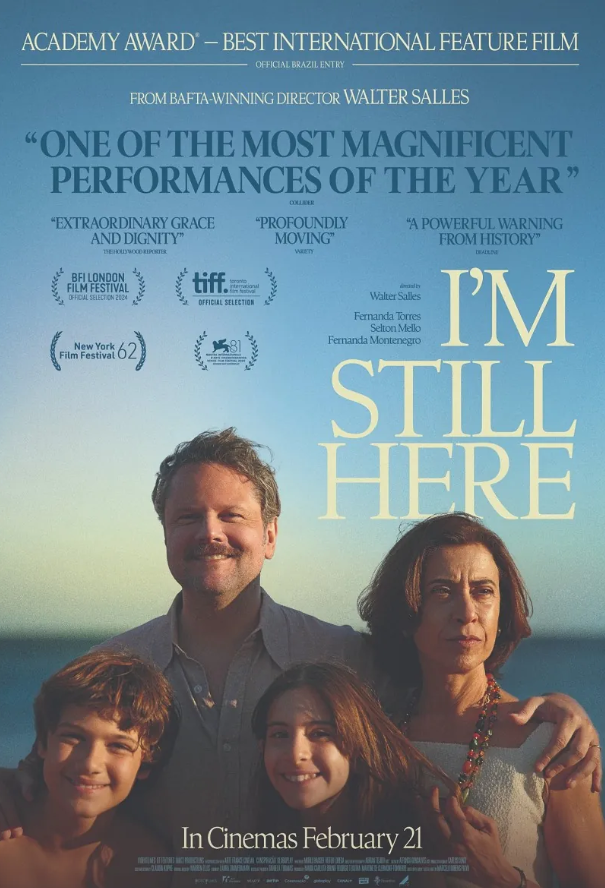
 Memorable films and books hinged around enforced disappearances of political dissidents, which was frequent under military dictatorships in Latin America, interweave the personal and the collective, with one informing the other. I’m Still Here, Walter Salles’ haunting and intimate tale of loss, defiance and solidarity, touched upon a brutal national wound through one family’s story. Adapted from Marcelo Rubens Paiva’s memoir, and imbued with the director’s own memories, it focussed on the well-off, progressive and politically engaged Paiva family on the despairing backdrop of Brazil’s repressive military dictatorship. Rubens (Selton Mello) – civil engineer, former Congressman and secret supporter of left-wing resistance activities – was arrested, tortured and killed by the authorities, though his status remained officially “unknown” until his wife Eunice (Fernanda Torres), who became a lawyer at the age of 47 and an activist championing victims of the dictatorship, secured his death certificate twenty-five years later. The film began on a buoyant note as we see this family – which also comprised of their four lively kids, living in a beach-side house in Rio Janeiro, and regularly visited by friends – with hints to the troubling political situation that turns into a backlash upon a Swiss diplomat’s kidnapping. The narrative, therefore, was broken into a “before” and an “after” as we see Eunice – who herself was illegally detained for 12 days – having to uproot her family and provide for it while doggedly pursuing Rubens’ disappearance. Accompanied by an engrossing soundtrack from the 60s and 70s, and powered by a towering central turn by Torres, this luminously shot and classically framed film reminded me of Cuarón’s Roma, which too was exquisitely foregrounded on a closely-knit family on the backdrop of political tyranny.


Director: Walter Salles

Genre: Drama/Historical Drama/Political Drama/Docudrama/Family Drama

Language: Portuguese

Country: Brazil

Tuesday, 18 March 2025

The Brutalist [2024]

 The Brutalist is an impressively imagined epic – at once monumental and intimate – on trauma, hubris, immigrant experience, corrosive ambitions, and demythologization of the American Dream. Its novelistically structured form, punctiliously conceived Eurocentric aesthetics, and exhilarating yet distancing tone obsessively mirrored its brilliant but flawed protagonist, and the modernist but abrasive titular architectural style. The intricacy and exactitude with which the narrative unfolded made it appear as an actual biographical account, even if it was, at most, a film à clef; this bold combination of faux-verité and quasi-historicity recalled the two extraordinary recent films Tár and The Zone of Interest. It follows László Tóth (Adrien Brody), a Hungarian-Jewish Holocaust survivor and renowned Bauhaus-trained architect, as he arrives at the US and settles in Philadelphia after WW2; finds in Lee Van Buren (Guy Pearce) a wealthy patron who places him in charge of a significant architectural commission, but malevolently extracts his pound of flesh; and finds his fierce love for his wife (Felicity Jones) replaced with conflicted emotions when they’re finally reunited after years of forced separation. These are juxtaposed with the borderline insanity with which he builds the colossal brutalist memorial over many years, and his self-destructive tendencies accentuated by his unprocessed trauma, inability to assimilate and heroin addiction. His first glimpse of America – strikingly captured through an inverted Statue of Liberty – sets the film’s feverish mood, which was sustained through stunning visual compositions – shot on VistaVision and 35mm film stock – and compelling score that was alternately orchestral, jazz and atonal. Incidentally, contrary to what the film’s muted coda ended with, director and co-writer Brady Corbet made it particularly about the complex, ferocious and tumultuous journey that preceded the destination.


Director: Brady Corbet

Genre: Drama/Historical Epic/Film a Clef

Language: English/Hungarian/Hebrew

Country: US
Wednesday, 23 October 2024

The Crown [2016-2023]

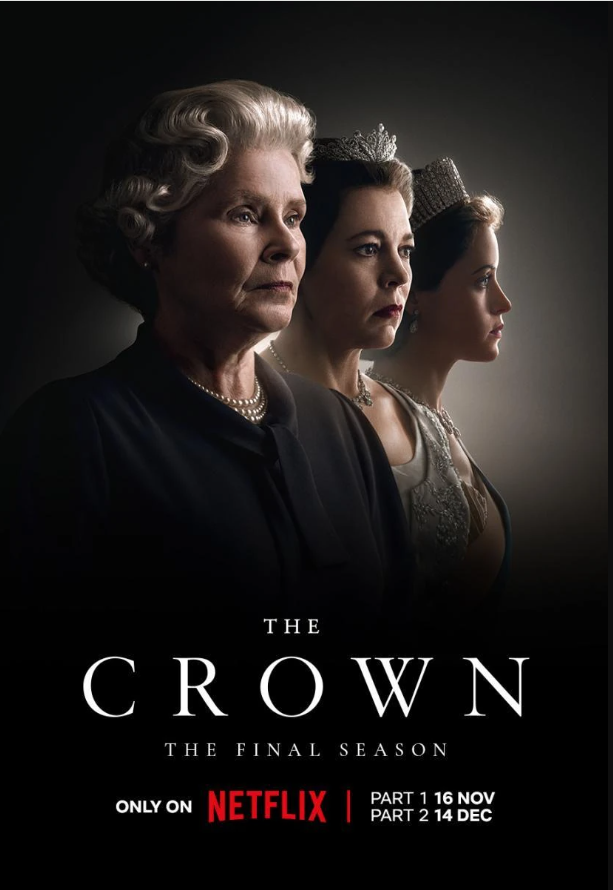
 The journey from being decidedly sceptical about watching The Crown to being left mesmerized by it was an exhilarating one. Though not an exceptionally long series per se, it achieves a formidable colour when one takes into account that it intricately covered six decades of British history, complex political forces and social happenings, and a staggering multitude of events and people. Hence, instead of a conventional summation, it’s perhaps more prudent to highlight few aspects that made this a TV phenomenon. First, and foremost, this was anything but a hagiography or a simple history lesson; rather, it was charged, edgy and turbulent on one hand, and delicate, layered and nuanced on the other, while boldly diving into moral turpitudes and quandaries. Second, it was a gripping portrayal of the “royal family” as a dysfunctional, bickering, self-centred and over-privileged group of people with skeletons in their closets and nasty machinations up their sleeves, while also evolving with the years – both willingly and otherwise. Third, the show’s creator went for a crazy gamble by casting different actors for the same characters at different times, given the narrative’s stunning temporal arc, and that played off superbly; each actor brought in something remarkable while also ensuring continuity. Fourth, it was packed with magnificent performances; the seven actors who I found most shattering were Claire Foy as Elizabeth (Seasons 1-2), Vanessa Kirby as Margaret (S1-2), Alex Jennings as Edward (S2, S5), Josh O’Connor as Charles (S3-4), Emma Corrin as Diana (S4), Lesley Manville as Margaret (S5-6), and Salim Daw as Mohamed Al-Fayed (S5). Fifth, and definitely not the last, the larger tapestry was exquisitely interwoven through meticulously mounted episodes, many of which were extraordinarily powerful; “Fagan” (S4), which recalled the bleak Thatcherite dystopia in Leigh’s Meantime, “Fairytale” (S4), where Diana roller-skates in Buckingham Palace and jives to ‘Edge of Seventeen’, ‘Tywysog Cymru’, where Charles is drawn into Welsh history, “Aberfan” (S3), centred on a colliery disaster, and ‘Vergangenheit’ (S2), that delved into the monarch’s Nazi links, were my personal favourites (in that order).


Created By: Peter Morgan

Genre: Drama/Historical Drama/Family Drama/Marital Drama/Biopic/Epic

Language: English

Country: UK

Saturday, 14 September 2024

Section Spéciale (Special Section) [1975]

 Cost-Gavras’ Section Spéciale bore the attributes that powerfully resonated in his stunning trilogy that preceded it and had made him among the most thrilling political filmmakers in the world – his pulsating masterpiece Z, the intensely unsettling The Confession, and the smashing gem State of Siege – in that it too portrayed a dystopian historical chapter from the 20th century, did that using a progressive Marxist gaze that considered acts of abuse anywhere and against anyone as a personal affront, and on an ambitious narrative canvas smartly enmeshed with agit-prop elements. Made with the objective of uncovering the rotten core of “Vichy France” – the collaborationist regime that was formed under German Occupation during WW2 – it chronicled a sham trial that was held by it to appease its Nazi masters, and thereby underscored the power of corruption and the corruption of power. When a Nazi officer is assassinated by the Resistance in Paris, the Minister of Justice Joseph Barthélémy (Louis Seigner) – with active complicity of the government – quickly drafts a draconian legislation, sets up a kangaroo court, and retrospectively tries Communists, socialists and Jews – who’ve already been sentenced for petty offenses – in order to execute them, and thereby avert retaliations. Though lacking the visceral power and gripping dynamism of the said trilogy, and missing the charismatic presence of Yves Montand, it nevertheless categorically conveyed the state-sponsored abomination of foundational legal principles. A sequence near the beginning, where a peaceful protest is violently broken up by the cops, highlighted Costa-Gavras’ ability to create exciting outdoor set-pieces. Its depiction of the Vichy regime’s use of the guillotine as a brutal political device, incidentally, would have a companion piece in Chabrol’s damning Story of Women.


Director: Costa-Gavras

Genre: Thriller/Political Thriller/Historical Thriller

Language: French

Country: France

Saturday, 7 September 2024

Christ Stopped at Eboli [1979]

 Christ Stopped at Eboli, Francesco Rosi’s sublime adaptation of Carlo Levi’s celebrated memoir, was composed as much as elegiac memories of enforced exile, as it was crafted as probing field notes on people existing in the margins. Through these parallel routes – informed by Levi’s personal impressions, political consciousness, and ethnographic meditations borne out of curiosity and empathy, and that unfolded through a series of loosely strung vignettes and anecdotes – it emerged as a document both specific in its context and timeless in its eloquence. Levi, a qualified doctor, left-wing intellectual and anti-fascist activist based in Turin, used his passion for painting as a front for his political resistance against Mussolini. Upon being arrested for his dissidence, he was banished to a remote town in remote southern Italy. While residing there from 1935 to 1936 – his exile was cut short upon the country’s successful invasion of Ethiopia – he witnessed impoverishment, disenfranchisement, diseases, superstitions and ancient customs. Despite the arid, desolate and alienating environs – poetically captured in washed-out colours – he got enmeshed into the community, participated in discussions, renewed his long-severed tryst with medicine, captured the place through his paintings, and even developed a sensuous relationship with a promiscuous cleaning woman (Irene Papas), leading to a rich understanding of the irreconcilable North-South divide. Rosi’s observational style provided the perfect counterfoil to Gian Maria Volontè’s immersive turn as the soft-spoken yet fiercely perceptive Levi, in this eloquent, essayistic study. The opening sequence, languidly cataloguing Levi’s gigantic journey via multiple transportation modes, during which he befriends an abandoned dog, was particularly memorable. The locale, premise and overarching theme, incidentally, heavily reminded me of Kiarostami’s The Wind Will Carry Us, their tonal departures notwithstanding.


Director: Francesco Levi

Genre: Drama/Historical Drama/Biopic

Language: Italian

Country: Italy

Thursday, 5 September 2024

Land and Freedom [1995]

 Loach’s deeply underrated gem Land and Freedom remains a singular work in his oeuvre, for his rare foray into historical epic – thus presaging the excellent The Wind that Shakes the Barley – and into a setting far removed from his preferred milieu of working-class Britain. Yet, it was also profoundly linked to the political inquiries, meditations and dissents that he’s pursued throughout his career. This rousing ode to the collective spirit of resistance – albeit, one tampered with bleak setbacks and heartbreaking defeats – opens with the death of the aged Liverpudlian Dave Carne, upon which his granddaughter (Suzanne Maddock) delves into his mementoes at his flat – newspaper cuttings, letters, photographs, and earth wrapped in a red cloth, the immensely moving significance of which will emerge later – and thereby pieces together an extraordinarily eventful chapter from his younger days. Unfolding in 1936 over flashbacks, David (Ian Hart), an unemployed Communist, travels to Spain to enlist with the International Brigade and fight with the Republicans against Franco. However, he ends up joining the Marxist Revolutionary and unwaveringly anti-fascist group POUM. There he experiences the thrill of fighting fascists, seeing a freed village opting for collectivization, befriending comrades, and having a tender romance with a fiery Catalan fighter (Rosana Pastor), as well as facing terrible losses, witnessing the appropriation of the left by Stalinists, and most devastatingly, the collapse of shared dreams. Marvellously shot on location that lent it both poetic and gritty textures, this electrifying collaboration between Loach and playwright Jim Allen recalled Homage to Catalonia, Orwell’s unforgettable memoir from his days of walking with POUM revolutionaries during the Spanish Civil War, and ended on a stirring display of solidarity during David’s funeral.


Director: Ken Loach

Genre: Drama/Historical Epic/War

Language: English/Catalan

Country: UK

Sunday, 31 December 2023

The Gospel According to St. Matthew [1964]

 The Gospel According to St. Matthew was a great conundrum as much for the inherently contradictory context surrounding it, as it was for the fierce work that it was. The towering Italian poet, filmmaker and intellectual Pasolini was an avowed Marxist and steadfast atheist; he’d received a suspended prison sentence for his short La Ricotta from the previous year – part of the omnibus Ro.Go.Pa.G. – as it was deemed “blasphemous”; and, one would be hard placed to find something more outrageously ribald, sacrilegious and subversive than his extraordinary Trilogy of Life. It’s therefore astonishing that he made such a faithful, and almost reverential, adaptation of a religious text and unironic inquiry into Jesus’ life and myth. Furthermore, the film’s unflinching neorealism, visceral force, bleak austerity and spare minimalism – and the political readings into Jesus’ radical humanism – placed it at singular odds to the bombastic genuflection in conventional cinematic representations of the Bible, thus drawing parallels to Caravaggio’s blazing, unsettling and violent Biblical paintings. Heading its non-professional cast was Enrique Irazoqui – 19-year-old Economics student and Communist activist from Spain who’d go on to become a computer chess expert – whose searingly intense enactment of Jesus reminds one of El Greco’s paintings, while such intellectuals like Natalia Ginzburg, Enzo Siciliano, Alfonso Gatto, etc. played various supporting roles. Made with the rigorous touch of cinéma verité, shot in grainy and unsparing monochromes, filmed in gritty Southern Italian towns to mimic Palestine and Galilee, comprising of an incredibly eclectic soundtrack that ranged from Western Classical to African-American gospel blues and Congolese hymns, and evoking Renaissance-era paintings, it covered the preacher’s life – right from his birth, through meteoric rise, till death – with cutting and desolate ferocity.


Director: Pier Paolo Pasolini

Genre: Drama/Religious Drama/Historical Epic

Language: Italian

Country: Italy

Wednesday, 22 November 2023

Senso [1954]

 Luchino Visconti’s celebrated fourth feature Senso served as a pivotal milestone for the “Red Count”, as it marked his decisive turn from a pioneering neorealist filmmaker to a practitioner of grand and ambitious historical melodramas. This visually sumptuous, emotionally feverish, vividly operatic and lavishly mounted epic – that exultantly combined Visconti’s love of cinema, theatre, opera and the fine arts – formed a precursor to and therefore one half of a diptych with his gargantuan masterpiece The Leopard, in that both were extraordinarily lush, formally meticulous, and were set against the turbulent backdrop of the radical social and political transformations that swept through the country during the Risorgimento. At its heart is a torrid, outrageously reckless and thoroughly self-destructive love affair that Livia (Alida Valli), a beautiful countess unhappily married to an older aristocrat with a chameleonic ability to shift his allegiances in sync with changing landscapes, gets embroiled in with a much younger, roguish and self-serving Austrian Lieutenant (Farley Granger), which leads her to betray her patriotic principles – viz. the causes of Italian Nationalists who’re battling for independence from the Austrian Occupation – and takes her to complete moral and existential doom. The resplendently designed and crafted film magnificently evoked the arresting architectural and locational splendour of Venice, Rome, Veneto and Verona – rapturously amplified by luscious art décor, ornate costumes and actual artworks; ravishingly shot in muted, fading colours by three different cinematographers (G.R. Aldo died midway, upon which Robert Krasker came in, but conflicts with Visconti’s vision led to Giuseppe Rotunno being asked to step in); and accompanied by a classical score – comprised of a spectacularly orchestrated and filmed battle scenes at par with what Visconti staged in The Leopard.


Director: Luchino Visconti

Genre: Drama/Historical Drama/Romantic Drama/Epic

Language: Italian

Country: Italy

Saturday, 18 November 2023

Killers of the Flower Moon [2023]

 Martin Scorsese’s bravura adaptation of the acclaimed nonfiction book of the same name by David Grann – for the 44th feature-length film of his storied career – is a bleak, brooding, engrossing and sprawling meditation on evil, greed and the capitalist excesses. It simultaneously delved into the rotten core of settler-colonialism, and specifically, the genocidal “birth” of a nation-state at the bloody-soaked expense of indigenous populations. This ambitious work – that freely worked in equal measures as revisionist Western, slow-burn crime, black comedy, existential horror and historical epic – delivered a macabre retelling of the serial killings – bordering on extermination – of the Osage people, who’d discovered oil in Oklahoma and became incredibly wealthy upon their forced relocation there, by white supremacists who wanted to seize control of the massive oil money. That Native Americans were patronized as sub-humans, made it easier to carry out the massacre with impunity, braggadocio and untroubled conscience. In a remarkable reworking of the book, which had primarily chronicled the proto-FBI’s investigations into the crimes, Scorsese focused instead on the perpetrators – specifically, the calcified and slimy William Hale (Robert De Niro), an affluent cattle rancher whose seemingly genial attitude towards the Osage community masks his monstrous heart, and his dim-witted and easily manipulated nephew Ernest Bucharest (Leonardo DiCaprio) who enters into a “poisonous” marriage to Mollie Kyle (Lily Gladstone) as part of his uncle’s elaborate nefarious and murderous scheme. Both Scorsese regulars were outstanding in their embodiment of the grotesque underbelly of American history. In a formally blazing and politically audacious finale, the tragic saga is transformed into a lurid radio opera, thus providing a cutting commentary on how popular media cynically repurposes historical injustices into kitschy consumerist fodder.


Director: Martin Scorsese

Genre: Revisionist Western/Crime Drama/Docufiction/Historical Epic

Language: English

Country: US

Wednesday, 16 August 2023

Oppenheimer [2023]

 Oppenheimer – contrary to my apprehensions of muscular and/or hagiographic account of a man who’d helped engineer war crimes and precipitate global arms race – was a thematically dense, formally dazzling and deeply bleak film which was antithetical to a conventional biopic, deconstructive of a dark chapter in 20th century history, and riveting political thriller with a surprisingly level-headed portrayal of leftism in America alongside feverish examination of individual and collective hubris. Nolan demonstrated his fascination with temporal fluidity in cinema by crafting a work at once monumental and intimate, through a Cubist structure – Picasso’s Guernica, incidentally, is eloquently referenced near its beginning – that kept zooming in and out, and rigorously progressed along interlocking timelines. It was a bold audiovisual exercise too, in its experimentations with colour and monochrome, aspect ratios, depths of field, and interplay of diagetic/non-diagetic sounds. The film’s stylistic bravura boldly complemented the multifaceted decomposition of its complex protagonist, enacted with searing intensity by Cillian Murphy. He was leftist and antifascist – his brother Frank, wife Katherine (Emily Blunt) and troubled former girlfriend Jean Tatlock (Florence Pugh) were card-carrying Communists; many of his Manhattan Project colleagues had left-wing affiliations; he’d contributed to Spanish Civil War causes through Communist channels, etc. – and yet collaborated with the American military and industrial machineries that were fervidly conservative; further, he became “father of the atomic bomb”, the concentration and proliferation of which he subsequently dissuaded. The parallel narratives chronicled his university days, Los Alamos, McCarthy witch-hunts orchestrated by Lewis Strauss (Robert Downey Jr.)., and guilt. He’d crossed paths with the who’s-who of scientific giants of his time, which the film mirrored through an all-star cast, comprising also of Matt Damon, Kenneth Branagh, etc.


Director: Christopher Nolan

Genre: Biopic/Political Drama/Political Thriller/Historical Drama/Psychological Drama/Epic

Language: English

Country: US