Showing posts with label TV Miniseries / Series. Show all posts

Sunday, 2 August 2026

Mussolini: Son of the Century [2025]

 It often takes distance to relook at an infamous tyrant’s hideous rise, along with the toxic idea of fascism (or its codification, to be more appropriate), and that’s what one senses while watching the biopic miniseries on Benito Mussolini’s surge from a relative nobody to two decades’ reign as an ultra-right-wing dictator of Italy. Adapted from Antonio Scurati’s novel, this was directed by British filmmaker Joe Wright – best known for his fine 2007 film Atonement and having never made anything outside the English language, leave alone in Italian – and produced while conscious that populist right-wing nationalism has once again been raising its ugly head across continental Europe, including in Italy. The brutal, power-hungry and self-serving strongman’s ascent – from founding the ‘Fasci Italiani di Combattimento’ in 1919 and stoking pent-up frustrations from WW1, through establishing the savage ‘Blackshirts’ militia, exponential growth in political clout and snatching the Prime Ministerial chair, and up until the cynical assassination of socialist leader Giacomo Matteotti by his bloodthirsty thugs in 1924, culminating with a chilling speech in the Parliament on 3rd January 1925 which effectively signalled the advent of totalitarianism – has been presented in the form of a punk, stylized and tar black satire that made it a volatile fusion of political history with gleeful formal experimentation, punched with the ethos and machinations of a gangster movie. The deliberately grotesque, hideous, hyper-violent and vulgar tone and palette – composed with compelling exactitude over 8 episodes of an hour each – were accompanied by a techno score, contemporary self-awareness, and a fiery – and frequently fourth-wall breaching – performance by Luca Marinelli as the smug, insecure, uncouth, self-serving and cunning despot who embodied the absolute corruptibility of absolute power.


Director: Joe Wright

Genre: Biopic/Black Comedy/Historical Drama/Political Satire/TV Miniseries

Language: Italian

Country: Italy

Wednesday, 20 May 2026

Portobello [2025]

 It’s quite astonishing that Marco Bellochhio, a (hopefully) soon-to-be nonagenarian who made his directorial debut six decades back, is still making films that’re bold, ambitious, caustic, rebellious, comprises of electrifying moments and filled with throbbing vitality. His second television miniseries – made four years after Exterior Night, a similarly vigorous and riveting recounting of a complex and sensational chapter from contemporary Italian history – Portobello flamboyantly glided through a real-life soap opera filled with kitsch, melodrama, scandal-mongering, lurid machinations, “theatre of the absurd” and a proto version of cancel culture. Enzo Tortora (Fabrizio Gifuni, in his third consecutive collaboration with Bellocchio and fourth overall) was at the peak of his popularity in the early-1980s when things took a spectacular nose-dive for him and he was plunged into a bizarre nightmare. He was the host of the enormously popular weekly TV show – a rather cheesy programme that was fervently devoured by 28 million viewers – when Giovanni Pandico (Lino Musella), a creepy and egotistic Comorra member who was obsessed with Tortora and turns into an informant for the Italian authorities, falsely alleges the latter of being a drug trafficker for the mafia out of sheer spite. Few of his fellow turncoats, too, join him in that, and as a result Tortora’s life comes crashing down, leading to a frustrating, traumatic and seemingly endless battle with an obsessed state prosecution. Bellocchio splendidly captured the zeitgeist through ambitiously mounted set-pieces and production designs, and the utterly farcical nature of the scenario through a mix of drama, bombast and sardonic humour, thereby making this a thrilling seriocomic ride. The firebrand Italian filmmaker’s pointed jabs at his country’s social, political, judicial, religious and criminal layers continue unabated.


Director: Marco Bellocchio

Genre: Drama/Legal Drama/Crime Drama/Biopic/TV Miniseries

Language: Italian

Country: Italy

Friday, 7 November 2025

Twin Peaks [1990-91, 2017]

 Twin Peaks – the surrealist, grisly, horror, mystery, campy and goofy soap opera that David Lynch co-created with Mark Frost – was a surprise hit when it premiered in 1990, and became a pop-culture phenomenon with a cult following despite its eccentric, outlandish and bizarre plot elements. The first season – arguably the highest-point in the series – opened with the murdered body of the beautiful but troubled high school student Laura Palmer (Sheryl Lee) in the tranquil town of Twin Peaks. It followed, on one hand, the murder investigation led by the incorrigibly optimistic and doggedly persuasive FBI Agent Dale Cooper (Kyle MacLachlan) supported by the local Sheriff, and on the other, the private affairs, sly ploys and nefarious machinations of the town’s offbeat residents which included corrupt businessmen, impassive cops, mad psychiatrists, punks, drifters, and striking damsels (Lara Flynn Boyle, Sherilyn Fenn, and Joan Chen), along with teasing forays into alternate realms. The longer second season concluded the investigation, and then took the plot forward. With the broader narrative scope, it succeeded in being more playful, madcap and adventurous, while also stepping the gas too much on occasions on silly humour and psychedelic excesses. Though the second season ended on a cliffhanger note, and Lynch followed it immediately with the gripping prequel feature Twin Peaks: Fire Walk With Me, it was a whopping 2 ½ decades before a much-awaited third season finally arrived. Largely bereft of the campy Americana and soap opera elements of the earlier seasons, this alternately arresting, ingenious and exasperating season – filled with multiple parallel plots, interludes and detours, alongside both returning and new cast members – took the narrative forward, backwards and sideways into a bonkers, mind-bending trip.


Director: David Lynch

Genre: Series/Crime/Mystery/Comedy/Horror/Thriller/Drama

Language: English

Country: US

Sunday, 19 January 2025

The Story of Film: An Odyssey [2011]

 At just over a century, cinema is, by some distance, the youngest of all major artforms; yet, it has evolved, expanded and shape-shifted so extraordinarily in its relatively brief history, that any attempts at chronicling its history is bound to be an exercise in audacity. Furthermore, when one realizes that it freely built upon multiple other artforms, and its progression has been as technical as cultural and political, one can also sense the sheer complexity of that endeavour. If one dizzying way to do that was Godard’s dense, metatextual and monumental video essay Histoire(s) du Cinéma, another diametrically opposite approach was Marc Cousin’s in The Story of Film. Running at 900 minutes, and covering around 1000 films across all 6 continents, this was no less ambitious. Further, by consciously spending considerable time on silent cinema, covering films from the “global south”, and complementing technical evaluations and historical details with highly personal views – even if they were dubious or superficial at times – Cousins made this much more idiosyncratic than what a more straightforward documentary would’ve been. Spread over 15 chapters, it covered an immensely wide spectrum – films made within and outside the studio system, films that’re canonical and those beyond the canon, popular and arthouse movies, films demonstrating technological developments as well as political contexts – which also made it episodic and engaging, even if this sacrifice of depth for breadth made it too cursory and thereby less rigorous. Notwithstanding Cousins’ exasperating diction and repetitiveness, one must admire his love for the medium, the stunning span of his focus, and the herculean efforts that he invested by interviewing diverse people and physically visiting numerous places during the course of its making.


Director: Mark Cousins

Genre: Documentary/History/Mini-Series

Language: English

Country: UK

Wednesday, 23 October 2024

The Crown [2016-2023]

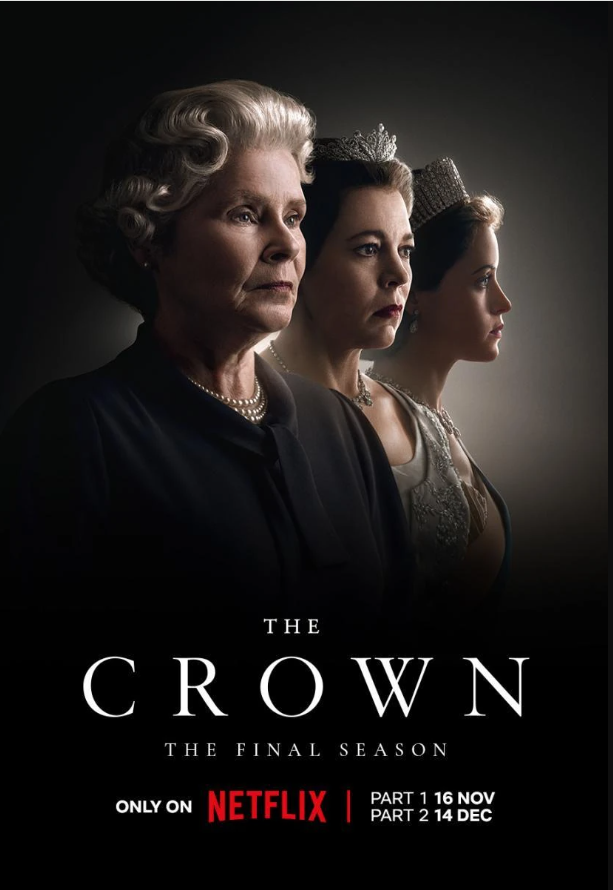
 The journey from being decidedly sceptical about watching The Crown to being left mesmerized by it was an exhilarating one. Though not an exceptionally long series per se, it achieves a formidable colour when one takes into account that it intricately covered six decades of British history, complex political forces and social happenings, and a staggering multitude of events and people. Hence, instead of a conventional summation, it’s perhaps more prudent to highlight few aspects that made this a TV phenomenon. First, and foremost, this was anything but a hagiography or a simple history lesson; rather, it was charged, edgy and turbulent on one hand, and delicate, layered and nuanced on the other, while boldly diving into moral turpitudes and quandaries. Second, it was a gripping portrayal of the “royal family” as a dysfunctional, bickering, self-centred and over-privileged group of people with skeletons in their closets and nasty machinations up their sleeves, while also evolving with the years – both willingly and otherwise. Third, the show’s creator went for a crazy gamble by casting different actors for the same characters at different times, given the narrative’s stunning temporal arc, and that played off superbly; each actor brought in something remarkable while also ensuring continuity. Fourth, it was packed with magnificent performances; the seven actors who I found most shattering were Claire Foy as Elizabeth (Seasons 1-2), Vanessa Kirby as Margaret (S1-2), Alex Jennings as Edward (S2, S5), Josh O’Connor as Charles (S3-4), Emma Corrin as Diana (S4), Lesley Manville as Margaret (S5-6), and Salim Daw as Mohamed Al-Fayed (S5). Fifth, and definitely not the last, the larger tapestry was exquisitely interwoven through meticulously mounted episodes, many of which were extraordinarily powerful; “Fagan” (S4), which recalled the bleak Thatcherite dystopia in Leigh’s Meantime, “Fairytale” (S4), where Diana roller-skates in Buckingham Palace and jives to ‘Edge of Seventeen’, ‘Tywysog Cymru’, where Charles is drawn into Welsh history, “Aberfan” (S3), centred on a colliery disaster, and ‘Vergangenheit’ (S2), that delved into the monarch’s Nazi links, were my personal favourites (in that order).


Created By: Peter Morgan

Genre: Drama/Historical Drama/Family Drama/Marital Drama/Biopic/Epic

Language: English

Country: UK

Saturday, 29 June 2024

The Lying Life of Adults [2023]

 The chaotic messiness of life, the anxiety-laden process of reconciling with that, and the complexities that people must often navigate through vis-à-vis familial and class backgrounds, are running strands in Elena Ferrante’s novels, and the same vividly held true in her captivating book The Lying Life of Adults. Edoardo De Angelis placed these at the forefront in his commendable adaptation – co-written by Ferrante herself – into the miniseries form. Giovanna (Giordana Marengo) is an intelligent, perceptive and soft-spoken, but inwardly obstinate, restless and emotionally muddled adolescent girl. Unsure of her footing, she finds herself drifting while growing up in a well-off nuclear family, comprising of erudite and left-leaning parents, in 1990s Naples. Upon overhearing her father’s offhand remark about her growing resemblance to her estranged Aunt Vittoria (Valeria Golino) – who her father had violently fallen out with many years back, turning her into persona non grata in their family – she develops a gnawing curiosity to meet her. And when that eventually happens – which necessitates a journey from the cloistered bourgeoisie world that she inhabits to the gritter and seedier side of the city, thus crossing irreconcilable societal borders in the process – the impact of that spins her out of her axis. As her relationship starts deepening with this brash, volatile and overly religious woman – alternately magnetic and repulsive – she finds herself noticing the fault-lines in her family and questioning her own identity, which brings forth a rebellious streak in her that pushes her towards forging a radical new path for herself. Though certain sections felt tad superfluously etched, striking turns by Marengo and Golino, strong political undercurrents, impressive visual designs, and eclectic electronic soundtrack made for a rollicking viewing experience.


Director: Edoardo De Angelis

Genre: Drama/Urban Drama/Coming-of-Age/Miniseries

Language: Italian

Country: Italy

Wednesday, 24 January 2024

Out 1: Noli Me Tangere [1971]

 Jacques Rivette eschewed time and narrative, and deconstructed the experience of making and watching movies, in Out 1, his grandest and boldest experiment. Often considered one of the "holy grails for cinephiles", it remains an audacious, enigmatic and baffling work, what with its staggering 13-hours’ length, wildly freewheeling structure, extraordinary exercises in improvisation, and unavailability for many years. It began with exacting and bemusing dives into the immersive workshops of two avant-garde theatre collectives rehearsing Aeschylus’ plays – a rigorously analytic troupe led by the avuncular Thomas (Michael Lonsdale) and an idiosyncratic one led by the spirited Lili (Michèle Moretti) – whose outré drills and heavy improvs metatextually mirrored the film itself. Two neurotic outsiders, meanwhile, provoke a parallel thread – one of paranoia, subterfuge and conspiracy reminiscent of Paris Belongs to Us – presented as a cackling anti-thriller. On one hand there’s Colin (Jean-Pierre Léaud), a shapeshifting, harmonica-playing drifter who becomes drawn into a quixotic investigation to uncover a sinister secret society linked to Balzac and Lewis Carroll; on the other there’s Frédérique (Juliet Berto), an alluring hustler and vagabond who too loiters into an analogous quest. Packed with extraordinary long takes – including a bravura one following an increasingly manic Léaud through the Parisian streets – the film also had Françoise Fabian as a crafty lawyer, Bulle Ogier as the proprietor of a shady joint, and the great Éric Rohmer as a deadpan Balzac scholar. Claustrophobic interiors were juxtaposed with radiant exteriors in this wry, dazzling and monumental opus often interpreted as an expression of post-May’68 disillusionment and malaise. Rivette, interestingly, cut a four-hour version which he called Spectre – or “ghost” – as opposed to this longer version’s subtitle which ironically means “touch me not”.


Director: Jacques Rivette

Genre: Avant-Garde/Experimental/Social Satire/Black Comedy/Mystery/Mini-Series

Language: French

Country: France

Monday, 26 June 2023

Esterno Notte [2022]

 In March 1978, former Italian PM and Christian Democracy party leader Aldo Moro was kidnapped, held hostage for 55 days and eventually assassinated by the revolutionary guerilla outfit Red Brigades. The centre-left politician was an influential statesman and popular leader whose sway cut across the political spectrum; “Caso Moro”, as a result, remains one of the most dramatic and defining moments in post-War Italy. Bellocchio, who’d made the acclaimed film Buongiorno, Notte on the same event – albeit from the perspective of an RB member – returned to this subject 20 years later with Esterno Notte, where he significantly expanded the scope by focusing on all key protagonists and therefore resorting to the miniseries form which allows for more expansive treatments while retaining the narrative elements and cinematic appeal of feature-length films. The resultant work, split over 6 Parts, was ambitious, kaleidoscopic and oftentimes compelling. The first 5 episodes spotlighted on each of the key players – Part 1 on Moro (Fabrizio Gifuni) himself; Part 2 on conflicted Minister of the Interior Cossiga (Fausto Russo Alesi); Part 3 on Pope Paul VI (Toni Servillo) who launched a parallel plan to get Moro freed upon realizing the government’s unwillingness to negotiate; Part 4 on RB and, in particular, Adriana Faranda (Daniela Marra), a single mother and committed revolutionary who was part of the core team and expressed disagreements with their pig-headed tactical choices; Part 5 on Moro’s wife Eleonora (Margherita Buy) who becomes increasingly furious at the CD leadership for their wilful inaction – while the final episode wrapped things up. Gifuni, as Moro, and Buy, as his devastated wife, gave superlative turns in this brooding docufiction on political conflicts, cover-ups, violence and aftermaths.


Director: Mario Bellocchio

Genre: Drama/Political Drama/Docufiction/TV Miniseries

Language: Italian

Country: Italy

Saturday, 14 January 2023

Histoire(s) du Cinéma [1988-1998]


 To say that Godard’s magnum opus Histoire(s) du Cinéma – the 8-part video essay conceived while he was on lecture tours during the 80s, 10 years in the making, and clocking at a massive 266 minutes – is a monumental treatise on cinema is stating the obvious. It’s a dense, daunting, discursive, digressive, deeply self-reflexive, incredibly metatextual, unabashedly polemical, and radical reimagining of what cinema is and can be. And in turn this freeform, kaleidoscopic and demanding work – filled with hyperlinks, reflections, juxtapositions, dizzying montage, and intricate interplay of images, sounds and words – manifested everything that Godard was and remains – viz. a pioneer, a pathbreaker, a prophet, a subversive pun artist, a romantic, a rebel, a staggering intellectual, a profoundly progressive critical thinker and someone for whom history (and story) of cinema – as the wordplay in the title alluded to – and its form and dialectics, were inseparable from the history, story, interpretation and politics of the 20th century. His complex and sprawling meditation on the medium, therefore, encompassed everything from the American studio system to Soviet montage, from Italian neorealism to French avant-garde, and from wide-ranging impressions of other artforms (literature, painting, music) to auto-portraiture. These in turn were overlayed with his wry and weary commentary on fascism, imperialism, capitalism, consumerism, tyranny, exploitation and devastating wars that the century was besieged with, along with stirring espousal of revolutionary ideas and melancholic elegy on cinema. While it was impossible to make note of the slew of films that he referenced – which led to inevitable copyright issues, though, ironically, Godard exempted his own work from copyright restrictions – I managed to count 65-odd films that I’ve watched, though I’m sure I missed a few.


Director: Jean-Luc Godard

Genre: Documentary/Essay Film/Miniseries

Language: French

Country: France

Tuesday, 27 September 2022

Better Call Saul [2015-2022]

 Breaking Bad, which earned immense fandom, plaudits and awards, was undeniably gripping; however, its spin-off prequel Better Call Saul – to let the cat out of the bag at the very outset – was even better. The creators, in an excellent creative decision, focussed here on the backstories of two secondary characters from the previous show – the hustling, loquacious and amoral lawyer Saul Goodman (Bob Odenkirk) in particular, and to a lesser degree the taciturn ex-cop turned enforcer Mike Ehrmantraut (Jonathan Banks) – and dramatically reworked the mood and scope while retaining elements which were at the forefront there. The resultant work was more psychologically nuanced, morally ambiguous, stylistically ambitious, and sprawling in its narrative arc. Odenkirk gave a truly outstanding performance as Jimmy McGill, former con-man and struggling lawyer who, over 6 marvellous seasons, transforms into a wealthy, crafty and flourishing lawyer through a mix of sheer will, ingenuity, impudence, street-smartness and willingness to cut corners. Banks evoked a droll persona, juxtaposing fierce loyalty, albeit for Gus Fring (Giancarlo Esposito) – the ruthless Chilean drug distributor for the cartel – with an indeterminate moral compass. Kim Wexler (magnificently played by the stunning Rhea Seehorn) – a virtuoso lawyer and a complex, enigmatic woman – formed a fascinating counterpoint to Saul. Among other memorable characters, Saul’s elder brother Chuck (Michael McKean), a renowned lawyer with psychological troubles; Lalo Salamanca (Tony Dalton), a conniving and charismatic Mexican drug lord; and Nacho (Michael Mando), a foot-soldier in the Salamanca gang, stood out. The series became darker, murkier and more engrossing as it progressed, reaching its apotheosis in the final season – set “after” Breaking Bad’s events and shot in bleak monochromes – which portrayed a lonely, broken and hunted Saul struggling to contain his natural instincts.


Creators: Vince Gilligan & Peter Gould

Genre: Drama/Crime Drama/Legal Drama/Black Comedy

Language: English

Country: US

Friday, 5 November 2021

Breaking Bad [2008-2013]

 Breaking Bad possibly ranks – alongside Sopranos and The Wire – as one of the most acclaimed American crime TV series of the last few decades, in terms of both popular and critical consensus. Though it took time to garner viewership – its creator Vince Galligan, in fact, had to pitch the idea to multiple networks before being hesitatingly accepted by AMC – by the time it concluded its run of 5 seasons, it was among the most watched, discussed and awarded television shows of all time. The distracting fandom/hype surrounding it aside, it does remain a smart, compelling, brilliantly written and superbly realized show that slowly grows on one thanks to its original, unconventional storyline – albeit using a frighteningly real scenario as its springboard –; blend of multiple genre elements – crime, black comedy, family drama, morality play, Western –; a protagonist who one roots for even though he transitions into a fiendish antagonist; and interjections of ingenuity, dark undercurrents, ethical wranglings and violence into an otherwise deliberately paced narrative. The basic premise involved middle-aged high school chemistry teacher Walter White (Bryan Cranston) – bitter, proud, overqualified, underpaid and suffering from mid-life crisis – who, upon being diagnosed with stage-three lung cancer, gets into crystal meth production and distribution in order to pay for his treatment and secure financial security for his family. Cranston displayed a gripping screen presence, and was ably supported by a fine support cast – notably his headstrong wife Skylar (Anna Gunn); emotionally vulnerable meth addict and Walter’s partner Jesse (Aaron Paul) with whom he shares a complex relationship; incredibly capable DEA agent Hank (Dean Norris); deceptively vicious druglord Gus (Giancarlo Esposito); unctuous, resourceful and hilariously crooked lawyer Saul (Bob Odenkirk), etc.


Directors: Vince Gilligan et al

Genre: Crime Drama/Western/Family Drama/TV Series

Language: English

Country: US

Wednesday, 13 October 2021

True Detective [2014, 2015, 2019]

 True Detective has been an arresting TV series in the way each season was akin to self-contained miniseries, while the overall HBO series – created by former literature professor Nic Pizzolatto – was connected by genre/sub-genre (crime drama, police procedural), complex narrative structure (labyrinthine, multi-linear plotting), tonal palette (downbeat, moody, atmospheric, brutal, slow-burn) and themes (institutional corruption, abuse of power, perpetuation of violence, the need to subvert the system for solving crimes). The series begun on a brooding, electric note with the first season – fabulously led by Woody Harrelson as a sincere, philandering detective with Louisiana State PD and Matthew McConaughey as his disturbed, brilliant partner – which involved gruesome, religious cult homicides chronicled along two parallel strands 17 years apart. The grimy but tad bloated second season – with a cast comprising of Colin Farrell as a self-destructive cop with a murky past; Rachel McAdams as a promiscuous, self-hating detective; Vince Vaughn as a mobster trying to go legit – felt closer to a gangster film despite the elements of murder and mystery, and end on a fatalistic note. And the beautifully paced, ambitiously delineated third season, which arguably remains the best of the lot despite the relatively lower viewership – with a superb performance by Mahershala Ali as a tenacious, conflicted Arkansas State PD detective; ably supported by Stephen Dorff as his loner partner and Carmen Ejogo as the former’s wife who becomes a narrative fiction writer with a voice of her own – dealt with a gruesome investigation into two missing kids that audaciously unravels over three timelines across 35 years. From the first season’s stunning opening credits till the third’s deftly underplayed finale, this series definitely deserves the plaudits it has garnered.


Directors: Nic Pizzolatto, Cary Joji Fukunaga et al

Genre: Crime Drama, Anthology, Series, Miniseries, Police Procedural

Language: English

Country: US

Sunday, 15 August 2021

Once Upon a Time There Was One Country [1995]

 Kusturica’s riotously allegorical, unhinged, extravagant, sweeping, farcical, bitingly satirical and darkly ironic retelling of contemporary history of Yugoslavia – a country that, as the title so poignantly makes it clear, doesn’t exist anymore – was 5 ½ hours of dazzling anarchy, exhilarating madness, subversive exuberance and trippy fever dream like few others. This grandiose work, interestingly, had two versions – the 3 ½ hour theatrical cut, released as Underground, which won Kusturica his 2nd Palm d’Or, and this expansive long-cut that was shown on Serbian television; while the former was a fabulous achievement in itself, the filmmaker’s epic, delirious and incendiary vision arguably realized its full potential in the broader miniseries canvas. Set over half a century from 1941 till around 1992, it covered three crucial chapters in the country’s turbulent past – the Nazi occupation during the WW2, the Tito years during the Cold War era, and the devastating Yugoslav Wars that tore the country apart – through a complex ménage à trois between Blacky (Lazar Ristovski), a gregarious, anti-fascist, fearless Communist resistance leader; Marko (Miki Manojlović), a self-serving, duplicitous and slimy antagonist, and Natalija (Mirjana Joković), a stunningly beautiful, popular and opportunistic theatre actress who both men are in love with. While they start out as inseparable friends and fellow guerilla partisans, Marko tricks Blacky into an underground shelter and concocts an elaborate ruse in order to keep him there, while he steal his girlfriend, becomes an arms trafficker and gets wealthy, until all hell breaks loose. Filled with outstanding set-pieces, surreal splashes, lively ensemble cast, jaundiced world-views, carnivalesque atmosphere, unpredictable narrative arc, extraordinarily foot-tapping brass score and a profoundly heartbreaking finale, this was filmmaking at its most bravura, hyperbolic and unforgettable.


Director: Emir Kusturica

Genre: Black Comedy/Political Satire/War/Historical Epic/Miniseries

Language: Serbian

Country: Serbia