Tuesday, 30 January 2024

Hands over the City [1963]

 Hands over the City, Rosi’s electrifying follow-up to his dazzling Salvatore Guiliano, firmly established him as one of the greatest practitioners of political cinema, whose left-wing defiance for unearthing murky governmental collusions, corruptions, criminality and cover-ups through investigative filmmaking made him a powerful comrade to Costa-Gavras. While Sicilian polity served as the canvas for his landmark previous feature, he trained his lens here on Naples. Through an arresting blend of social realism and baroque stylizations – thus both leveraging his apprenticeship in neorealism while also transcending it – Rosi delivered a blistering exposé on how real-estate speculations and constructions were making a mockery of due processes, and in turn violating the city’s architectural character and the interests of its working-class population, through rotten hand-in-glove complicity with the political establishment. His use of architecture as political and existential inquiries, therefore, drew interesting parallels to Antonioni’s Red Desert, Godard’s Alphaville, Tati’s Playtime, etc., despite their formal disparity. When an old residential building collapses with tragic consequences, the city council is eager to bury the incident – not least because Nottola (played with imposing heft by Rod Steiger), a wealthy real estate shark who’s part of the right-wing party that’s in power and with which he has a quid pro quo relationship, is potentially to blame for it. Communist party member De Vita (passionately enacted by real-life council member Carlo Fermariello) is the only person who raises his voice and even propels a futile departmental enquiry. Shot in stunning B/W and punctuated by a pulsating brassy score, it was filled with fury, ferocity, urgency, and bleak irony, as sealed by the riveting sequence where the politicians operatically call out in unison, “our hands are clean!”


Director: Francesco Rosi

Genre: Drama/Political Drama/Political Thriller

Language: Italian

Country: Italy

Friday, 26 January 2024

Salvatore Giuliano [1962]

 In the annals of landmark political filmmaking, Salvatore Guiliano – the scintillating film that established Marxist and post-neorealist filmmaker Francesco Rosi as one of the most electrifying voices of post-War Italian cinema – remains a work of piercing analytic brilliance, formal bravura and blazing ferocity. Having earlier assisted Visconti on La Terra Trema and Senso, he combined visceral realism, remarkably dialectical approach, and uncompromising diagnosis of historical artefacts into a thrilling piece of investigative journalism that provided a scalding examination of the rotten state of affairs perpetuated by the government, army, police, Mafiosi, feudal class and law – foregrounded in Sicily’s gritty sociopolitical landscape – that first led to the titular outlaw’s phenomenal rise in power and popularity, and thereafter the massive manhunts that eventually led to his death and posthumous trial. Instead of a classical approach, Rosi adopted a dazzling multi-perspective form – reminiscent of Citizen Kane, Rashomon and Peruvian writer Llosa’s magnificent novel The Real Life of Alejandro Mayta – for a powerful inquiry into corruption, complicity and expediency, and in turn deconstruction of the Sicilian bandit’s life, death and myth. Rosi crafted this complex, clinical and non-linear mosaic, and forensic diagnosis, with a mostly non-professional cast – as desperado, partisan, hired-hand, fugitive – and filmed in the same locations where Guiliano’s meteoric persona unfolded, through magnetic B/W palettes that evoked a striking sense of here-and-now. In a fascinating artistic choice, we hardly ever see Giuliano; yet, the enigmatic desperado’s shadowy presence pervaded every episode, including his enlisting for Sicily’s secessionist ambitions, his repute among the poor for his antagonistic persona vis-à-vis the oppressive carabiniere, his noxious participation in the massacre of Sicilian communists, and the power structure’s turbid, tangled and malleable links to him.


Director: Francesco Rosi

Genre: Drama/Historical Drama/Biopic/Docudrama

Language: Italian

Country: Italy

Wednesday, 24 January 2024

Out 1: Noli Me Tangere [1971]

 Jacques Rivette eschewed time and narrative, and deconstructed the experience of making and watching movies, in Out 1, his grandest and boldest experiment. Often considered one of the "holy grails for cinephiles", it remains an audacious, enigmatic and baffling work, what with its staggering 13-hours’ length, wildly freewheeling structure, extraordinary exercises in improvisation, and unavailability for many years. It began with exacting and bemusing dives into the immersive workshops of two avant-garde theatre collectives rehearsing Aeschylus’ plays – a rigorously analytic troupe led by the avuncular Thomas (Michael Lonsdale) and an idiosyncratic one led by the spirited Lili (Michèle Moretti) – whose outré drills and heavy improvs metatextually mirrored the film itself. Two neurotic outsiders, meanwhile, provoke a parallel thread – one of paranoia, subterfuge and conspiracy reminiscent of Paris Belongs to Us – presented as a cackling anti-thriller. On one hand there’s Colin (Jean-Pierre Léaud), a shapeshifting, harmonica-playing drifter who becomes drawn into a quixotic investigation to uncover a sinister secret society linked to Balzac and Lewis Carroll; on the other there’s Frédérique (Juliet Berto), an alluring hustler and vagabond who too loiters into an analogous quest. Packed with extraordinary long takes – including a bravura one following an increasingly manic Léaud through the Parisian streets – the film also had Françoise Fabian as a crafty lawyer, Bulle Ogier as the proprietor of a shady joint, and the great Éric Rohmer as a deadpan Balzac scholar. Claustrophobic interiors were juxtaposed with radiant exteriors in this wry, dazzling and monumental opus often interpreted as an expression of post-May’68 disillusionment and malaise. Rivette, interestingly, cut a four-hour version which he called Spectre – or “ghost” – as opposed to this longer version’s subtitle which ironically means “touch me not”.


Director: Jacques Rivette

Genre: Avant-Garde/Experimental/Social Satire/Black Comedy/Mystery/Mini-Series

Language: French

Country: France

Sunday, 21 January 2024

Four Days in July [1984]

 Mike Leigh’s final television film and the middle chapter in his terrific trilogy on Thatcher’s harsh regime – sandwiched on either side by Meantime and High HopesFour Days in July remains a remarkable, albeit criminally underrated, work in his canon. Like the two other films, it too was a defiantly political film, filled with rousing left-wing solidarity and radical compassion. Its tone, however, wasn’t one of anger or disillusionment; rather, it was enveloped in understated warmth, fragility and melancholy, which made it even more touching and eloquent. Set in Belfast at the peak of “The Troubles”, the turbulent Northern Ireland conflict provided a politically-charged backdrop, informing the characters and their personal stories, but rarely overshadowing the intimate tale of two couples – at opposite ends of political and religious divides – expecting their first children during the 12th July “Orange Marches”. The gregarious, warm-hearted Collette (Brid Brennan), and the withdrawn, soft-spoken Eugene (Des McAleer), who’s been crippled by bullets and shrapnel, are Catholics and republicans quietly hoping for a free Ireland. Leigh’s kinship, unsurprisingly, was steadfastly with this unassuming couple that was magnificently brought to life by the two actors. Their gentle banters with similarly humble and memorably portrayed neighbours – deadpan window-washer (Stephan Rea) and modest plumber (Shane Connaughton) – added nuanced undertones to their milieu. The other side of the spectrum was represented by the brash army officer Billy (Charles Lawson) and his unsettled wife Lorraine (Paula Hamilton), who’re Protestants and unionists. Two exceptionally stitched sequences especially stood out – Collette pensively singing the haunting IRA ballad “The Patriot Game”; and the two new mothers, in adjacent hospital beds, realizing their divides by the fundamentally contrasting names they’ve chosen for their babies.


Director: Mike Leigh

Genre: Drama/Political Drama/Marriage Drama

Language: English

Country: UK

Tuesday, 16 January 2024

High Hopes [1988]

 The title of Leigh’s High Hopes – the third film in his so-called “Anti-Thatcher Trilogy”, which was preceded by Meantime and Four Days in July – wasn’t just ironic and sardonic, but quietly mournful too, and with a tinge of bitterness. It pointed to the vacuous, self-centred “high hopes” that the nouveau riche associates their class mobility and entitlements with. Conversely, it also underscored the despair and disenchantment that come for a progressive and conscientious person for harbouring high ideals, or “high hopes”, and the futility thereof. Made with a cheeky mix of parody, humour, pathos and anger, this seriocomic film had at its core one of the most delectably whimsical, lovable and infectious married couples in cinema – Cyril (Phil Davis), a Marxist working-class man who’s become profoundly disillusioned with Thatcher’s England and the glib upper-class around him who he observes with scorn and befuddlement, and Shirley (Ruth Sheen), an affable woman who shares her husband’s left-wing beliefs, bohemian outlook, love for the pot and disdain for the then British Prime Minister, while still retaining a streak of optimism – who live an unassuming life in their little flat in King’s Cross, North London. The philosophy with which they live their lives, unsurprisingly, is at complete odds with that of Cyril’s shallow, neurotic sister (Heather Tobias), who’s unhappily married to a wealthy, philandering clown. Meanwhile, Cyril’s taciturn widowed mother (Edna Doré), suffering from dementia, lives a distanced existence at one of the last council houses in a rapidly gentrifying neighbourhood, as sharply accentuated by her smug, upper class next-door neighbour (Lesley Manville). If some of Leigh’s caricatures were broad, that’s how he probably intended, in order to demonstrate which side he’s on.


Director: Mike Leigh

Genre: Drama/Black Comedy/Social Satire/Political Satire

Language: English

Country: UK

Sunday, 14 January 2024

Meantime [1983]

 Often considered the pinnacle of Mike Leigh’s acclaimed work in television, and the first chapter in his searing trilogy foregrounded on Thatcher’s Britain – it was followed by Four Days in July and High HopesMeantime presented a blistering portrayal of the economic degradation and existential disillusionment of the working-class during her cruel premiership. Crafted using a combustible mix of anger, despair, irony and cutting humour, the filmmaker’s profound empathy for the disenfranchised and the marginalized shone through above all. An impoverished and dysfunctional blue-collar family of four – middle-aged couple Frank (Jeffrey Robert) and Mavis (Pam Frier), and their two adult sons Mark (Phil Daniels) and Colin (Tim Roth) – who’re living a grubby existence in a shabby, cramped flat in London’s working-class East End, has been hit hard, like numerous others, by recession and widespread unemployment. Consequently, all three men in the family are unemployed, and therefore compelled to depend on the meagre dole distributed by the council office and Mavis’ menial job in order to meet ends. The film’s primary focus was on the two diametrically opposite brothers having a complex love-hate relationship – Mark is cynical, bitter and alienated, while Colin is naïve, gauche and vulnerable – which made it an interesting precursor to Life Is Sweet, which too had featured a similarly complicated relationship between two contrasting sisters. Leigh loved dealing in pointed class juxtapositions, and that manifested through Mavis’s sister Barbara (Marion Bailey) who’s unhappily married to a well-off man (Alfred Molina) and lives in suburban comfort. The marvellously enacted film, which also featured a bare-knuckled turn by Gary Oldman as an unstable skinhead, was filled with gritty locales that brilliantly counterpointed its bleak mood and sardonic tone.


Director: Mike Leigh

Genre: Drama/Family Drama/Social Drama/Black Comedy/Social Satire

Language: English

Country: UK

Tuesday, 9 January 2024

Teorema [1968]

 Teorema – a work of stunning bravado, intellect and force – remains amongst the most politically and formally radical films in Pasolini’s oeuvre. It posited, with smouldering fury and elliptic allegory, such an inflammable discourse on the existential barrenness of the bourgeoisie – a class for which he had profound disdain – that it evoked a sharp furore upon its release. While its cutting Marxist dialectics troubled conservative audience, its subversive religious subtexts enraged the Vatican to no end. And, in what can only be called unintentionally ironic, advertisements in the American market exploited its unsettling minimalism by promoting it as having only “923 spoken words.” The eerily magnetic parable was hinged around a strikingly enigmatic “visitor” (Terence Stamp) – a god or a devil or a mix of both – who comes to stay for a few days with a Milanese bourgeois family, in their decadent mansion, comprising of wealthy industrialist and paterfamilias (Massimo Girotti), his wife (Silvana Mangano), their daughter (Anne Wiazemsky, who was nudged by her then boyfriend Godard to work with Pasolini), son, and middle-aged maid (Laura Betti). All five get seduced by him – which he gladly partakes in – before departing as mysteriously as he’d arrived. Their sexual union with him take their lives towards breathtaking repercussions. While the impact is positive for the maid as she gets bestowed with miraculous abilities, it's one of devastating desolation for the family – the son becomes a manic artist (presaging, interestingly, Warhol’s “piss art” by a decade), the daughter becomes catatonic, the mother starts picking up younger men, and the father abandons literally everything. The film’s desaturated visuals and idiosyncratic soundtrack – which segued from Morricone to Mozart – complemented its feral tone and modernist palette.


Director: Pier Paolo Pasolini

Genre: Drama/Psychological Drama/Mystery

Language: Italian

Country: Italy

Sunday, 31 December 2023

The Gospel According to St. Matthew [1964]

 The Gospel According to St. Matthew was a great conundrum as much for the inherently contradictory context surrounding it, as it was for the fierce work that it was. The towering Italian poet, filmmaker and intellectual Pasolini was an avowed Marxist and steadfast atheist; he’d received a suspended prison sentence for his short La Ricotta from the previous year – part of the omnibus Ro.Go.Pa.G. – as it was deemed “blasphemous”; and, one would be hard placed to find something more outrageously ribald, sacrilegious and subversive than his extraordinary Trilogy of Life. It’s therefore astonishing that he made such a faithful, and almost reverential, adaptation of a religious text and unironic inquiry into Jesus’ life and myth. Furthermore, the film’s unflinching neorealism, visceral force, bleak austerity and spare minimalism – and the political readings into Jesus’ radical humanism – placed it at singular odds to the bombastic genuflection in conventional cinematic representations of the Bible, thus drawing parallels to Caravaggio’s blazing, unsettling and violent Biblical paintings. Heading its non-professional cast was Enrique Irazoqui – 19-year-old Economics student and Communist activist from Spain who’d go on to become a computer chess expert – whose searingly intense enactment of Jesus reminds one of El Greco’s paintings, while such intellectuals like Natalia Ginzburg, Enzo Siciliano, Alfonso Gatto, etc. played various supporting roles. Made with the rigorous touch of cinéma verité, shot in grainy and unsparing monochromes, filmed in gritty Southern Italian towns to mimic Palestine and Galilee, comprising of an incredibly eclectic soundtrack that ranged from Western Classical to African-American gospel blues and Congolese hymns, and evoking Renaissance-era paintings, it covered the preacher’s life – right from his birth, through meteoric rise, till death – with cutting and desolate ferocity.


Director: Pier Paolo Pasolini

Genre: Drama/Religious Drama/Historical Epic

Language: Italian

Country: Italy

Friday, 29 December 2023

The Bitter Tears Of Petra Von Kant [1972]

 The Bitter Tears of Petra von Kant established a radical and decisive shift in Fassbinder’s cinematic form and grammar – from austere, low-budget, experimental films to the kind of flamboyantly conceived, lusciously mounted and heavily stylized melodramas that he’s associated with. During an eight-month hiatus that he took from filmmaking after making a staggering 10 films between 1969 and 1972, he devoured Douglas Sirk’s movies and even met the then retired filmmaker at his residence in Switzerland, which catalysed this transition. It also searingly mirrored his left-wing politics and homosexuality, alongside an intensely auto-fictional evocation of his own relationships with actor Günther Kaufmann and his assistant Peer Raben. The resultant work, consequently, combined formal exactitude, sensational stylistic flourishes and fervid passions with sharp political subtexts – on power, privilege and class – and stirring self-expression, thus making this a ravishing, complex and turbulent accomplishment. Adapted from a play written by RWF himself, it manifested the theatre through its structure – viz. four acts and an epilogue – and by rigorously setting it entirely within the confines of a single room, which interlaced both artifice and claustrophobia into the emotional upheavals demonstrated by its stunning all-female cast. The film’s three central characters were the eponymous heroine (Margit Carstensen), a haughty and famous fashion designer recovering from yet another marital break-down; a strikingly captivating, nubile and icy ingenue (Hanna Schygulla) who the older woman falls crazily in love with; and Petra’s silent and suffering assistant (Irm Hermann). This ferocious chamber drama, that provoked controversy upon its release, was further underpinned by its gorgeous cinematography by Michael Ballhaus, resplendent ensembles, idiosyncratic props, campy dialogues, evocative use of music, and a giant print of Poussin's Midas and Bacchus.


Director: Rainer Werner Fassbinder

Genre: Drama/Psychological Drama/Romantic Drama

Language: German

Country: Germany

Wednesday, 27 December 2023

Dear Diary (Caro Diario) [1993]

 Nanni Moretti’s delightful, drifting and self-deprecating rendition of his ironic and neurotic protagonist – part actual self, part alter-ego, part satiric depiction – in his wry, idiosyncratic and infectious gem Caro Diario, is bound to remind one of the celebrated self-representations by the likes of Buster Keaton, Jacques Tati, Woody Allen and João César Monteiro; yet, for all the supposed similarities – even if these were parallels to be proud of – this was a distinctively and uniquely Moretti creation. The loosely structured triptych, filled with deadpan sketches, worked along multiple overlapping forms – an intimate and self-reflective diary film; a disarmingly mordant and subversive satire on vacuous consumerism, market forces and politics (no wonder, there was a stirring nod to Pasolini’s murder); a rich self-referential examination; a freewheeling city symphony and road film; and quirky notes on cinema, pop-culture, friendship and mortality. The 1st chapter, titled “On My Vespa”, sees an impish Moretti riding through the different quarters of Rome on the iconic scooter, observing diverse architectures, quipping on gentrification, making incongruous conversations, lambasting shallow movie trends, and expressing a goofy love for Flashdance. In the 2nd chapter, titled “Islands”, a deadpan Moretti and an austere intellectual friend – who deplores television, only to become obsessed with American soap opera – decide to hop from one oddball island to another, including Rossellini’s Stromboli, in the futile hope of working on their art bereft of urban distractions. The final chapter, titled “Doctors”, sees a flummoxed Moretti visiting a series of conventional and alternative “doctors” trying to get an irrepressible itchiness cured, only to learn – fortunately, before it was too late – that he’s become inflicted with Hodgkin’s lymphoma, and the chemotherapy treatments that he must then endure.


Director: Nanni Moretti

Genre: Comedy/Black Comedy/Social Satire/Film a Clef/Anthology Movie

Language: Italian

Country: Italy

Friday, 22 December 2023

A Wedding Suit [1976]

 Can social observations be piquant and compassionate in equal measures? Can there be immersive storytelling with the frailest of plots? Can something carry heft despite being outwardly slight? Abbas Kiarostami’s gently ironic third film A Wedding Suit – at 3 minutes shy of an hour, it’s either feature-length or not depending on whose definition one subscribes to – provided a fascinating early peek into the Iranian maestro’s extraordinary ability to turn a seemingly commonplace scenario into something that’s beguiling and singular. It also demonstrated his love for training his lens on kids and adolescents, which he’d began with his debut feature itself and would pursue almost exclusive for around 16 years via both fictions and documentaries. Its three pint-sized protagonists are teenage working-class boys who, while being employed in low-wage employments at an age where they ideally ought to be in the school, pursue a common fleeting dream of transitioning into “respectable” men. Ali, with his impassive demeanour, works as an assistant to a veteran tailor, and he continuously crosses paths with the talkative Hossein, with whom he’s relatively closer, and the roguish livewire Mamad, who both kids view with considerable suspicion, as they all work in the same trilevel complex. When Ali’s employer takes the order of making a suit for a well-off boy of similar age, both Hossain and Mamad vie for it in order to wear this fancy dress for one evening – something they couldn’t ever afford otherwise, thus representing an impossible dream for them – before it’s handed over. Kiarostami, through this simple premise, crafted a deadpan, satirical and tragicomic examination of class boundaries, along with a poetic slice-of-life portrayal of adolescence, wishful longing and life in Tehran.


Director: Abbas Kiarostami

Genre: Comedy/Social Satire/Slice of Life

Language: Persian

Country: Iran

Tuesday, 19 December 2023

Monsieur Klein [1976]

 Monsieur Klein, Joseph Losey’s frighteningly brilliant pièce de résistance, provided – as claustrophobic political thriller, darkly surreal fable and bleak historical document – a ferocious examination of French culpability during the Nazi Occupation. It accomplished that through spare and haunting interpretation of Kafka’s prophetic masterpiece The Trial, wherein its eponymous protagonist – a smug, amoral, apolitical, apathetic and wealthy art-dealer who cynically profits from people’s misfortunes, and played with chilling aplomb by Alain Delon – becomes a victim himself on account of mistaken identity; and, spurred as much by his self-destructive obsession as the climate of paranoia and persecution, he’s eventually crushed by the monstrous tyranny of the Nazi bureaucratic apparatus. Losey had himself faced ugly witch-hunts due to his fearless left-wing politics, which’d forced him into exile, and his distressing personal experiences imbued the film with deeper meanings. Two intensely disturbing scenes set the context – pseudo-medical assessment of a middle-aged woman’s Semitic physical features; and Klein’s exploitation of a Jewish man’s desperation by purchasing a priceless artwork at a pittance – which powerfully foreshadowed the subsequent proceedings. The core plot is set in motion when a Jewish newspaper gets delivered to his doorstep. He realizes that there’s another person with the same name – albeit, a Jew, and potentially member of the Resistance too, who remains an enigma till the end – and things go downhill from there with fatalist certainty. The film – magnificently photographed in washed visuals which complemented its existential dread, and also starring Jeanne Moreau in an arresting support role and Juliet Berto in a cameo – culminated with the harrowing Vel' d'Hiv' Roundup in 1942 during which over 13,000 Parisian Jews were deported by cattle cars to Auschwitz for their mass murder.


Director: Joseph Losey

Genre: Drama/Political Thriller/Existential Thriller/Psychological Drama/Mystery

Language: French

Country: France

Wednesday, 13 December 2023

The Bride Wore Black [1968]

 While Truffaut loved making crime films as an expression of his love for classic noirs – albeit permeated with poetic sensibility that was distinctively French – The Bride Wore Black was arguably his most Hitchcockian work, and therefore his most direct ode to the iconic filmmaker who he deeply admired. Adapted from the fatalist roman noir of the same name by Cornell Woolrich, it was also a homage to the then-dying crime writer whose books he loved. This pulpy tale of a bride who exacts murderous revenge on the five people responsible for making her a widow on the day of her marriage, in turn, served as a direct reference to the premise, structure and devices of Tarantino’s absurdly entertaining Kill Bill. Though it arguably finds place as second-tier Truffaut – as much on account of the silly backstory and gaping plot holes, as for the differences that he had while shooting with his celebrated DOP Raoul Coutard, with whom he’d worked on three films in the past, that potentially impacted his direction – it nevertheless exuded captivating flavours, not least on account of its magnetic leading lady Jeanne Moreau, in her second collaboration with him. She was arresting as an icy-cold femme fatale who seductress and eliminates her victims in manners that were simultaneously outrageous and deadpan – pushing a lascivious ladies’ man (Claude Rich) off the balcony; poisoning a lonely middle-aged bachelor (Michel Bouquet); leading a cocky politician (Daniel Boulanger) to suffocation; piercing a smitten painter with an arrow while luridly posing for her; and getting herself arrested to finish off a corrupt scoundrel. Coutard’s dazzling cinematography – with its sunny, colourful visuals – imbued the film with a cool, modernist and detached flavour.


Director: Francois Truffaut

Genre: Thriller/Crime Thriller/Post-Noir

Language: French

Country: France

Saturday, 9 December 2023

Shakespeare Wallah [1965]

Shakespeare Wallah – the sophomore Merchant-Ivory collaboration that earned them international fame – was a rare example of exceptional films focused on travelling performers, alongside the likes of La Strada, Floating Weeds, The Travelling Players, The Puppetmaster, Arekti Premer Galpo, etc. It was loosely based on English thespian Geoffrey Kendel’s diaries, who’d toured throughout India in the 1940s and 50s – along with his wife Laura Liddell, and daughters Jennifer and Felicity – with their travelling theatre troupe “Shakespeareana”. In a fascinating blurring of lines between memoir and fiction, it starred Geoffrey and Laura themselves as ageing Shakespearean artists Tony and Carla Buckingham, and Felicity as their teenaged daughter Lizzie, who, as “The Buckingham Players”, criss-cross through post-Colonial India staging the Bard’s plays – from private performances for wealthy royals (Utpal Dutt) and at boarding schools, to public shows for paying audiences. The rapidly changing social climate and landscape of the newly independent country – intent on leaving behind the shadows of British Raj – has meant a sharp decline in the demand for classical English theatre and therefore the Buckinghams’ finances, further exacerbated by the swing towards popular cinema. While the parents are alternately cynical, nostalgic and resigned, an affecting romance brews between the naïve ingénue Lizzie, and a wealthy playboy (Shashi Kapoor, who was married to Jennifer Kendal), albeit complicated by a fiercely jealous Bollywood star (Madhur Jaffrey). This ravishingly beautiful, bittersweet and evocative representation of an era fading out in the mists of time – embodied by brilliant, nomadic artists converting into fossils – was made particularly memorable by a magnificent and rapturous soundtrack by Satyajit Ray, gorgeous cinematography in hypnotic B/W by Subrata Mitra, and a sensitive script by Merchant-Ivory regular Ruth Prawer Jhabvala.


Director: James Ivory

Genre: Drama/Romantic Drama/Period Film/Film a Clef/Road Movie

Language: English

Country: USA

Wednesday, 6 December 2023

Story of Women [1988]

 Story of Women, the 2nd of 7 collaborations between Claude Chabrol and Isabelle Huppert, comprised of a radically non-conformist anti-heroine – a historical figure whose crimes are interpreted as an attack on patriarchal norms and bourgeois morality, thus setting her against the society – that immediately reminds one of their stunningly scorching first association from exactly a decade back, Violette Noziere. It was also the French filmmaker’s most frontal assault on the hypocrisy and criminality of Vichy France – when the puppet Nazi satellite that was established during the German Occupation had to, among other things, execute a certain number of people to appease their masters – through this true story of the last women to be guillotined in this country. Marie Latour (Huppert), who faced this abominable punishment, was a working-class woman with two kids who, during her husband’s extended absence on account of being a slave labourer in Germany, embraces two rather murky vocations as means to escape from her squalid existence. She starts performing clandestine abortions – that wasn’t just illegal, but was considered then a grave crime against fascist morality – and also starts renting out rooms for her prostitute friend. Upon succeeding in improving her lifestyle, she continues pursuing these even after the return of her husband Paul (François Cluzet). Ironically, her arrest is precipitated not due to her infractions, rather by her cuckolded husband’s bruised ego at her brash refusal to play the traditional role of a wife. Chabrol presented a cutting commentary on patriarchy, hypocrisy, collusion and culpability of the Vichy government; and, buoyed by Huppert’s riveting turn, Marie evolved into a fierce, edgy and complex person who’s demonized for never trying or wanting to be a saint.


Director: Claude Chabrol

Genre: Drama/Historical Drama/Feminist Cinema/Docufiction

Language: French

Country: France

Friday, 1 December 2023

L'Enfer (Hell) [1994]

 Henri-Georges Clouzot – best remembered for his two electrifying thrillers The Wages of Fear and Les Diaboliques – had written the screenplay for L’Enfer and began its shooting in 1964, but had to leave it unfinished on account of production woes. Three decades later Claude Chabrol – one of the most caustic and brilliant examiners of middle-class artifice, hypocrisy and relationships – resurrected this unfinished project and adapted Clouzot’s script into a deliriously dark, delicious and demented examination of a marriage that turns not just toxic, but diabolical too, on account of extreme jealousy, unhealthy obsessions, crippling paranoia and pathological insanity. The film began in a mood of sunny cheerfulness, but progressively yet decidedly transformed into a hellish atmosphere – buoyed by elements that were alternatively saucy, parodic, unsettling and disorienting – which made it both a chilling depiction of madness and a scathing commentary on the conformist images of bourgeois domesticity. The jaunty opening sequences breezily capture the peppy romance and bucolic marriage of Paul (François Cluzet), a boutique hotelier in a provincial town, and Nelly (Emmanuelle Béart) who he’s fallen head over heels for. Things, however, start spiralling downwards when Paul initially suspects his sultry and attractive wife is having an extra-marital affair with a virile young worker, and starts surreptitiously stalking her. Before long, the intensely cuckolded and insecure man starts imagining that she’s sleeping around with every man and obsessing about her supposedly insatiable desires. There’s no going back from here, as he – alternating between self-pity, delusion and violence – propels their marriage into a raging inferno and a chilling climax. Interestingly, Nelly’s supposed infidelity is never clarified, while the nightmarish finale left things unsettlingly ambiguous in this work of surprising ferocity.


Director: Claude Chabrol

Genre: Thriller/Black Comedy/Marital Thriller/Romantic Thriller

Language: French

Country: France

Monday, 27 November 2023

La Piscine (The Swimming Pool) [1969]

 Nearly a decade after Alain Delon’s character – triggered by fragile insecurity, repressed envy and spurned ego – took Maurice Ronet’s character to his watery grave in the dazzling thriller Plein Soleil, he did it again for similar underlying reasons in La Piscine. Sultry, sensuous and gloriously sun-drenched on one hand, while menacing, ominous and disquieting on the other – accentuated by rippling undercurrents of sexual tension and fervid jealousy – Jacques Deray’s luscious, languid, hypnotic, slow-burn smash hit served as the perfect companion piece to the earlier film. It also witnessed the ravishing pairing of former lovers Delon and Romy Schneider; she was roped in upon Delon’s insistence after Jeanne Moreau had turned down the role. Failed writer, recovering alcoholic and ad-man Jean-Paul (Delon), and his entrancing girlfriend Marianne (Schneider) with whom he’s in a passionate fling, are enjoying a lazy, carefree and steamy summer vacation at a luxurious Saint-Tropez villa in Côte d'Azur – basking in the sun, swimming in the open-air pool under the resplendent sky, and with the Mediterranean Sea discernible in the background – when their idyllic isolation is shattered by the sudden arrival of Marianne’s former boyfriend Harry (Ronet), a successful and insouciant music producer who’s still enamoured by her, along with his coy teenage daughter Pénélope (Jane Birkin). Marianne’s free chemistry with Harry, who’s an old buddy of Jean-Paul’s, provokes intense anxiety and turmoil under the latter’s disconcertingly placid demeanour, which in turn propels him towards seducing the wide-eyed teenager. This superbly performed ménage à quatre inevitably leads the increasingly tense narrative – photographed in lush visuals, with the camera often gazing at the roguishly attractive bourgeois characters, and accompanied by Michel Legrand’s jazz score – to a sinister finale.


Director: Jacques Deray

Genre: Thriller/Crime Thriller/Marital Thriller/Neo-Noir

Language: French

Country: France

Sunday, 26 November 2023

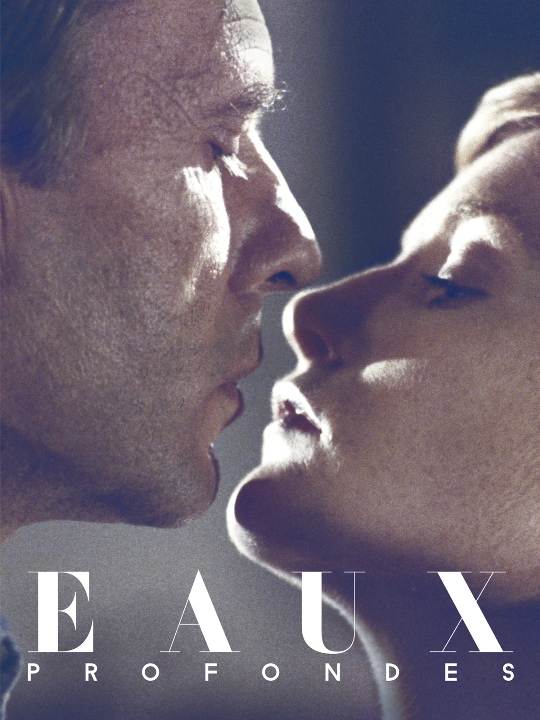
Eaux Profondes (Deep Water) [1981]

 Three decades before Jean-Louis Trintignant and Isabelle Huppert, two giants of French cinema, played father and daughter in Haneke’s devastating masterwork Amour, they had their first onscreen collaboration – and the only one for many years – as a couple conjoined in a toxic marriage in Michel Deville’s saucy, pulpy and criminally under-watched Eaux Profondes. This striking rendition of Patricia Highsmith’s magnificent novel Deep Water mirrored the author’s deliciously warped portrayal of a noxious relationship and closet sociopathy, and consequently emerged as a terrific adaptation of Highsmith, nearly at par with Hitchcock’s Strangers on a Train, Clément’s Plein Soleil and Wenders’ The American Friend. Middle-aged Vic (Trintignant) is a soft-spoken, well-to-do man of private passions – be it his vocation as a perfumier or his oddball hobby of petting snails in his garage – and lives a sedate life at a provincial French town. His friends, however, are concerned for him due to his placid demeanour despite his striking young wife Mélanie (Huppert) – with whom he has a doting daughter – openly taking young men as lovers. What they don’t know is that, he probably loves being cuckolded by his promiscuous wife who, in turn, teases him with her scorching sensuality and adulteries; what she, however, doesn’t know is that, there’s a violent streak under his sociable persona that’s about to snap. The vivid visuals, jazzy score, lurid carnality and seething violence boldly evoked a touch of giallo and B-movies. Trintignant was stunning in an atypical role, while Huppert was tantalizing as a coquettish seductress in the same year as her similarly sultry turn in Tavernier’s blazing tour de force Coup de Torchon, which too – incidentally – was a powerhouse adaptation of American crime literature.


Director: Michel Deville

Genre: Thriller/Crime Thriller/Psychological Thriller/Neo-Noir/Marital Thriller

Language: French

Country: France

Wednesday, 22 November 2023

Senso [1954]

 Luchino Visconti’s celebrated fourth feature Senso served as a pivotal milestone for the “Red Count”, as it marked his decisive turn from a pioneering neorealist filmmaker to a practitioner of grand and ambitious historical melodramas. This visually sumptuous, emotionally feverish, vividly operatic and lavishly mounted epic – that exultantly combined Visconti’s love of cinema, theatre, opera and the fine arts – formed a precursor to and therefore one half of a diptych with his gargantuan masterpiece The Leopard, in that both were extraordinarily lush, formally meticulous, and were set against the turbulent backdrop of the radical social and political transformations that swept through the country during the Risorgimento. At its heart is a torrid, outrageously reckless and thoroughly self-destructive love affair that Livia (Alida Valli), a beautiful countess unhappily married to an older aristocrat with a chameleonic ability to shift his allegiances in sync with changing landscapes, gets embroiled in with a much younger, roguish and self-serving Austrian Lieutenant (Farley Granger), which leads her to betray her patriotic principles – viz. the causes of Italian Nationalists who’re battling for independence from the Austrian Occupation – and takes her to complete moral and existential doom. The resplendently designed and crafted film magnificently evoked the arresting architectural and locational splendour of Venice, Rome, Veneto and Verona – rapturously amplified by luscious art décor, ornate costumes and actual artworks; ravishingly shot in muted, fading colours by three different cinematographers (G.R. Aldo died midway, upon which Robert Krasker came in, but conflicts with Visconti’s vision led to Giuseppe Rotunno being asked to step in); and accompanied by a classical score – comprised of a spectacularly orchestrated and filmed battle scenes at par with what Visconti staged in The Leopard.


Director: Luchino Visconti

Genre: Drama/Historical Drama/Romantic Drama/Epic

Language: Italian

Country: Italy

Saturday, 18 November 2023

Killers of the Flower Moon [2023]

 Martin Scorsese’s bravura adaptation of the acclaimed nonfiction book of the same name by David Grann – for the 44th feature-length film of his storied career – is a bleak, brooding, engrossing and sprawling meditation on evil, greed and the capitalist excesses. It simultaneously delved into the rotten core of settler-colonialism, and specifically, the genocidal “birth” of a nation-state at the bloody-soaked expense of indigenous populations. This ambitious work – that freely worked in equal measures as revisionist Western, slow-burn crime, black comedy, existential horror and historical epic – delivered a macabre retelling of the serial killings – bordering on extermination – of the Osage people, who’d discovered oil in Oklahoma and became incredibly wealthy upon their forced relocation there, by white supremacists who wanted to seize control of the massive oil money. That Native Americans were patronized as sub-humans, made it easier to carry out the massacre with impunity, braggadocio and untroubled conscience. In a remarkable reworking of the book, which had primarily chronicled the proto-FBI’s investigations into the crimes, Scorsese focused instead on the perpetrators – specifically, the calcified and slimy William Hale (Robert De Niro), an affluent cattle rancher whose seemingly genial attitude towards the Osage community masks his monstrous heart, and his dim-witted and easily manipulated nephew Ernest Bucharest (Leonardo DiCaprio) who enters into a “poisonous” marriage to Mollie Kyle (Lily Gladstone) as part of his uncle’s elaborate nefarious and murderous scheme. Both Scorsese regulars were outstanding in their embodiment of the grotesque underbelly of American history. In a formally blazing and politically audacious finale, the tragic saga is transformed into a lurid radio opera, thus providing a cutting commentary on how popular media cynically repurposes historical injustices into kitschy consumerist fodder.


Director: Martin Scorsese

Genre: Revisionist Western/Crime Drama/Docufiction/Historical Epic

Language: English

Country: US