Straw Dogs polarized its audience upon its release; four decades hence, it still hasn’t lost that ability – that shows how relevant and topical the movie is to the current times as it was during the Vietnam War era. Considered the finest non-Western from Sam Peckinpah, Straw Dogs is a deeply disturbing meditation on the vicious cycle of violence that is intrinsic to human nature and society. Dustin Hoffman, in one of the most remarkable roles of his distinguished career, plays David Summer, a soft-spoken, mild-mannered and nerdish American mathematician, who has relocated with her wife to a small Cornish village where she was born, in order to escape the commotion back home in the US. The promiscuous nature and overt sexuality of Amy (played brilliantly by Susan George), heightened by her boredom, attract the attention of the young men working for David, and soon enough the film enters harrowing territory that is both powerful and distressing in its stark and relentless portrayal of primal human instincts. David’s inevitable journey from deliberate avoidance of to headlong plunge into masculinity and animalistic violence is thus as nerve-racking as it is liberating, quite akin to David Cronenberg’s A History of Violence. Aided by the eerie score and jittery editing, this visceral Sam Peckinpah classic remains one of the most explosive and provocative films ever made.
 Director: Sam Peckinpah
Genre: Drama/Thriller/Psychological Thriller/Crime Thriller
Language: English
Country: UK
 Polish master’s Krzysztof Kieslowski’s Dekalog, one of the most staggering masterpieces ever brought to screen, would rank, along with the likes of R. W. Fassbinder’s Berlin Alexanderplatz, among the most ambitious cinematic achievements. Comprising of ten one-hour films made for television, each representing a pronouncement from the Ten Commandments, Dekalog paints intimate, richly layered and thoroughly enriching portraits of Polish society through the microcosm of an apartment block which forms the backdrop for the stories. The series encompasses themes ranging from personal crises, ethical dilemmas and the political history of Poland to even the role of filmmakers, and covers such topics as technology, parent-child complex, infidelity, voyeurism, new found wealth, etc. In fact love, or lack thereof, human loneliness, cosmic conundrums and ironies of everyday life are some of the recurring as well as underlying motifs of the deeply philosophical project. Since Kieslowski was an agnostic himself, religious symbolisms never take the front seat; rather, they are subtly alluded to at most, as the various devastatingly human stories unfold before us. Music forms a vital aspect of the series, and has been used with astounding effect to create and accentuate the moods and tones specific to each parts. Hauntingly beautiful, profoundly moving and brilliantly enacted, Dekalog is cinema of the very highest order. Dekalog 5 & 6 were later expanded into A Short Film About Love and the A Short Film About Killing, respectively.

Director: Krzysztof Kieslowski
Genre: Drama/Psychological Drama/Existential Drama/Romance/Black Comedy/TV Miniseries
Language: Polish
Country: Poland
 Jean Pierre-Melville’s Bob le Flambeur was both a nostalgic tribute to American film noirs that were nearing the end of their classic era, and an early trendsetter (or pioneer) for the Nouvelle Vague movement that was about to begin. Thus it managed to be the perfect bridge between the doom and fatalism typified by the former, and the kind of style and iconoclasm brought in by the latter. The film has at its centre the eponymous Bob the Gambler (played with imperious panache by Roger Duchesne), a compulsive down-on-his-luck gambler of aristocratic lineage and who lives within a strictly defined moral code, who decides to earn some quick buck by robbing a huge casino. He gets hold of the perfect crew and devises the perfect plan, only to go haywire thanks to human frailties and bad luck. But a sudden resurgence of fortune and some quick banter later, we are provided a delicious and memorable finale in keeping with the kind of charm, style and swagger of our protagonist. The film, shot in glorious black-and-whites, boasts of a very fine cast, especially Isabel Corey who plays a coquettish nymphet whose age (she was barely 16 then!) belied her wholesome body and precocious sexuality. The light-hearted and immensely enjoyable caper was also a celebration of Montmarte and the sinful night life of Paris.
 Director: Jean-Pierre Melville
Genre: Crime Thriller/Post-Noir/Gangster Movie/Caper
Language: French
Country: France
 Jason Reitman attained instant popularity with Thank You for Smoking and widespread acclaim with Juno, but if you really think of it, Up in the Air might just be his most matured movie to date. Not that the other two weren’t good, in fact they were just as engrossing; just that his latest flick has a far more palpable soul than them. The movie starts off in the neat satirical tone that just grabs you by the neck and makes you pay attention to Ryan Bingham, a high-flying hatchet man whose job it is to aid in the downsizing of companies, who spends more time on the flight and elsewhere, and who is really happy with his isolated, detached existence. But then he ends up striking a casual conversation with a fellow traveler, and even though they end up in bed in real quick time, he finds himself slowly and surely falling in love with the lady. With the terrible recession as its backdrop, the movie is an affecting picture of the existential crises and loneliness of jet-setters with six-figure salaries. The shift in tone from satire to drama has been handled very well, and the performances of the two leads, George Clooney and Vera Farmiga, especially the wonderful chemistry they share, go a long way in making this movie a brisk, enchanting and warm-hearted tale of our troubled times.
 Director: Jason Reitman
Genre: Comedy/Existential Drama/Social Satire/Romance/Road Movie
Language: English
Country: US
 Otto Preminger’s Where the Sidewalk Ends saw the coming together of Dana Andrews and Gene Tierney, co-stars in the director’s brilliant Laura. The movie, though not as brooding, atmospheric or downright magnificent as the latter, was no less ‘noirish’; in fact, the end product was far more gritty, brutal and tense. Andrews starred here, with considerable aplomb, as Mark Dixon, a pugnacious cop who prefers treating thugs and crooks with body blows than with kid gloves – a reaction to his wanting to move out of the shadows of his father who was a criminal himself. Consequently, though he’s good at his job, he’s forever facing the ire of his more morally upright chief. During the course of an investigation he accidentally knocks off the key accused of a murder incident, and wrongly ends up framing the guy for it whose lovely daughter he finds himself falling for. Though Lana Tierney’s character is as bland as it gets, she forms the moral anchor which compels Dixon, on one hand, to get even with a mobster who he’s been after for a long time, on the other it also makes him do the ethically right thing (whoever heard that phrase in a film noir) at the end. The good guys and the bad guys are separated right from the beginning of the film; nonetheless, Preminger did blur the line between what’s right and what isn’t, making this a pretty fatalistic movie even for the genre it belongs to, and a satisfying watch too.
 Director: Otto Preminger
Genre: Film Noir/Crime Thriller
Language: English
Country: US
 David Fincher showed promise in the often neglected Alien 3. But he truly and squarely came on his own as a tremendous talent with the dark and noirish Seven – a movie that is on one hand a trip down the murky by-lanes of human civilization, and on the other an unabashedly stylish take on the oft-made genres of police procedurals and serial killer films. Morgan Freeman stars as a brilliant and well-read, albeit world-weary, veteran homicide detective on the verge of retirement, when he is paired with a brash, rookie cop (played by Brad Pitt) to solve a series of grisly, horror-inducing and impeccably planned murders based on the seven deadly sins. Played against the backdrop of a cold, bleak and perpetually rain-swept New York-like urban jungle, the movie presents the grotesque underbelly of our seemingly staid society (a theme which Fincher employed with fantastic effects in his Fight Club as well) – the kind that is sure to leave the weak-hearted shuddering. The grim plot and exacting violence have been suitably boosted by the pulpy, gripping and blazing fast narrative. The acting, too, is first rate; no just the two leads, Kevin Spacey too is quite terrific as the deranged psychopath and religious fanatic John Doe as he leads the film to a memorable, if chilling, climax.
 Director: David Fincher
Genre: Thriller/Crime Thriller/Psychological Thriller/Mystery
Language: English
Country: US
 La Nuit Américaine (or Day for Night), a technique used to shoot nighttime sequences in daylight in order to save cost, is the ironic title of Francois Truffaut’s loving homage to the absolutely crazy act of making a movie. Freewheeling, intelligent, witty, irreverent and quintessentially French, Truffaut has shown us all the tricks of his fascinating trade, and some more. The French legend himself has played the director of a movie within the movie, as he tries going about making a melodrama (essentially the kind of film Truffaut would never make in his real life), as the entire process is besieged with troubles galore – the film’s young protagonist (played quite superbly and with inimitable panache by Truffaut-favourite Jean-Pierre Leaud) is an immature and temperamental intellectual, the lead actress (the beautiful Jacqueline Bisset) is an American star recovering from an emotional breakdown, the film’s third lead dies with the climax still to shoot, a perpetually depressed actress continually bumbles on her part thanks to her affection for alcohol, to name a few. The film is filled with hilarious set-pieces and the script is infectiously funny; in fact, even the scenes which ought to have been heavy end in irony, and the wry, straight-faced, self-deprecating humour will have one peeling with laughter on the floor. And the unforgettable (if deliberately self-serving) final voiceover from the auteur perfectly counterpoints all the whims, caprices, shams and phonies that come with this line of business.
 Director: Francois Truffaut
Genre: Comedy/Satire/Showbiz Drama
Language: French
Country: France
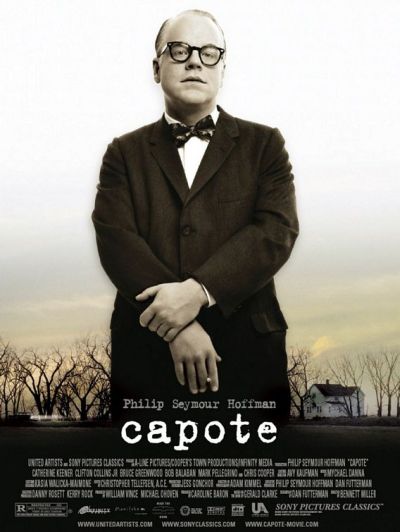
 Capote was the movie that motivated me to read In Cold Blood, the iconic novel by Truman Capote, and now that I’ve read the celebrated ‘non-fiction novel’, I felt the urge to check out how the movie now stood up in my that-much-more-informed eyes; suffice it to say, it didn’t just stand, it soared. Based on the author’s experience of writing the book (believe it or not, it took him seven years to do so!), the movie gives us as much a peek into the creation of one of the great masterpieces of 20th century literature, as it gives into the incredibly complex persona of the author – a cynical, pompous braggart, but ultimately a brilliant writer. And in Phillip Seymour Hoffman’s astonishing and devastating performance, Capote’s public veneer as well his personal self have been captured in all the nuances, shades and layers. Hoffman’s performance is so breathtaking, that it is easy not to notice that the acting of his co-stars, too, are very good. The exceptional script and perfect narrative pacing managed to make this one of the most compelling character studies and biopics in recent memory. The film is incessantly dark and disturbing, in keeping with the sensational if bleak subject matter, and the kind of moral dilemma presented by the proceedings is kept in a leash tight enough to make one ponder without spoiling the film’s ability to keep one engaged right till the last frame. And yes, the photography is brilliant too, and completes the moody tone and atmosphere of the film exceptionally well.
 Director: Bennett Miller
Genre: Drama/Psychological Drama/Biopic
Language: English
Country: US
-->
In Before Sunrise, Richard Linklater’s brilliant sleeper hit, we got introduced to the American dude Jesse and the French belle Celine, as they spent a night in Vienna speaking to each other. Nine years later, they chance upon each other, but under completely different circumstances altogether. Jesse has written a novel that has made him a minor celebrity, but his family life is anything but happy – in fact all these years the only girl he’s ever dreamt of is Celine. Celine, on the other hand, works as an activist, and these nine years have only made her more cynical by the day; her on-and-off love life too never really helped her out. And now, as these two people start catching up on each other in the streets of Paris, slowly the layers of cynicism and detachment start getting peeled off, and we become aware of all the personal disappointments, regrets, disaffections and failures that have ensured that they remain hardly as naïve as they were during that blissful night a decade back. As with Before Sunrise, this one too keeps us completely engaged despite being (or rather, because it is) a loquacious film, thanks to the marvelous script and Linklater’s smooth and tightly controlled direction. Ethan Hawke and Julie Delpy, too, have done the movie no harm with their absolutely wonderful on-screen chemistry, making this one of those rare sequels that manages to work so well.

Director: Richard Linklater
Genre: Drama/Romantic Drama
Language: English
Country: US
 Celebrated Polish filmmaker Krzysztof Kieslowski’s The Double Life of Veronique is a movie that works at a philosophical, and even, metaphysical level. It tells the tale of duality and spiritual connection between two unrelated individuals – Veronika, a talented Polish girl who unfortunately looses her life while making her debut as a vocalist for a symphony on stage, and Veronique, a French girl who too was a singer but is now working as a music teacher, and who gets mysteriously affected by her Polish counterpart’s death. A sense of deep melancholy and sadness pervades the film, as the director goes about making us feel the kind of cosmic harmony that existed between the two girls prior to Veronika’s untimely death. Nearly every frame of the movie has been created with such exquisite care and is filled with such rapturous beauty, matched only by the delicate and classical beauty of the lead actress, that one is sure to be left mesmerized. Irene Jacob (who would go on to star in the director's Three Colors: Red) played both the roles to near perfection, filling them with fragility and pathos. The film also boasts of a hauntingly evocative score. The film does at times veer towards self-indulgence; further, the abstract and meandering plot, the unabashed poeticism, and the challenging style adopted by Kieslowski, might be off-putting for those uninitiated to arthouse cinema; nonetheless, even when one doesn't comprehend the proceedings, the movie doesn't fail to strike a chord with somewhere deep within.
 Director: Krzysztof Kieslowski
Genre: Drama/Psychological Drama/Surreal Drama/Romance/Avante-Garde
Language: Polish/French
Country: Poland
 Israel’s brazen display of might is the only practical modus operandi for survival in the intensely hostile environment around them. However, that said, newspapers rarely provide us the other side of the story, especially why the Palestinian (or Islamic) suicide bombers do what they do. Hany Abu-Assad’s Paradise Now tries doing that, and the end result is a movie filled as much with seething anger as it is with empathy. The movie begins with the lives of two Palestinian youths, the laconic and perpetually sulking Said, and his temperamental but more jovial buddy Khaled, working as car mechanics, and living impoverished but dignified existences in a region filled with hatred and violence. Soon enough, though, we are shocked to find that these two otherwise ‘normal’ and regular guys are planning to avenge the so-called wrongs done to them by volunteering to act as human bombs in Tel Aviv for an underground terrorist group. The subject thus is potent and real, and has largely been presented without the aid of jingoisms. Khaled’s final transition from fundamentalism to rationale is too quick to be really believable; but the director more than made up for that by serving us a haunting climax that packs quite a punch – its effect might not be bulldozer stuff, but quietly provides a more than palpable impact in its reconfirmation of the vicious cycle of violence.

 Director: Hany Abu-Assad
Genre: Drama/Psychological Drama/Political Drama
Language: Arabic
Country: Palestine
 In Gosford Park, Robert Altman has fused the popular whodunits of Agatha Christie with the social mannerisms and satires of P.G. Wodehouse, making the end effect a charming who-is-the-killer tale and a pointed look into the 30’s class structure in Britain. An ensemble film if there ever was one, Altman managed to keep the numerous characters and the freely wavering narrative just about in control as he presents a couple of days into the lives of a group of English aristocrats, on vacation at a huge manor, with their array of servants, maids, butlers and what not. And amidst their weekend of hunting, gossiping and fine dining, the host ends up dead in his library; and if that wasn’t enough, he is discovered to have been killed twice! The whodunit structure, though, acts largely as a prop for the narrative as Altman uses most of his energy at caricaturing and satirizing those residing upstairs, the ones living downstairs, and the numerous staircases that form symbolic conduits between the two disparate groups. On surface the more aristocratic counterparts are happy with their cocktails, bridge games, expensive couture and their trademark stiff upper lips; but scratch a bit and you find that jealousy, adultery, narcissism, opportunism and bloated egos abound in plenty. Too many cooks oftentimes spoil the broth as it is difficult to paint so many characters in a limited time frame. Thankfully the actors did a good job in keeping one interested.
 Director: Robert Altman
Genre: Drama/Comedy/Social Satire/Mystery/Comedy of Manners/Ensemble Film
Language: English
Country: US/UK
 Aparna Sen’s Japanese Wife, based on the novel of the same name by Kunal Basu, is the most offbeat love triangle one can hope to come across. Snehamoy is a “chhaposha” (simple, average, middle/lower middle-class) Bengali school teacher at the Sundarbans, while Miyage is a shy Japanese girl residing in Yokohama, who, through pen-friendship, end up having a 17-year long platonic relationship and marriage despite never getting to see each other in person. The third angle is a young widow who silently loves Snehamoy, who in turn gets subtly attracted to her physically. The movie is, lets face it, is based on an improbable premise, and the emotional impact is not as much as a movie such as this ought to have. But the acting of Rahul Bose as the soft-spoken teacher, Moushumi Chatterjee as his loquacious aunt, and especially Raima Sen as the young widow, are pitch-perfect, which in turn get amply complemented by the impressive photography – the tranquility and fury of the region and the river Matla have been very well captured. The standout moment in the movie – the kite-flying competition between Bengali and Japanese kites; the overhead shots of the soaring kites took the film to a different plane altogether at times (no puns intended).
 Director: Aparna Sen
Genre: Drama/Rural Drama/Romance
Language: Bengali/English
Country: India
 Though Alien 3 starts off from where Aliens ended, it is quite obvious right from the first frame that David Fincher, who helmed this film – his feature film debut, wanted to take the project in a different direction altogether, instead of blindly imitating the previous two films of the franchise or trying to feed on their successes. That certainly rubbed a lot of fans in the wrong places, and understandably so, because the Fincher version is dark, depressing and moody, and thus turned out to be a revisionist Alien film, if I’m allowed to say so. Set in a dank, dreary and dingy all-male prison in a god-forsaken planet where Ellen Ripley has crash landed, and filled with convicts with violent pasts who have now taken to religion, the film opted for a gloomy tone instead of visceral thrills. And in a bizarre sense of irony, the vicious alien here is a four-legged canine creature. In a plot twist, Ripley has ended up having alien blood in her body, thus making her impervious to the lethal hunter – that, and her wits (because there aren’t any weapons in the prison) are what she uses to get even with her new-formed kin. The movie is slow, nihilistic and emotionally cold, and could have done with a tighter plot; nonetheless, it also forms an impressive indication of things to come from the talented former music video director.
 Director: David Fincher
Genre: Science-Fiction/Thriller/Action/Horror/Prison Thriller/Creature Film
Language: English
Country: US
 Where Ridley Scott’s Alien was a dark, disturbing and relentlessly bleak exploration into fear and paranoia, James Cameron’s Aliens is an adrenaline-fuelled, big-budget display of showmanship and state-of-the-arts special effects. Similarly, where Ellen Ripley of the former was a fragile but strong-willed lady trying to survive in deep space, here she is a full-blown action heroine who sure knows how to kick some alien ass; Sigourney Weaver reprised the iconic role and managed to carry the film on her broadening shoulders. After being in hyper-sleep for 57 years, she is discovered by The Corporation and is coaxed into joining a mission to revisit the planet where her crew had come in contact with the vicious alien life form, now a teeming human colony, as the aliens have purportedly gone berserk there. But then, as we all knew would happen, her current crew, comprising of gum-chewing gun-toting hard-as-nails marines start getting picked one after the other, and so the onus for doing the needful once again rests on Ripley, and she certainly doesn’t disappoint on that count. The movie, though an exceedingly enjoyable watch and a thrilling ride, doesn’t manage to hold a candle to the visceral terror and brilliance of the first movie, and the ‘good humans v/s bad corporation’ angle can get tiresome at times.
 Director: James Cameron
Genre: Science-Fiction/Action/Creature Film
Language: English
Country: US
 With Alien, the then largely unknown Ridley Scott took the slasher genre of science-fiction horror to the level of high art and mainstream acceptance, as it went on to become a groundbreaking genre classic with philosophical overtones, spawning numerous imitators but few equals. Aboard Nostromo, a humongous spaceship, the motley crew stumbles upon a near-indestructible and vicious alien life form at a distant planet – a creature that has acid for blood and feeds on humans with chilling efficiency. Set mostly inside the pristine white spaceship, paranoia and terror is created as much by the serpentine saliva-dripping alien, as by the claustrophobic, byzantine interiors, pacing that is at odds with genre norms, visceral thrills, relentlessly bleak cinematography and long moments of screeching silence; the film’s tagline, “In space, no one can hear you scream”, perfectly encapsulated its dark and sombre tone. The movie catapulted Sigourney Weaver, in the iconic role of the beautiful yet tough Ellen Ripley – a role she would reprise three more times, and which also formed the archetype for Linda Hamilton in the Terminator series, to superstardom. And the horrific and suggestive scene where the baby alien violently bursts out of John Hurt’s chest is part of cinematic folklore alongside the likes of the shower scene in Psycho.
 Director: Ridley Scott
Genre: Science-Fiction/Horror/Creature Film
Language: English
Country: US
 The Host, directed by the acclaimed South Korean director of Memories of a Murder fame, is summer blockbuster like few of its kind. On one hand it is a pretty darn satisfying popcorn churner with some rip-roaring thrill quotient, while on the other it is a darkly comic character study and a potent socio-political commentary. The movie starts off with a blatant abuse of the environment when an American scientist orders his Korean assistant to clear bottles after bottles of formaldehyde into the basin, and that ends up producing an uncouth blood-thirsty creature that one not-so-fine day jumps out of River Han and creates mayhem in Seoul. The movie kicks into full-throttle when the young daughter of our dim-witted but courageous protagonist (Song Kang-ho), belong to a dysfunctional but courageous family, takes a vow to get even with the ugly monster and rescue her daughter who has been trapped in a dank sewer of the labyrinthine drainage systems by the river. The movie boasts of some fine SFX and scintillating action sequences; but the maverick director managed to make this a genre-bending film by having oddball characters with their share of idiosyncrasies taking the place of regular heroes expected in creature films, and infusing his quintessential dose of black humour which will even make you cringe at times. And the underlying statement on our rapidly deteriorating environment through human callousness, too, shall not be lost on the viewers.
 Director: Bong Joon-ho
Genre: Thriller/Black Comedy/Social Satire/Science-Fiction/Creature Film
Language: Korean
Country: South Korea
 The Girl with the Dragon Tattoo is a psychological thriller of the first order, and has at its core a mystery tale that will grip you from start to finish despite its generous length. But what elevates it beyond any generic confines lies in its compelling character study. A relentlessly dark and brooding film, the movie, based on the immensely popular novel of the same name, is about Mikael Blomkvist, a disgraced middle-aged investigative journalist, and Lisbeth Salander, an enigmatic computer hacker with a brilliant mind and a sordid past, getting together to try and solve a very cold case and unravel the mysterious disappearance of the niece of a wealthy patriarch forty years back; in the process they end up opening a can of ugly worms and solving the deadly trail of abused bodies left by a psychotic serial killer. Scandinavia here doesn’t just have cold weather but is also infested by perverse misogynists, and the grotesque sides of human nature have been ripped apart from seemingly amicable veneers by the director. Michael Nyqvist, as the obsessed journo, has brought in a sense of calm and humanity in this disturbing film otherwise largely dominated by the terrific performance of Noomi Rapace as the tattooed, pierced, heavily promiscuous and emotionally scarred Lisbeth. The movie is certainly not for the chicken-hearted as it boasts of grim subplots, bleak nihilism and denouements, and intense violence – both physical and emotional, apart from a dense, labyrinthine plot and observations that revel in capturing the minutest details of the investigative process.
 Director: Niels Arden Oplev
Genre: Thriller/Psychological Thriller/Mystery
Language: Swedish
Country: Sweden
 If one wants to list brilliant first features, one needs look no further than acclaimed Bengali auteur Rituparno Ghosh’s Hirer Angti. Though not as readily available or as widely known as some of his more famous films, Hirer Angti is nonetheless clearly indicative of the filmmaker’s immense storytelling abilities, and forms a fine introduction to his later and more intellectually demanding works. The name sounds simplistic, and rightly so, as this was based on a popular children’s story by Samaresh Majumdar; but this wonderfully constructed tale of the arrival of a mysterious young man, who speaks chaste Bengali, at the huge house of a Bengali family during the auspicious and joyous occasion of Durga Puja, has the ability to provide an exhilarating and a thoroughly engrossing experience to children and adults alike. The film comprises of tidbits, observations and elements that are sure to make culturally conscious viewers nostalgic, and speaks volumes of Ghosh’s tremendous cultural knowledge. And the subtle infusions of wit and humour in the script, fine performances by every member of the cast, and the impressive soundtrack, all add up to make this a must watch for anyone willing to explore the oeuvre of one of the most talented filmmakers working in India today.
 Director: Rituparno Ghosh
Genre: Comedy/Mystery/Children's Film
Language: Bengali
Country: India
 Climates, directed by Nuri Bilge Ceylan, darling of the festival circuit and maker of the brilliant Uzak, is another stark and austere drama on man’s inherent need and failure to connect. Set in an increasingly detached and distant Turkish diaspora, Climates is about the breakdown of a seemingly happy relationship where the resultant turbulence felt by the concerned couple is more inward than outward. A university professor and his much younger girlfriend who works for a TV channel (played, in a brave casting decision, by the director and his real-life wife) who, while on a vacation after a long time, realize that they have drifted too apart emotionally to remain happy together. However, despite rekindling a raw physical affair with an old flame, the laconic guy realizes that he is now lonelier than ever before, and thus makes one last attempt to bridge the huge chasm that has developed between him and his former fiancé. The narrative is slow, and long moments of silence rather than words define most of the proceedings – thus making this a difficult watch for most. Contrarily, if one is willing to put in some effort and allow the movie to reveal its various layers and subtleties, he will not regret watching this intense and beautifully photographed human drama.
 Director: Nuri Bilge Ceylan
Genre: Drama/Psychological Drama
Language: Turkish
Country: Turkey