Thursday, 17 September 2020

Girlhood [2014]

 Girlhood – the third entry in Sciamma’s trilogy on coming-of-age and female identity (preceded by Water Lilies and Tomboy), reductively titled in its English translation to perhaps pair it with Linklater’s Boyhood – was brash, sassy and mercurial, even if it felt tad uneven and overdone at times in its narrative choices and flow. The portraiture of a socially and economically marginalized African-French adolescent girl belonging to a working-class family and neighbourhood, and struggling to understand her sense of being, was enchanting and filled with empathy in its best moments. It began on a scintillating note as we see girls fiercely jostling in a game of American football – otherwise stereotyped as a masculine sport – and then breaking into post-match camaraderie. The hyperkinetic opening montage was followed by 16-year old Marieme (Karidja Touré) walking timidly to her grungy apartment, and later being informed matter-of-factly, to her severe disappointment, that high school is out of bounds for her. These emotional extremes immediately defined her life and her world. On one hand, she faces frequent violence from her overbearing older brother, rarely gets to see her single mother who works as a cleaning woman at La Défense, and is ready fodder for the local drug dealer and pimp; however, on the other hand, she experiences joy, acceptance and even freedom as she becomes part of a band of three vivacious, feisty and delectably badass girls – Lady (Assa Sylla), Adiatou (Lindsay Karamoh) and Fily (Mariétou Touré). And, irrespective of how one ultimately judges this film, one is bound to be enraptured as they experience moments of fleeting euphoria together – bonding, having fun, hanging out and even dancing with carefree abandon to Rihanna’s pop-hit Diamonds.


Director: Celine Sciamma

Genre: Drama/Buddy Film/Coming-of-Age

Language: French

Country: France

Tuesday, 15 September 2020

We Need to Talk About Kevin [2011]

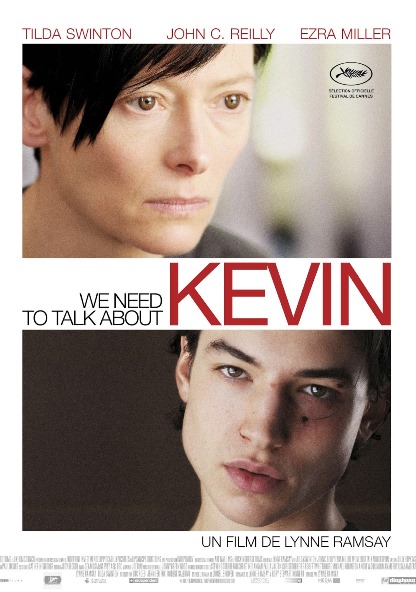
 Lynne Ramsay had made a crackling debut with the marvelous coming-of-age film Ratcatcher, and she’d followed that up with the curiously affecting buddy and road film Morvern Caller. With We Need to Talk about Kevin – her first film in 9 years, adapted from the the novel of the same name by Lionel Shriver – she made quite a shift in terms of narrative, thematic and stylisation choices. The result, methinks, was a mixed work – compelling on account of a stunning lead performance by Tilda Swinton, the bold expressionistic splashes that the film had begun with, and sustaining the oppressive atmosphere; however, the portrayal of evil sans any examination of the complexities surrounding it – perhaps projecting “nature” over “nurture” in that clichéd debate – was problematic and held the film back from achieving psychological depth; also, the visceral sense of disorientation in the initial stages were tad undone by the more conventional (and expositional) storytelling in the later stages. However, a subject as discomfiting and troubling as this does certainly speak volumes of Ramsay’s willingness to venture beyond her comfort zones. The movie is hinged around a complicated and intensely antagonistic mother-son relationship – between Eva (Swinton), a bohemian and successful travel writer who ends up settling down into a staid suburban life upon her marriage (John C. Reilly plays her loving husband) and unplanned motherhood; and her revolting son Kevin (brought forth through chilling but essentially one-note turns by Jasper Newell as a kid and Ezra Miller as a teenager) who becomes increasingly sly, cruel, destructive and sociopathic as he grows – that begins on a sour note and keeps going south thereafter, until it ends in violent mayhem.


Director: Lynne Ramsay

Genre: Drama/Psychological Drama/Family Drama

Language: English

Country: UK

Saturday, 12 September 2020

Certain Women [2016]

 With Certain Women Kelly Reichardt achieved something remarkable in how splendidly she touched upon a range of prescient themes – patriarchy, agency, marital fidelity, marginalization, unrequited love, burdens of capitalism, etc. – through a work that was so incredibly disarming, low-key and grounded. Hence, the weightier topics aside, it was also a gently affecting portrayal of the trivial aspirations, ephemeral joys, quiet disappointments, and the underlying existential ennui of four women in rural America. Reichardt structured the film as a loosely hyperlinked triptych by adapting three separate short stories by Maile Meloy set in sparsely populated, bitterly cold Montana. The first segment is centered on Laura (Laura Dern), an attorney embroiled in a rather cold affair and saddled with a disgruntled client (Jared Harris) who’s adamant about suing his former employer despite no legal standing. In the second segment, Gina (Michelle Williams), a businesswoman and a social outsider married to an adulterous man who’s also her subordinate in her business, hopes to procure some authentic sandstone from an old-timer. And, in the final and arguably the best segment, a soft-spoken Native American woman (Lily Gladstone), who manages a horse ranch alone, gets emotionally drawn to an attractive young lawyer (Kirsten Stewart) who must drive for hours to take legal classes for high school teachers in order pay off her student loans. The lazy beauty, stirring melancholy and wrenching loneliness in the three vignettes – the tone for which was established in the first scene itself wherein a slow train diagonally cuts across the screen in a stunning, uninhabited landscape – were exquisitely evoked through marvelous photography, and brought to life by brilliant performances, with Gladstone’s being the most unforgettable of the lot.


Director: Kelly Reichardt

Genre: Drama/Americana/Ensemble Film

Language: English

Country: US

Thursday, 10 September 2020

Waiting for the Carnival [2019]

Toritama, located in northeast Brazil, was once – to borrow the title of an irresistible Bohumil Hrabal novel – a laid-back “little town where time stood still” and literally nothing happened; but then the allure of gig economy arrived under the the charming garb of “blue diamond”, promising wealth, success and realization of capitalist dreams, thus irrevocably altering its landscape forever. Marcelo Gomes, in this deceptively engaging documentary, focused on the dramatic transition of this town popularly called the “jeans capital” for producing 20 million denim pairs annually. A random day here, therefore, is a bustling display of people involved in stitching, sewing, cutting, ironing and whatnot out of make-shift spaces run by hardworking locals, and transporting them using motorcycles. They’re all suffused with entrepreneurial pride on account of their supposed independence, belief that this is bringing them more money than ever before, and conviction that they’re earning future glory through their present slogging. Yet, ironically, they labour for peanuts in congested shop floors and garages, from early morning till night seven days of the week, without any security or benefits; and, if these weren’t enough, they must literally sell off their possessions every year – anything from TV and fridge to furniture – in order to pay for their annual vacations to the nearest beach during the Carnival. Gomes, interestingly, portrayed these dichotomies – comparisons with memories of this town which he’d visited long back as a kid, and the illusory nature of lives of the lively but impoverished populace – with disarming candour but also using soft brushstrokes; hence neither was the satire acrid nor the nostalgia sentimental, and instead it was filled with captivating freshness, amused curiosity and empathy.


Director: Marcelo Gomes

Genre: Documentary/Social History

Language: Portuguese

Country: Brazil

Monday, 7 September 2020

Mistress America [2015]

 Baumbach’s Mistress America is considered a companion piece to his infectious and brilliant Frances Ha – both were, after all, co-written with Greta Gerwig and centered on compelling female friendships. Their aesthetics, though, couldn’t be more contrasting – muted joys and melancholy of the latter (shot in luminous B/W), as opposed to the latter’s spunky screwball. And, along with Woody Allen, literary influences were palpable too; the premise of a narrator’s infatuation with a person’s effortless and enigmatic effervescence, reminds one of such classics as Fitzgerald’s The Great Gatsby, Capote’s Breakfast at Tiffany’s, West’s The Day of the Locust, etc. Tracy (Lola Kirke) is an enchanting but naïve college freshman and wannabe writer who craves for entry into an exclusive literary club and faces a mini heartbreak when Tony, the boy she started hanging out with, starts dating another girl. Her lonesome life experiences a scintillating stroke of euphoria upon meeting and befriending her soon-to-be step-sister Brooke (Gerwig) – a charismatic, eccentric, vivacious and unpredictable woman who lives at a grungy space in Times Square, dabbles in a multitude of part-time jobs, posts pithy truisms on the social media, and is filled with crazy ideas ranging from feminist comic strip to starting a chic restaurant. Tracy becomes entranced by this older woman who’s either a phony or a prophet (or perhaps a bit of both), and starts hanging out with her while also composing a satirical short story based on her. Though tad uneven – their visit to shallow old friends in Connecticut and Tony’s insecure girlfriend were clearly the weak spots – marvelous turns by the alluring Kirke and the lively Gerwig, and their carefree NYC romp made it a funny, delightful watch.


Director: Noah Baumbach

Genre: Comedy/Social Satire/Buddy Film

Language: English

Country: US