Saturday, 29 April 2023

Le Cœur Fantôme (The Phantom Heart) [1996]

 Philippe Garrel’s filmography weren’t just delineated with remarkable formal, tonal, textural and compositional consistencies, it was often threaded with thematic commonalities too given how many of his films were laced with rich semi-autobiographical elements. His informally linked “Autobiographical Series” of five profoundly personal, understated and beautifully crafted gems – viz. L’Enfant Secret, Les Baisers de Secours, J’Entends plus la Guitare, Le Coeur Fantôme and Les Amants Réguliers – especially stood out in terms of their absorbing interpretations, reimagining, and manifestations of strands from his life through the prismatic lens of memory and cinema. The muted, introspective, and tender fourth film – the relatively least known work in that collage – portrayed personal, marital, romantic, and existential fragments of yet another brooding alter-ego of the filmmaker. Philippe (Luis Rego) is a middle-aged, soft-spoken, and moderately successful painter who moves out of the life and apartment he shares with his wife Annie (Évelyne Didi) – and their two kids who he deeply loves – after she reveals that she’s having an affair. While continuing to pursue with his painting at the small desolate space that he maintains, and casually indulging with a prostitute at times, he serendipitously meets the naïve and much younger Justine (Aurélia Alcaïs), and embarks on a tentative relationship with her. Philippe’s life, therefore, becomes delicately tied to the two women – the loving but possessive Justine, and Annie who seems to be falling apart and with whom his kids stay – while also spending time with his wry, garrulous and aged dad (played by the filmmaker’s real-life father, Maurice Garrel) who’s long separated from Philippe’s mother and is slipping towards oblivion. The film was shot in soft, washed-out colours that complemented its fragile, melancholic fabric.


Director: Philippe Garrel

Genre: Drama/Romantic Drama/Marital Drama

Language: French

Country: France

Thursday, 27 April 2023

Arabian Nights [1974]

 Arabian Nights – Pasolini’s concluding instalment in his audacious, expansive and uninhibited ‘Trilogy of Life’ – was an episodic anthology film that revelled in the joys of storytelling like The Decameron and The Canterbury Tales, the two preceding films in this celebrated triptych on seminal medieval literature. It was even more ambitious in that he had to choose the stories from around a thousand Persian folk tales; filmed it in locations across Iran, Yemen, Nepal and Ethiopia; and conjured a highly intricate narrative web of nested interconnected stories, despite doing away with the iconic framing device featuring Scheherazade. It was, however, possibly the least political of the trio – the sole focus here being the celebration of sensuality in its myriad forms, devoid of restrictive modern-day prejudices –, and the wicked black humour of the earlier films was toned done while freely retaining the source collection’s fantastical nature. The central strand was on the passionate romance between and incredible parallel journeys of Nur-e-Din (Franco Merli), a naïve young guy, and Zumurrud (Ines Pellegrini), a striking slave girl, while the remaining episodes – featuring dazzling locational backdrops and stories-within-stories – covered a spectacular range from impish and intimate to swashbuckling and violent. The one that deserves a special mention involved the impetuous Aziz (Ninetto Davoli) who abandons his bride-to-be Aziza – who, nevertheless, helps him out of selfless love and dies of heartbreak – upon being smitten by a mysterious, bewitching woman. That Davoli had recently broken off his relationship with Pasolini in order to marry a woman, provided a deep personal allegory for the filmmaker. The ignominious fate that Aziz eventually faced at the hands of his hedonistic pursuit, consequently, served as a sardonic cinematic schadenfreude.


Director: Pier Paolo Pasolini

Genre: Comedy/Romantic Comedy/Drama/Fantasy/Anthology Film

Language: Italian/Arabian

Country: Italy

Wednesday, 26 April 2023

The Canterbury Tales [1972]

 Based on Geoffrey Chaucher’s influential Middle English epic, The Canterbury Tales was Pasolini’s ecstatic and flamboyantly crafted second chapter – positioned between The Decameron and Arabian Nights – in his episodic, iconoclastic and spectacularly boundary-pushing Trilogy of Life. It wasn’t just more luscious and hyperbolic than its predecessor, but also more exultantly unhinged – being unabashedly peppered with graphic carnality and scatological humour – and expressed an even darker world-view. However, while it did manifest rebellious political overtones – in its lashing indictment of organized religion with its unfettered bigotry and hypocrisy; odious depictions of feudal lords and wealthy profit-mongers with their unbridled greed and pomposity; and continued affront towards bourgeois morality – it was, arguably, not as consistently and radically political as the trilogy’s masterful opening salvo. The classic’s frame story was retained here wherein eight tales are narrated by traveling pilgrims and chronicled by a smirking Chaucer (played by Pasolini) – a hideous and obnoxious elderly merchant who becomes blind upon marrying a bored, much younger woman (Josephine Chaplin) who’s aroused by a secret admirer; the violence with which the church punishes sodomy, and the befriending of the devil by a ruthless civil servant; a Chaplin-esque scoundrel (Ninetto Davoli) who lives dangerously and dies nonchalantly by offending everyone; the wooing of an unfulfilled married woman by two young lotharios; an insatiable middle-aged woman who seduces a young academic; two guileless students who exact sweet, salacious revenge against a sly middle-aged miller; three crass buddies who’re tricked by a world-weary old man into becoming murderous beasts; an avaricious monk who gets a glimpse of hell. The last tale, in fact, portrayed arguably the most gleefully grotesque, hilariously offensive and uninhibitedly outrageous cinematic rendition of hell.


Director: Pier Paolo Pasolini

Genre: Black Comedy/Social Satire/Religious Satire/Anthology Film

Language: Italian

Country: Italy

Wednesday, 19 April 2023

The Decameron [1971]

 Unapologetically ribald, wickedly subversive, gleefully scandalous and vivaciously realized, The Decameron – Pasolini’s extraordinary adaptation of Boccaccio’s mammoth 14th century volume, and the first chapter in his ‘Trilogy of Life’, followed by The Canterbury Tales and Arabian Nights – was also a profoundly political work. The towering Italian giant – whose avowed Marxism, staggering intellect, homosexuality and insouciant non-conformism made him a trailblazer for many but an anathema to reactionary conservatives – crafted a radical interpretation of the landmark Italian text. He did away with the framing device, chose 10 (out of the 100) stories that appealed to him the most; and gave them a stunning class spin by stripping them of royalty, transplanting them from Florence to Naples which served as a microcosm for the global south within Italy, and scripted it in the Neapolitan dialect. And he furthered these facets by packing it with bawdy humour, provocative sexuality, delirious subversion of organized religion, and deromanticized depiction of the Renaissance-era, laced with gold-digging, backstabbing, promiscuity, hypocrisy and violence. The fabulist, interweaving, vividly composed and thoroughly amoral tales included a swindled guy who joins hands with gravediggers; a deaf-mute simpleton who entices an entire convent of lascivious nuns; a wife’s adultery under the nose of her cuckolded husband; a merchant who lies his way to sainthood despite a life devoted to grotesquerie; the great Giotto’s pupil (played by Pasolini himself) who’s come to paint frescoes in a small church; a young couple whose first libidinous tryst gets spectacularly outed; a coy girl’s unsettling preservation of her murdered boyfriend; a respectable man who takes lewd advantage of a poor gullible couple; and a heavenly pact made between a pious man and his philanderer buddy.


Director: Pier Paolo Pasolini

Genre: Black Comedy/Social Satire/Religious Satire/Anthology Film

Language: Italian

Country: Italy

Saturday, 15 April 2023

Simon of the Desert [1965]

Simon of the Desert – considered part of his extraordinary “Alatriste/Pinal trilogy” along with Viridiana and The Exterminating Angel, as well as his admired “Religious trilogy” along with Nazarín and The Milky Way – was the final film that Buñuel made in Mexico, as well as his final collaboration with Silvia Pinal, her then producer-husband Gustavo Alatriste, and Mexican cinematographer Gabriel Figueroa. Curtailed ostensibly on account of production and financial woes, this gleefully wicked interpretation of Saint Simeon Stylites’ self-imposed life atop a pillar in the middle of a desert seeking penance, provided a spare and droll demonstration of classic “Buñuelian” elements for its striking use of surrealism and its cutting satire on blind faith, harsh self-flagellation and rigid dogmatism that organized religion both peddles and champions. Simón (Claudio Brook) experiences “professional advancement” even in a life of extreme self-denial such as this, wherein, after spending six years, six weeks and six days on a 10-feet pillar, he moves to a significantly taller one erected by a wealthy patron; attains both celebrityhood and scorn among monks and commoners for his ascetism; performs an off-hand miracle which, ironically, doesn’t lead to any brouhaha; and engages in wryly comical battles with a sly, indefatigable and chameleon-like Satan (Pinal) who manifests in multiple forms – as a coquettish seductress, in the ruse of god, etc. – in order to break his absurd abnegation. In the film’s terrific and thoroughly insane finale, Simón is teleported by Satan to a swinging rock 'n' roll nightclub in modern-day New York City, amidst a frenzied crowd indulging in “radioactive flesh” – in a wry reference to the Cold War nuclear arms race and “Mutually Assured Destruction” – against a pulsating live music.


Director: Luis Bunuel

Genre: Black Comedy/Religious Satire/Surrealist Movie

Language: Spanish

Country: Mexico

Thursday, 13 April 2023

Honeycomb [1969]

 The third chapter in Saura’s delicious and delirious ‘Bourgeois Trilogy’ – preceded by the brooding and magnificent Peppermint Frappe, and the stark and tense Stress Is Three – was a sensational exercise in absurdism, and a lacerating satire on the bourgeoisie – their social insularity, vacuous existences, class privilege and moral quagmire, that’re allegorically manifested through subversion of the sanctimonious institution of marriage – worthy of a top-drawer Buñuel. Through its progressively wild and unpredictable narrative arc – it began with an excellent, low-key single-take sequence that situated the viewers in the brutalist architecture of the exclusive villa where the film’s super-wealthy couple resides, to the bleak and shocking denouement – and an unhinged chronicle of marital toxicity that explodes into unfettered chaos and pulpy violence, it heralded a manic eruption of troubling memories, repressed obsessions, lurid fantasies and grotesque fetishes. When the ultra-staid ambiance, sterilized décor and rigid order within the modernist residence of the glum industrialist Pedro (Per Oscarsson) and his gleefully naïve wife Teresa (Geraldine Chaplin) – who possesses an anarchic streak despite having always lived in oppressive domesticity – are suddenly disturbed by the latter’s unsettling regression into her Catholic past, and the appearance of antique furniture in the household that’re antithetical and anachronistic to it, it ruptures the pair’s estranged marital dynamics and provokes them into indulging in a series of increasingly discomfiting, deranged, kinky and hysterical role-plays that’re bound to end on an ugly note for both, even if they’re spectacularly liberated out of their states of moribund stupor and existential decay in the process. Chaplin, who co-wrote the script with frequent Saura collaborator Rafael Azcona, gave an exhilarating turn as the volatile girl-woman who catalyses the couple’s mutually assured annihilation.


Director: Carlos Saura

Genre: Black Comedy/Social Satire/Marital Satire

Language: Spanish

Country: Spain

Monday, 10 April 2023

Stress Is Three [1968]

 Stress Is Three, the middle chapter in Carlos Saura’s wickedly brilliant and pungently satirical ‘Bourgeois Trilogy’ – which painted scabrous portraits of Spain’s Franco-era bourgeoisie, focusing on toxic and perverse relationships that’re defined by self-destructive obsessions, twisted passions, and unsettling fetishes hiding underneath false propriety – provided for a striking contradiction to the two superb films that sandwiched it, viz. Peppermint Frappé and Honeycomb. While the two films on either side were made in vivid colours, had greater thematic complexities, and broader temporal scopes, this stood aside with its monochrome visuals, narrative conciseness and events set over a single day. These facets, along with its off-balancing tone – which kept playfully veering towards psychological and even physical violence –, and portrayal of simmering marital and sexual jealousy that reached a ferocious intensity, made this an interesting companion piece to Polanski’s terrific debut film Knife in the Water. The film unfolds over a road trip – from Madrid to Almeria – taken by the uptight Fernando (Fernando Cebrián), a well-to-do and feudalist industrialist, his teasing wife Teresa (Geraldine Chaplin, Saura’s muse at that time who featured in all the three films in this trilogy) who he’s obsessed with, and his laidback friend and business partner Antonio (Juan Luis Galiardo) who he suspects Teresa is having a fervid affair with. His jealousy is especially amplified by the ironic tussle between his fears and his desire of being proven right. Grainy B/W imagery, along with the sparingly used pulsating jazz beats, filled the proceedings with electrifying undercurrents of paranoia and tension – to the extent that it felt the film is inevitably progressing towards an ugly denouement – while also complementing the brooding atmosphere with cynical levity and discordance.


Director: Carlos Saura

Genre: Drama/Psychological Drama/Marital Drama/Road Movie

Language: Spanish

Country: Spain

Friday, 7 April 2023

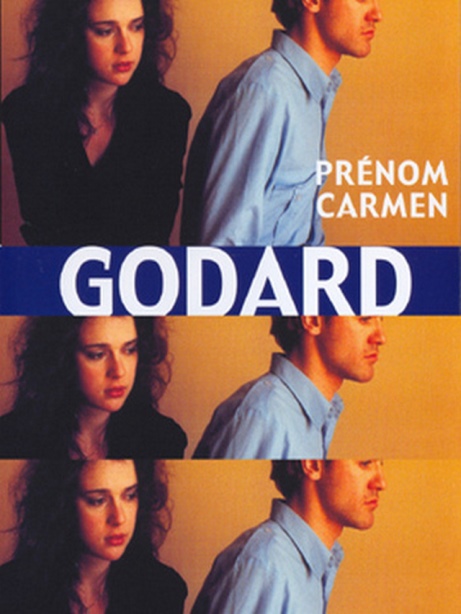
Prénom Carmen (First Name: Carmen) [1983]

 Prénom Carmen – which completed a remarkable trilogy with Every Man for Himself and Passion, in that they all featured disillusioned filmmakers in existential limbo, and the crumbling of “small movies” under overbearing financial considerations – wasn’t just a magisterial work that established the 1980s as one of the richest decades for Godard, it also places among his most aesthetically dazzling films with its fragmentary storytelling, shallow-focus visuals and rapturously beautiful use of music. It was most fascinating in how it provided an interplay between classicism and modernist deconstructions, narrative and form, solemn and absurdist, composure and chaos, melancholy and sardonic humour, personal and political. The film played out along three interconnected narrative strands that frequently overlapped but were also noteworthy for their departures. The central strand – which was a radical reimagining of Georges Bizet’s opera Carmen, by Anne-Marie Miéville – covered the passionate, tumultuous and ultimately self-destructive affair between the ravishingly beautiful Carmen (played with sultry allure by 20-year-old neophyte Maruschka Detmers), who’s part of an underground post-Maoist revolutionary cell, and a naïve security guard (Jacques Bonnaffé) who gets entangled with her during a bank robbery and falls obsessively in love with her. In parallel we see a neurotic, hilariously deadpan, aphorism-spouting, lecherous, washed-up filmmaker (played with satiric, self-deprecating aplomb by Godard himself) who’s refusing to leave the sanitorium that he’s cooped up in; and a string quartet, whose absorbing Beethoven rehearsals provided stirring emotional parallels to the actions. The heady mix of doomed lovers, militant politics and operatic violence aimed at capitalist structures stirred my memories of Le Petit Soldat and La Chinoise, while interjections of “live” music recording with narrative elements made me draw parallels with One Plus One.


Director: Jean-Luc Godard

Genre: Drama/Political Drama/Romantic Drama/Crime Drama/Musical/Showbiz Satire

Language: French

Country: France

Wednesday, 5 April 2023

Passion [1982]

 Godard’s remarkable and underrated gem Passion was laced with a delightful dichotomy. While it wasn’t an easy film – heavily political, essayistic in its form, opaque, digressive, thematically intricate and dense, woven with complex metaphors, and possessing an intellect that was unnerving in its brilliance – it was also droll, playful, deadpan, irreverent, self-effacing, and comprised of visually stunning and meticulously composed tableaux vivants that strikingly contrasted with the grainy realism of the rest of the film. Raoul Coutard, who Godard collaborated with here for the first time since his trailblazing masterpiece Week-end 15 years back, can be thanked for its splendid visual design. To paraphrase a reviewer’s witty summation, it’s a movie without a story about the making of a movie without a story, and like his previous film Every Man for Himself, here too the protagonist was a filmmaker in a state of intellectual stasis and artistic crisis. Jerzy (Jerzy Radziwilowicz) is a Polish director making a non-narrative film for television comprising of spellbinding recreations of renowned paintings by European masters – Rembrandt, Goya, Delacroix, Ingres, El Greco, Caravaggio – while his producer László (László Szabó) is highly agitated as Jerry repeatedly cancels the shoots, for the lack of conventional storyline, and because it’s overbudget which has made the financiers furious. During the course of its filming Jerry initially has an affair with Hanna (Hanna Schygulla), the weary owner of a hotel where the crew has put up, and thereafter gets besotted with Isabelle (Isabelle Huppert), a stuttering, sincere and alluring shopfloor worker who’s striking with her comrades as she’s been fired for her Marxist views by the factory’s farcical owner Michel (Michel Piccoli), who, in turn, is married to Hanna.


Director: Jean-Luc Godard

Genre: Drama/Political Drama/Political Satire

Language: French

Country: France

Monday, 3 April 2023

Every Man for Himself [1980]

 Godard, after spending well over a decade in absolute, self-imposed exile from mainstream cinema – during which time he first severed all ties with his Nouvelle Vague legacy, then made a series of politically radical agitprop Marxist essays in 16mm as part of the underground Dziga Vertov collective, and thereafter joined hands with Anne-Marie Miéville on avant-garde and formally dense video productions during his “SonImage” phase – made his return to 35mm feature films with Every Man for Himself. He therefore heralded the 1980s, and began yet another phase of extraordinary creativity, with this movie which he called his “second first film”, not least because it released two decades after his pathbreaking debut Breathless. Yet, for Godard, a return to commercial filmmaking can never be simply that, and hence, despite its apparent narrative elements and formal restraint, it was still a thematically provocative and stylistically exciting work. It was filled with striking flourishes – stunning use of slo-mos, bursts of pulsating non-diagetic music (including instances where one character can hear it while others can’t), idiosyncratic and even incredibly scandalous digressions – and comprised of biting social commentary on sexual politics, late-stage capitalism, commodification of relationships, and the inherently abusive nature of anyone in positions of power (including, in a sardonically self-referential touch, the filmmaker himself). It focussed on three existentially estranged characters – Paul Godard (Jacques Dutronc), a divorced, impassive and emotionally alienated television filmmaker; Denise Rimbaud (Nathalie Baye), a TV producer who’s having a stressful breakup with Paul, and hopes to thoroughly upend both her professional and personal lives; and Isabelle Rivière (Isabelle Huppert, in a disarmingly enchanting turn), a saucy, sexy, alluring, and self-assured prostitute for whom nothing is out of bounds.


Director: Jean-Luc Godard

Genre: Drama/Psychological Drama/Relationship Drama

Language: French

Country: France

Sunday, 2 April 2023

Life is Sweet [1990]

 Life is Sweet, the commercial breakthrough in Mike Leigh’s feature filmmaking career, provided an enchanting embodiment of the facets that’ve come to distinctively define his penchant for intimate family dynamics, everyday lives of the working-class, understated political stance, observational style and seemingly improvisational approach – albeit, one steadfastly arrived at through extensive rehearsals. As the title so ironically implied, this delightful and infectious – but never mawkish – film captured fleeting moments of bittersweet joys amidst the despair, disillusionments, disenfranchisements, hardships and tribulations that Thatcher’s dismal, neoliberalist reign – which, incidentally, ended in the same year as this film’s making – represented for the British working-class population; it also alluded, in parallel, to food in its myriad forms, implications and manifestations. At the film’s broad-hearted core was a memorably-etched family comprising of middle-aged parents – the affable, kindly and perennially hopeful Andy (Jim Broadbent), who’s the chef at an industrial kitchen; and the irrepressible, effervescent and loving Wendy (Alison Steadman), who does odd jobs while also managing the household –, and their chalk-and-cheese twin daughters – the composed, stolid and tomboyish Natalie (Claire Skinner), who works as a plumber, enjoys an easy life, and has an ambiguous sexuality; and the neurotic, self-loathing and deeply troubled Nicola (Jane Horrocks), who considers herself an anarchist feminist, is plagued by bulimia, and is in dire need of empathy. The film was filled with heart-warming moments – be it Andy’s silly hopes of turning around a ramshackle food caravan, and the endearing warmth between the couple, or the loving heart-to-hearts between Wendy and Nicola, and the sisters – which were elevated by terrific performances. The angle involving a pompous wannabe restauranteur’s (Timothy Spall) gastronomic train-wreck, however, felt out of place and avoidable.


Director: Mike Leigh

Genre: Comedy/Family Drama/Slice-of-Life

Language: English

Country: UK

Monday, 27 March 2023

India Song [1975]

 Marguerite Duras was a complex, multi-faceted and non-conformist individual, avant-garde artist, left-wing intellectual and defiant feminist, whose eventful life was defined by her diverse lived experiences, progressive politics, activist involvements and polyphonic artist pursuits. India Song, Duras’ most celebrated work – which she herself adapted from her unproduced play, which in turn was based on her novel Le Vice-Consul – provided a fascinating manifestation of her multi-dimensional identity and voice. This was, on one hand, a haunting, hypnotic and aesthetically splendorous work that pulls one in with its beauty, melancholy and mise-en-scène; portrayal of a lavish, decadent and doomed world; tactile evocation of ennui, existential torpor, overpowering memories and oppressive ambiance; and crafted a confounding house-of-mirrors reminiscent of Resnais’ Last Year at Marienbad. On the other hand, it was an abstract, dense, distancing and highly experimental exercise that eschewed narrative elements, radically decoupled image and sound, and interlaced seething critique on the alienating, dehumanizing and rotting effects of colonialism. Delphine Seyrig – in the same year as she starred as a disaffected single mother and reluctant prostitute in Akerman’s devastating masterpiece Jeanne Dielman, 23 quai du Commerce, 1080 Bruxelles – played Anne-Marie Stretter, the bored, lost, detached and promiscuous wife of the French colonial Ambassador in 1930s India, who’s spent her life across different colonized nations. Set within the premises of the diplomat’s luxurious embassy in Calcutta, she’s seen in a slow, dazed and bemused tango involving multiple paramours who she’s having affairs with – albeit, with real and dreams blurred – including the disgraced Vice-Consul of Lahore (Michael Lonsdale). Carlos d'Alessio’s intoxicating score provided a parallel tango with the magnetic visuals, various voices reflecting on a myriad digressive topics, and the film’s poetic ambiguity.


Director: Marguerite Duras

Genre: Drama/Psychological Drama/Experimental Film

Language: French

Country: France

Sunday, 26 March 2023

The Eternal Daughter [2022]

 Joanna Hogg’s The Eternal Daughter formed a trilogy of sorts with her remarkable preceding films The Souvenir and The Souvenir Part II, despite the apparent stark differences in form, style, mood, composition and storytelling. Its incredibly brooding atmosphere, dominant elements of gothic mystery – including an air of horror even –, visceral evocation of a lost Victorian era, and incredibly – even oppressively – compact structure in that there were just four characters worth considering (and six overall), a steadfastly single setting, and a brief temporal scope, made it stand significantly apart vis-à-vis the two latter films. Nevertheless, it unequivocally pursued with the semi-autobiographical context, recursive metatextual aspects – the film being about the protagonist’s intensely personal process of constructing an autofiction film based on lived experiences –, complex mother-daughter relationship, and looming presence of memory as an underlying motif. It’s set in a palatial, uninhabited and eerily secluded hotel – surrounding by deserted, fog-enshrouded environs – where Julie (Tilda Swinton), a middle-aged filmmaker, and her octogenarian mother (Swinton) have come to stay in order to relive old memories of the mother – as this stately mansion was her home when she was a young girl during the WW2 days, before it was hived off and turned into a hotel – which the daughter hopes to know, understand and interpret through her next directorial venture. Its bleak, unnerving construct – the classic haunted house setting, a cold receptionist (Carly-Sophia Davies), a mysterious caretaker, and constant repetitions with small but unsettling changes in each cycle – added compelling layers to its haunting exploration of buried trauma, inescapable ghosts, malleability of art, and the blurring of lines between actual and interpreted memories, and these were filtered through Swinton’s marvellous double turn.


Director: Joanna Hogg

Genre: Drama/Psychological Drama/Mystery

Language: English

Country: UK

Wednesday, 22 March 2023

Tár [2022]

 The meticulous precision and magisterial aplomb with which Todd Field composed, constructed and crafted Tár – the punctiliously calibrated and orchestrated narrative progression that built towards dramatic crescendos, separated by controlled contrapuntal stretches, and laced with stunning exactitude, rigorous formalism and subtle tonal shifts – mirrored the self-assured brilliance and performative flair of the “maestro” who occupied its dark and compelling core. It began with its complex anti-heroine Lydia Tár (Cate Blanchett) at the apogee of her prowess – she’s a globally renowned conductor at the Berlin Philharmonic with a jaw-dropping curriculum vitae; her rockstar popularity and luxurious, globe-trotting lifestyle complement her artistic genius and intellectual heft; and she’s on the verge of scaling her final peak – and then proceeded to chronicle her stunning unravelling brought upon by allegations of misconduct and abuse of power, precipitated by the suicide of a former student at the exclusive foundation for aspiring female conductors that she’s co-founded, and exacerbated by damning videos made viral on social media. The film’s central discourse revolved around ‘cancel culture’, difficulty of separating art from the artist and hubris; Tár, however, is neither a monster nor a martyr – rather, a deeply flawed person – and a gay woman who’s heroically succeeded in a bastion of patriarchy, thus subverting any easy analyses. The masterclass that she holds at the prestigious Juilliard School – shot almost entirely in breathtaking single take – was a masterclass in acting and camerawork too. Blanchett’s ferocious, spellbinding performance – marked by an extraordinary verisimilitude and edgy undercurrents that she brought in – found commendable support from Nina Hoss as her wife and concertmaster, Noémie Merlant as her assistant and protégé, and Sophie Kauer as a Russian prodigy who catches her fancy.


Director: Todd Field

Genre: Drama/Psychological Drama/Musical

Language: English

Country: USA

Tuesday, 21 March 2023

Broker [2022]

 Bittersweet chronicles of dysfunctional families have been the connecting thread in Kore-eda’s filmography, and Broker fell squarely in that bucket. However, what made it a companion piece to his zany and dazzling masterwork Shoplifters was that both were centred on “found families” – bound by choice and chance, as opposed to blood ties – comprising of misfits, outsiders and delinquents who reside outside the margins of social boundaries. While it displayed tremendous empathy for its characters like the earlier film – despite their moral greyness – his second consecutive feature made outside Japan was set slightly apart on two key accounts, viz. the morally complex topic at its core and its toned-down humour. These imbued it with both its strength and pitfall in that, on one hand, the plot was devoid of contrivances and easy answers, and was dealt with nuance and candour, while, on the other, sentimentality at times took precedence where dark humour and irony would’ve served better. Set in Korea, the motley and well-enacted ensemble cast comprised of two friends – owner of a debt-ridden laundromat (the always brilliant Song Kang-ho) and an orphaned worker in a church (Gang Dong-won) – who sell babies in the black market to those who aren’t able to adopt legally; a sassy sex worker (the striking Lee Ji-eun) who’s had to abandon her baby and go on the run; and a cop (Bae Doona) whose desperation to catch the two men in the act leaves her colleague (Lee Joo-young) both bemused and uncomfortable. The film, which alternated between oddball human drama, reluctant crime caper and quirky road movie – in a manner that Kore-eda has made his own – had a strangely satisfying ending despite hardly having one.


Director: Hirokazu Kore-eda

Genre: Drama/Road Movie

Language: Korean

Country: South Korea

Saturday, 18 March 2023

Don't Look Now [1973]

 Nicolas Roeg’s acclaimed horror classic Don’t Look Now was suffused with a vivid visual palette, stunning juxtaposition of pulp and desolation, punctuation of ominously calm stretches with jolting hyperactivity, and thrilling evocation of mood and drama through ecstatic use of colours, sounds, editing and characterizations. Its distinctive giallo-inspired style and flavour – which was further accentuated by its atmospheric Italian backdrop – therefore, foregrounded the astute audio-visual stylist in Roeg. At the heart of this baroque adaptation of a short story by Daphne du Maurier is a tragic story of loss, grief and tentative, albeit futile, attempts at moving on, and the horror was built around it by leveraging elements of both gothic and slasher. It begins with the accidental death of Christine – the young daughter of restoration architect John (Donald Sutherland) and his wife Laura (Julie Christie) – while playing outside their English country house. That John had an unsettling premonition just before tragedy struck, but was unable to stop it, formed a key component of the storyline that was brilliantly emphasized at the film’s memorable denouement. Sometime after this event – with Laura still recovering from clinical depression – they relocate to Venice as John has been commissioned by a bishop to restore a dilapidated church. The ancient, crumbling and beautifully photographed city provided the perfect counterpoint to this chilling tale that took a foreboding turn when Laura befriends a pair of elderly neurotic sisters, one of whom – the blind Heather (Hilary Mason) – is ostensibly a psychic who can see the dead Christine. The sensational lovemaking sequence, which was continually intercut with quietly mundane shots of the couple getting ready, provided an audaciously naturalistic depiction of renewed intimacy between a married couple.


Director: Nicolas Roeg

Genre: Horror/Psychological Horror/Marital Drama/Slasher

Language: English/Italian

Country: UK

Saturday, 11 March 2023

The American Friend [1977]

 Wim Wenders’ exhilarating adaptation of Patricia Highsmith’s brilliant Tom Ripley novel Ripley’s Game – with the script infused with few elements from the preceding novel Ripley Under Ground too, even though he had rights for only the third Ripley book which was an unpublished manuscript at that point – was strikingly laced with melancholic, impressionistic and existential flavours that his best narrative features abounded in. The sense of urban desolation and nihilism that it evoked – through fabulous picturization of Hamburg’s grimy waterfront, New York’s gritty landscape, Paris’ modernist buildings, and bleak interiors – turned this sparse, fatalist, deliberately paced tale of crime and deception into a work of haunting poetic realism, existential disaffection and stylish bravado. While Wenders made multiple creative changes to the novel – impregnation of transnational spirit and industrial grunge, ironic reversal of the principal locations (France vis-à-vis Germany), wryly playful departures at the climax, etc. – none were as radical as Ripley’s characterization, in which a Stetson-wearing Dennis Hopper brought manic impulsiveness and anarchic edginess into the anti-hero’s personable disposition. The other key character Jonathan, too, was subtly transformed – from a despondent, luckless British expat into a solemn, taciturn German picture framer and restorer who has a deadpan and individualist streak, even if he gets swayed by Ripley into committing two murders for money – by Bruno Ganz’s terrific portrayal. The two crime sequences – one at a Paris Metro station and the other in a high-speed train – were masterfully captured, while the sparingly used operatic score accentuated the moody atmosphere. Wenders, interestingly, cast several fellow filmmakers, including Nicholas Ray as an impersonating painter, Samuel Fuller as a henchman, Gérard Blain as a smooth-talking criminal and Jean Eustache as a do-gooder physician.


Director: Wim Wenders

Genre: Thriller/Crime Thriller/Existential Drama/Urban Drama

Language: German/English/French

Country: Germany

Thursday, 9 March 2023

The Taking of Pelham One Two Three [1974]

 Crime capers centred on hijackings are a dime a dozen, but whoever decides to hijack a subway train, given the seeming impossibility to escape from a hard-bound vehicle and out of an underground tunnel! That was the premise of Joseph Sargent’s taut, gritty and zeitgeisty The Taking of Pelham One Two Three, which became an instant pop-culture icon. Such was its appeal, in fact, that trains originating at 1.23 pm from the Pelham station in Bronx – the rationale for the film’s title – weren’t scheduled for many years! The action kicked off when four code-named men – the crafty mastermind and former mercenary Mr. Blue (Robert Shaw); former train driver and reluctant criminal Mr. Green (Martin Balsam); the psychopathic Mr. Grey (Héctor Elizondo); and Mr. Brown – take control of a bogey that they detach from the train, hold its 18 passengers hostage, and demand a spectacular ransom of $1 million to be delivered within an hour. Veteran transit cop Lt. Garber (Walter Matthau) takes charge of the negotiations and initiates arrangement of the money – notwithstanding the hilarious bureaucracy that the city’s buffoonish Mayor embodies – while intent on nabbing the criminals. Buoyed by the superb jazz score by David Shire, the deadpan and chaotic interactions between and across the different groups – kidnappers, hostages, cops, subway personnel, politicos, administrators – provided for lively drama, while the city’s legendary, throbbing and subterranean subway system was a character in itself. The diverse working-class hostages, in turn, formed an interesting microcosm of the city itself. While the script overdid the humour at times, the proceedings could’ve been moodier and tenser, and the escape plan wasn’t ingenious enough, these didn’t undo the film’s entertainment quotient and cultural currency.


Director: Joseph Sargent

Genre: Thriller/Crime Thriller

Language: English

Country: US

Sunday, 5 March 2023

La Ciénaga [2001]

 The stunning opening sequence of La Ciénaga – the spellbinding debut by Lucrecia Martel, one of the most original voices in contemporary cinema – began with a viscerally arresting depiction of torpor, ennui and vacuousness, wherein a group of flabby, lethargic, inebriated middle-aged adults – idling in sweltering weather, beside a pool filled with putrid, brackish water – are in such a stupor that when one of them slips, falls and cuts herself, others barely react. By putting us in the middle of this messy, ambiguous scene, Martel made it clear that the viewers will need to figure out the characters and their inter-dynamics themselves as the intricately orchestrated narrative unfolded, and in turn marvellously set the stage for the film’s brooding, clammy, chaotic, sensuous and hypnotic atmosphere ominously seething with violence. Martel trained her lens on the extended, cash-strapped, upper-middle-class families of the slothful, alcoholic Mecha (Graciela Borges) – comprising of her dazed husband, pubescent daughter (Sofia Bertolotto) who’s homoerotically enamoured by the family’s Indian servant girl who Mecha verbally abuses, handsome adult son whose playful frolicking with his cousin sister is borderline incestuous, and a one-eyed son addicted to hunting – and Mecha’s saner but acquiescent sister Tali (Mercedes Morán) – comprising of her patronizing husband and three kids, including a little son led to believe in phantom cat-eating African dog-rats. Mecha and Tali make vague plans of visiting Bolivia, their kids indulge in meaningless pursuits verging on disaster, and the television relentlessly covers a Catholic miracle. Simmering socio-political critique – bourgeois self-centredness, racial prejudices, class boundaries, religious frenzy, sexual undercurrents and familial malaise – were, therefore, enmeshed into the desultory proceedings, interlaced with terrific use of diagetic sounds, including captivating lo-fi music playing on stereos.


Director: Lucrecia Martel

Genre: Drama/Family Drama

Language: Spanish

Country: Argentina

Friday, 3 March 2023

The Pinochet Case [2001]

 Like his haunting homecoming essay Chile, Obstinate Memory – which powerfully foregrounded the theme of political memory and amnesia that would profoundly inform his filmography thereon – Patricio Guzmán’s The Pinochet Case too served as a coda to his monumental documentary trilogy The Battle of Chile. This brilliant and harrowing docu dispassionately articulated the belated addressal of Pinochet’s violent overthrow of Allende’s socialist government in 1973 and establishment of military dictatorship, which Guzmán had recorded in his electrifying opus. Pinochet, despite “relinquishing” his presidency in 1990, had retained military powers till his retirement when he appointed himself “senator-for-life”, lived with state-conferred privileges, and holidayed regularly in London, thanks to the preposterous 1978 Amnesty Law through which the army had absolved itself. However, Madrid-based prosecutor Carlos Castresana – a tireless advocate of international justice who’d witnessed the outrageous clemency accorded to Franco in Spain – had tenaciously built a case over 2 years on Pinochet’s crimes against humanity, which judge Baltasar Garzón upheld and the Scotland Yard enforced by putting Pinochet under house arrest in 1998. Using that as hinge, it solemnly covered two interconnected strands – the sensational political discourse that ensued in the UK which stripped him of his diplomatic impunity while also stalling tangible punishments; and poignant first-hand witnesses of tortures, rapes and disappearances that Pinochet’s enforcers had meted out to left-wing dissenters and activists, which Guzmán would expand upon in his masterful ‘Chile Trilogy’. Despite support from odious right-wing apologists and his triumphant return to Chile 1 ½ years later, Pinochet finally found his immunity stripped there too by judge Juan Guzmán. Its indelible parting shot, showing the unveiling of an Allende statue in Santiago, emphasized the ironic circle of life.


Director: Patricio Guzman

Genre: Documentary/Political History

Language: Spanish/English

Country: Chile