
Luis Bunuel and Salvador Dali, two young blokes
who would both go on to achieve stratospheric heights in their respective
fields, decided over a discussion in a restaurant to make a film. The result
was the 16-minute short called Un Chien
Andalou – unarguably the most famous short film ever made and a landmark
work in avant-garde surrealism. This was everything that a conventional film
can never aspire to be – a delirious mix of bizarre occurrences, grotesque
images, unrelated events, disjointed chronology, and what-not. The film opens
with one of the most shocking yet canonized film sequences – the slashing of a
woman’s eye with a neatly sharpened razor, shot in disturbing close-up and
without so much as a hint. Thereon, it presented one outlandish moment after
another – ants crawling out of a hole in a man’s palm, a guy dragging a couple
of grand pianos with a pair of dead donkeys on them, an androgynous man
casually poking at a severed hand with a stick in the middle of the road, a man
shooting at his own mirror image, so on an so forth. Film historians, cineastes
and psychologists have racked their brains and suggested a plethora of interpretations for this; but
Bunuel and Dali, in the most gleeful thumb of their noses to all the
intellectuals of the world, might just as well have created this just for
the fun of it. The grainy black-and-white short had a number of visual and
editing tricks that were remarkable for its time, and was backed by an excellent
score, comprising, among others, Wagner’s compositions, that wonderfully aided
the distressing imageries and the zany playfulness of its tone and pacing.

Director: Luis Bunuel
Genre: Avant-Garde/Experimental Film/Surrealist Film/Short Film/Silent Film/Short Film
Language: French
Country: France

Un Flic,
Jean-Pierre Melville’s final film, wasn’t just an excellent swansong for the
French auteur, it was also the perfect follow-up to his previous film, Le Cercle Rouge. Like the latter movie,
this too was a stylish and existential thriller centered on a heist; but, while
Alain Delon played the role of a laconic criminal in the earlier film, he
swapped places to the more agreeable side of law here – yet in either case it
didn’t end on a happy note for his character. The film begins with a bank
robbery on a particularly rainy day, staged by 4 men led by Simon (Richard
Crenna), a nightclub owner. Ironically, Commissioner Coleman (Delon) happens to
be a friend of Simon and a regular visitor to his nightclub; he’s even having
an affair on the sly with Simon’s platinum blonde fiancée (Catherine Deneuve).
Coleman has utmost derision towards criminals and bends the law whenever
necessary to get his job done; he leads his life and does his work in the most
cold, jaded and existentially detached manner imaginable. The measured pace
with which the plot moves forward, alternately focusing on the two opposing
sides, allowed terrific development of the various characters, as well as, superb
build-up of the film’s mood and palpably melancholic tone. The atmospheric, washed
out visuals brilliantly evoked the perpetual sense of doom and fatalism that
the film has been gift wrapped with, leading to the underplayed but subtly
affecting climax. The performances, in sync with Melville’s style, were completely
restrained. An audacious drug robbery scene, carried out by Simon on a moving
train, remains one of the hallmarks for the film.

Director: Jean-Pierre Melville
Genre: Thriller/Crime Thriller/Post-Noir
Language: French
Country: France

There are experimental arthouse films, and there
are experimental arthouse films without the former’s seamless quality. The
likes of Chris Marker’s La Jetee,
Vera Chytilova’s Daisies, or more
recently Leos Carax’s Holy Motors are
glowing examples of the former. Sergei Parajanov’s much acclaimed work The Color of Pomegranates,
unfortunately, clearly fall in the latter category. Purportedly a biopic on the
revered Armenian poet and musician Sayat-Nova, this was a highly whimsical and
surreal take on what his life and his ideas were representative of. Parajanov
presented the poet’s tortured and troubled conscience in the form of a series
of disjointed tableaus, aimed at capturing his inner self and his religious
influences. The film, consequently, is filled with Armenian imageries and
religious icons to that effect, and is bereft of any conventional narrative
structure. Parajanov’s creative choices and the film’s experimental nature, unfortunately,
were too deliberately brazen for its good – so much as to make the works of
Bunuel, Fellini, Tarkovsky, Godard et al seem mainstream in comparison. The vibrant colour schema was
eminently noteworthy, but its visual design, too, was obsessively
idiosyncratic. Further, not only was the film so heavily laden with symbolisms
as to make it a burdensome exercise for the viewers to keep a track of, some of
them were also too damn cryptic for a non-Armenian person. As for the symbols
which were decipherable – and there was no dearth of them – they singularly
lacked of subtlety. I understand that this film has been celebrated by various
quarters, but simply failed to strike a chord with me – intellectually or
otherwise. Interestingly, Sofiko Chiaureli, the Georgian actress and
Parajanov’s muse, played six different characters in the film.

Director: Sergio Parajanov
Genre: Avant-Garde/Experimental Film/Surrealist Film/Biopic
Language: Armenian
Country: Armenia (erstwhile Soviet Union)

Damnation
was a watershed moment for Hungarian filmmaker Bela Tarr, as it established the
visual style and rigorous formalism that defined his works thenceforth. It was
also a terrific introductory piece to his follow-up film, Satantango. The protagonist here is a morose, alcohol-addicted
pseudo-intellectual called Karrer (Miklos B. Szekely) who is in love with a highly
alluring bar singer (Veli Kerekes). However, unfortunately for him, she is highly
fickle about their affair, and she is married to a man who scares him. So, when
the manager of Titanik, the bar where she croons, offers him a shady job, he
passes it on to her broke husband. This doesn’t just give him the opportunity
for some quality intimacy with her, it also provides him on a platter the
chance to exact a sweet revenge. The plot might remind one of 40s noir, but
Tarr’s tonal, thematic and stylistic decisions made this an austere and bleakly
beautiful portrayal of small-town ennui, anomie, isolation, existential
alienation, moral decrepitude and stasis. Shot in high-contrast B/W, using his
trademark audacious single takes, the film’s visual signature is quintessential
Tarr. The desolate, depopulated and grimy wastelands, and the perpetual state
of rain and mud, against which he juxtaposed his weary characters, were
essential to the film’s mood and tone, as were the long moments of silence and
inaction. Tarr’s fascination with long, loosely choreographed dance sequences, too,
was on mesmeric display here. Interestingly, it is a rarity in Tarr’s
canon in that it comprised of far more music – albeit played on-screen as
opposed to background score – than is generally the case with his films,
including a lovely song.

Director: Bela Tarr
Genre: Drama/Psychological Drama/Avant-Garde Film
Language: Hungarian
Country: Hungary
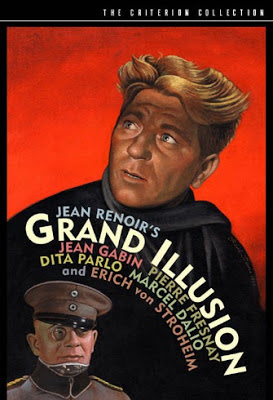
Filled with understated humour, wry observations
and humanism, Renoir’s Grand Illusion
was both a deeply anti-war film and a subtle commentary on societal differences
borne out of class, race and nationalities. Captain de Boieldieu (Pierre
Fesnay), an aristocratic senior officer, and Lt. Marechal (Jean Gabin), a
proletariat pilot, are taken captive in a German POW camp, commanded by Captain
von Rauffenstein (Renoir’s idol, Erich von Stroheim), during a reconnaissance
mission. After numerous failed attempts, Marechal finally manages to escape
along with a Jewish inmate, and they take refuge in the home of a lonely German
widow (Dita Parlo) during the course of their arduous journey. Renoir painted a
deftly textured picture on the utter futility of war. And, by displaying such
anachronistic gentlemanly conduct between the two parties, the film’s grandest
illusion was brilliantly depicted – made starker on hindsight by the horrors
that WWII has become synonymous with. Yet, for all its poetic realism and its humane
portrayal of men and women trapped in the cogs of world politics, Renoir also
provided a sly peek into our ingrained social barriers. Boieldieu and
Rauffenstein, despite belonging to opposite camps nationally, are bound by
their aristocratic heritage and mores; ironically, Marechal and his fellow
escapee are naturally strung together by their class and nationality, but the
question of race lingers at the back of their minds. Boieldieu and Marechal,
despite their national obligations, represent inherently opposing social
orders. Luminously photographed and excellently enacted, these paradoxical
sociopolitical subtexts, and the juxtaposition of old and new orders, made this
a universally relevant masterwork whose resonance has only increased with the
passage of time.

Director: Jean Renoir
Genre: Drama/War Drama/Prison Drama
Language: French
Country: France


